Medical Director, Medical Office Force LLC | Athens, Georgia
Alumnus: SMS Medical College, Emory University, University of Alabama at Birmingham
The healthcare payment landscape is shifting from “volume” to “value.” With the introduction of the CMS ACCESS Model in 2026, small clinics are no longer just competing on patient care – they are being evaluated on Outcome-Aligned Payments (OAP).
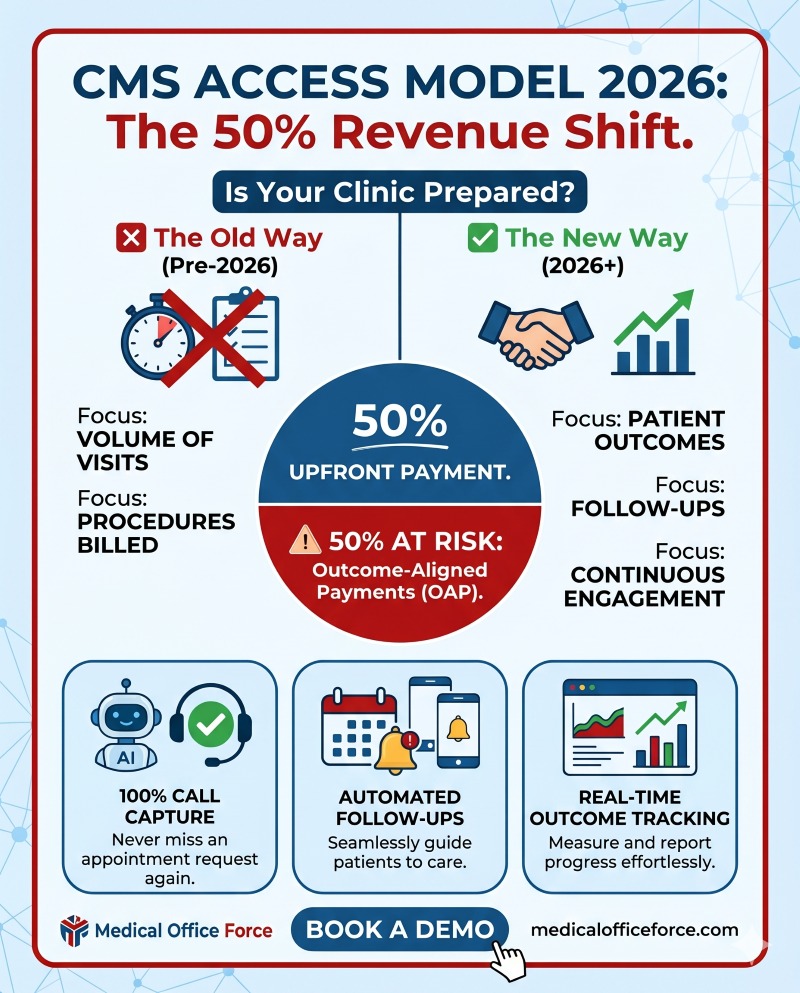
For independent practices, this shift is the difference between financial stability and a 50% revenue loss.
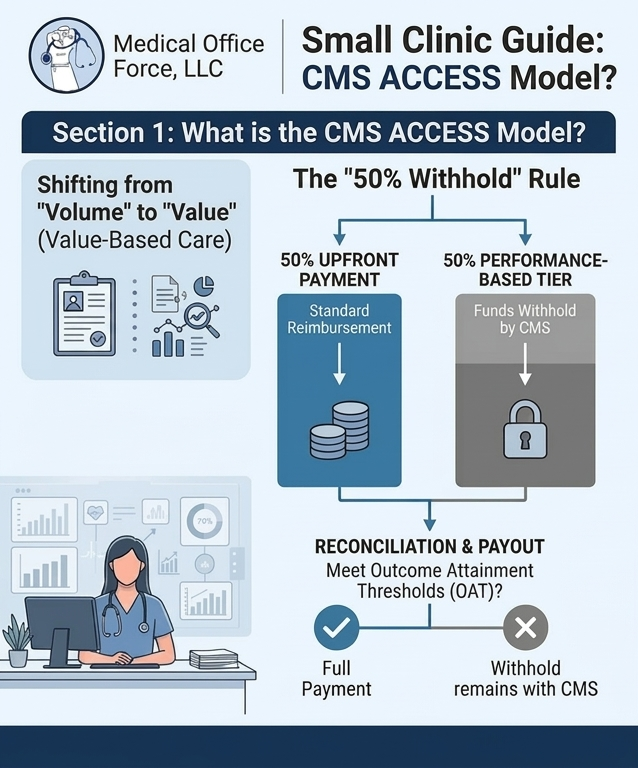
The CMS ACCESS Model is a new value-based care initiative that introduces Outcome-Aligned Payments (OAP). Under this model, up to 50% of clinic revenue is tied directly to measurable patient outcomes, engagement levels, and efficiency metrics.
50% Upfront Payment: Standard reimbursement for services rendered.
Large hospital systems have the overhead to manage complex reporting. Small clinics, however, face three critical “Risk Factors”:
How does the CMS ACCESS Model affect small clinic revenue?
It places up to 50% of total revenue at risk. This “withhold” is only paid out if the clinic meets specific patient outcome and engagement targets.
What is Outcome-Aligned Payment (OAP)?
OAP is a payment structure where a significant portion of reimbursement is tied to the quality of care and patient health results rather than the number of visits.
How can AI help clinics with the ACCESS Model?
AI handles high-volume tasks like patient scheduling, follow-up reminders, and data tracking, ensuring the clinic hits the engagement metrics required to trigger full payment.
Stop losing revenue to missed calls and manual processes. Medical Office Force specializes in helping small clinics navigate the CMS ACCESS Model.
For more information, write to contact@medicalofficeforce.com
Share Your Thoughts
No comments yet — be the first to comment!