How a Bilingual AI Receptionist Transforms Practice Workflow and Recovers Revenue

How a Bilingual AI Receptionist Transforms Practice Workflow and Recovers Revenue

How a Bilingual AI Receptionist Transforms Practice Workflow and Recovers Revenue

The 2026 Front Desk Solution: How a Bilingual AI Receptionist Transforms Practice Workflow and Recovers Revenue

  • Judah Coody

    Judah is the Marketing Lead at Medical Office Force. He specializes in new technology growth and on practical insights that help clinics succeed in a rapidly changing healthcare landscape.

The modern medical front desk is under immense pressure, with staff juggling high call volumes and endless administrative tasks. At the Medical Office Force (MOF), we understand that answering the telephone is an essential part of providing the care your patients expect and deserve.

As of March 31, 2026, bilingual AI medical front-desk reception in the U.S. looks real, early, and economically promising. While public data still does not give a clean national adoption rate for the exact niche of a “bilingual AI medical front-desk receptionist,” what we do have is strong adjacent evidence: over 80% of physicians say they now use AI professionally, 71% of hospitals reported using predictive AI in 2024, and the fastest-growing hospital AI uses included scheduling and billing. In a February 2026 MGMA poll, practice leaders using AI/automation for access most often named scheduling (31%) and calls (27%).

The Bilingual Imperative and Patient Flow

The bilingual piece matters immensely because the U.S. patient base is highly multilingual. Census data reports that 22% of people age 5 and older speak a language other than English at home, and KFF estimates about 26 million people in the U.S. have limited English proficiency (LEP), with Spanish accounting for 62% of adults with LEP. Furthermore, the Department of Health and Human Services (HHS) mandates that covered entities have language-assistance obligations, and the Section 1557 rule requires “reasonable steps” to provide meaningful access for people with LEP.

To meet this need, Medical Office Force provides an AI virtual receptionist that answers calls instantly and seamlessly switches between English and Spanish. Our technology provides an accurate response with less than 100 milliseconds of latency to language changes. 1 This lightning-fast, zero-hold-time interaction ensures patients feel heard and respected in their preferred language without the frustrating delays typical of older automated systems.

Outcomes: Experience, Access, and Engagement

On outcomes, the evidence is strongest for three things:

    1. Better language support improves experience and access: Systematic reviews show that language-concordant care improves outcomes in the majority of studies, and professional interpreters improve comprehension, satisfaction, and delivery of care for patients with LEP.
    2. Reminder/outreach workflows work: A systematic review found reminders reduced non-attendance by a weighted mean of 34% relative to baseline, with manual phone calls outperforming automated reminders (39% vs 29% relative reduction).
    3. Targeted outreach works: A randomized safety-net primary-care initiative found that adding targeted live telephone outreach to automated reminders reduced no-show rates from 36.2% to 32.8% overall.

For bilingual front-desk AI specifically, that means the best 2026 model is hybrid, not fully autonomous. At MOF, we recommend using AI for first-pass tasks such as language selection, scheduling, reminders, directions, registration, simple billing questions, and after-hours capture; then escalating failed contacts, symptom calls, consent discussions, and complex issues to your staff or a qualified professional interpreter. That approach fits both the evidence and the compliance environment, because AHRQ notes a high risk of error when LEP patients are handled without qualified professional interpretation.

The ROI Case and Telehealth Equity

The ROI case is strongest when the system does three jobs well:

    • Recovers missed calls and after-hours demand into booked visits: Healthcare clinics can lose an average of 74.1% of inbound calls to voicemails or hangups during peak hours and lunch breaks. Furthermore, data reveals that 34.8% of after-hours callers express active intent to book appointments or purchase services. By ensuring every call is answered seamlessly, practices plug massive revenue leaks. For example, capturing just 20 missed calls a day that result in two retained patients (valued at $200 per patient) recovers approximately $96,000 annually. Real-world deployments of bilingual AI agents across clinic networks have successfully captured thousands of after-hours appointments, recovering upwards of $180,000 in annual revenue and achieving a 15x ROI in just six months.
    • Reduces no-shows with bilingual reminders and smart escalation: Automated, language-concordant outreach ensures LEP patients understand their appointment details, directly lowering missed appointment rates and preserving schedule density.
    • Redeploys front-desk labor from repetitive calls to higher-value work: An AI receptionist operates flawlessly 168 hours a week and possesses the concurrent call capacity of 2 to 2.5 full-time staff members. By offloading routine scheduling to AI, practices dramatically lower staff burnout, reduce turnover costs, and allow human talent to focus on complex, in-clinic patient care.

That is why English-Spanish usually gives the fastest return, and why the next language should be chosen from your own call logs rather than guesswork. A conservative labor-only view already shows meaningful value. The BLS reports median 2024 pay for medical secretaries and administrative assistants at $44,640. So even 0.25 FTE of front-desk capacity redeployed is worth about $11,160/year in direct wages, and 0.5 FTE is about $22,320/year, before benefits and overhead. If the same system also reduces no-shows or captures even a small number of otherwise-lost appointments, total ROI can turn positive quickly.

There is also an equity and telehealth ROI. A 2025 systematic review found LEP patients were often less likely to use telemedicine, and across all seven modality studies, they had lower video use than English-proficient patients. Bilingual front-end support is not just a courtesy; it removes one of the first barriers to virtual care, access, and follow-up.

The Bottom Line for 2026

Bilingual AI front-desk reception is moving from pilot to operations, especially for English-Spanish workflows. The best-proven benefits are improved access, better no-show performance when paired with live follow-up, staff relief, and better service for LEP patients. The best business case is not “replace the front desk,” but “augment the front desk, recover demand, and escalate intelligently.”

Medical Office Force: 2026 ROI Brief & Pro Forma

Medical practices receive an average of 53 calls per provider per day, and the industry average shows that up to 24% of inbound calls are abandoned or go to voicemail. Furthermore, each provider generates approximately 66 minutes of phone call overhead daily. By augmenting your staff with MOF’s bilingual AI receptionist, you can recover this lost time and revenue data automation..

Metric 1-Provider Practice 5-Provider Practice 20-Provider Practice
Average Daily Call Volume 53 calls 265 calls 1,060 calls
Estimated Abandoned/Missed Calls (24%) 12 calls/day 63 calls/day 254 calls/day
Staff Time Recovered Daily ~1.1 hours ~5.5 hours ~22 hours
Minimum FTE Redeployed 0.25 FTE 1.0 FTE 4.0 FTE
Annual Baseline Labor Savings (at BLS $44,640) $11,160 $44,640 $178,560

(Note: Total ROI scales significantly higher when factoring in the actual revenue from capturing missed appointments, reducing no-shows, and eliminating after-hours leakage).

5 Questions Practice Owners Should Ask Before Implementing a Bilingual AI Receptionist

    1. How much revenue and patient trust are you currently losing due to the industry average of 24% of inbound calls going to voicemail or being abandoned on hold?
    2. Does the AI platform use a hybrid model? Is it capable of handling first-pass administrative tasks while intelligently escalating complex clinical or emotional issues to your human staff to remain compliant?
    3. What is the latency of the voice agent? Can the system detect a language change and respond in Spanish in under 100 milliseconds to preserve the natural flow of conversation and keep patients from hanging up? 1
    4. Does the AI natively integrate with your Electronic Health Record (EHR)? Will the AI seamlessly read and write scheduling data to Epic, Cerner, AthenaHealth, or your specific practice management software?
    5. How does the system support your Section 1557 compliance? Does the AI accurately handle Spanish dialects and LEP patient interactions equitably without relying on easily confused, basic translation algorithms?

FAQs About Bilingual AI Receptionists and ROI

    1. Will this AI voice agent completely replace my front desk staff?

No. Our AI voice agent is designed to augment your team, not replace them. It removes repetitive calls (like simple scheduling and FAQs) so your human team can focus on complex patient care, in-clinic experiences, and higher-value administrative work.

    1. How fast does the AI switch languages if a caller starts speaking Spanish?

The Medical Office Force AI features instantaneous language detection. It transitions from English to Spanish with less than 100 milliseconds of latency, creating a natural, conversational experience without forcing patients to navigate a “Press 2 for Spanish” menu. 1

    1. What is the real return on investment (ROI)?

ROI comes from three areas: recovering missed calls, reducing no-shows, and redeploying staff. By simply saving 0.5 FTE of front-desk capacity, a practice saves over $22,000 annually in direct wages. When you add the captured revenue from patients who would have otherwise hung up and called a competitor, the system pays for itself rapidly.

    1. How does a bilingual AI help with our Section 1557 compliance?

Under the Affordable Care Act’s Section 1557, medical practices must take reasonable steps to provide meaningful access to LEP patients. Providing a highly accurate, culturally competent Spanish AI front desk removes immediate language barriers, improving access to virtual care, appointment booking, and basic triage.

    1. How does the hybrid model actually work in practice?

The AI acts as the first line of defense. It handles language selection, books appointments, provides directions, and answers basic billing questions. If a patient describes a medical symptom, requests a complex procedure, or simply gets frustrated, the AI instantly escalates the call to your staff, ensuring patient safety and trust.

    1. Can the AI handle calls after hours?

Yes. The MOF AI operates 24/7/365. This allows your practice to capture high-intent patients who call during the evening or on weekends, ensuring their appointments are booked directly into your calendar before they can call another clinic.

    1. How long does it take to implement this in my clinic?

Implementation is remarkably fast. MOF’s system can be activated within days without requiring heavy, disruptive technical integration and syncs securely with major practice management software like Panacea, Epic, Cerner, and AthenaHealth.

References & Supporting Data

  • #1. American Medical Association (AMA): 2026 Physician AI Survey, detailing that over 80% of physicians now use AI professionally, with scheduling and calls acting as primary adoption drivers. 2
  • #2. U.S. Census Bureau & KFF: Demographic studies showing 22% of individuals age 5+ speak a language other than English at home, and approximately 26 million U.S. residents have limited English proficiency (LEP), with Spanish making up 62% of that demographic. 3
  • #3. U.S. Department of Health and Human Services (HHS): Section 1557 of the Affordable Care Act final rule, mandating meaningful language access and establishing strict non-discrimination protections for LEP individuals interacting with Patient Care Decision Support Tools (PCDSTs) and AI. 4
  • #4. Bureau of Labor Statistics (BLS): 2024 median wage data reporting medical secretaries and administrative assistants earn $44,640 annually.
  • #5. Industry Call Center Analytics: Operational benchmarks demonstrating that 24% of inbound medical calls are missed or abandoned, up to 74.1% are lost during peak times, and 34.8% of after-hours callers show high booking intent. 5
  • #6. Voice AI Performance Benchmarks: Enterprise AI latency tracking demonstrating that top-tier systems achieve sub-100 millisecond response times, enabling imperceptible code-switching between English and Spanish. 1

Works cited

    1. Spanish and Translate: Transync AI’s Real-Time Solution for 2026, accessed March 31, 2026, https://www.transyncai.com/blog/spanish-and-translate-transync-ai-solution/
    2. 2026 Physician Survey on Augmented Intelligence – American Medical Association, accessed March 31, 2026, https://www.ama-assn.org/system/files/physician-ai-sentiment-report.pdf
    3. Hispanic Americans’ experiences with health care | Pew Research Center, accessed March 31, 2026, https://www.pewresearch.org/science/2022/06/14/hispanic-americans-experiences-with-health-care/
    4. HHS Recent Guidance on AI Use in Health Care | ReedSmith, accessed March 31, 2026, https://www.reedsmith.com/our-insights/blogs/health-industry-washington-watch/102k29k/hhs-recent-guidance-on-ai-use-in-health-care
    5. 37 AI Receptionist Statistics 2026 [347K Calls Analyzed] – NextPhone, accessed March 31, 2026, https://www.getnextphone.com/blog/ai-receptionist-statistics
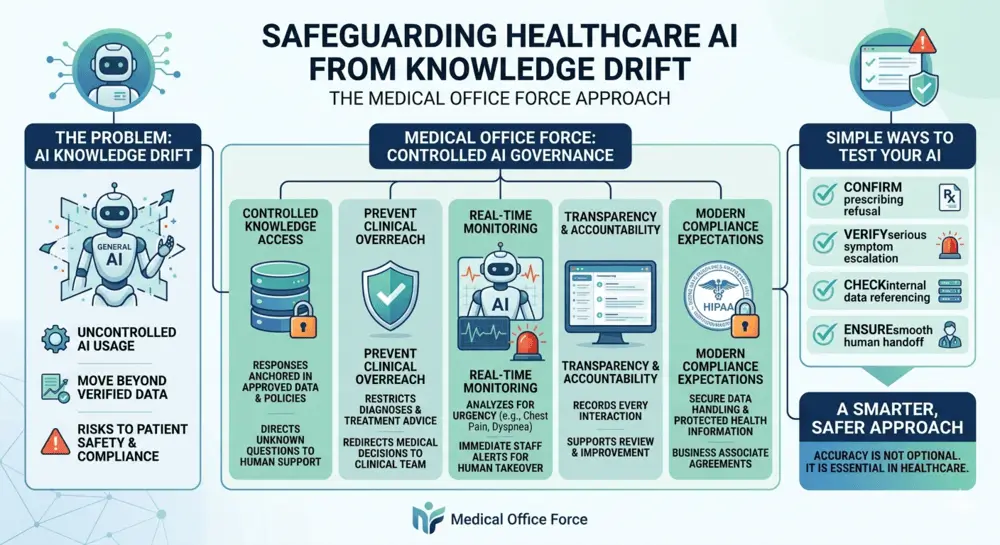
Safeguarding healthcare AI from knowledge drift using controlled AI governance, real-time monitoring, and patient safety protocols

How Medical Office Force Safeguards Your Practice’s AI From Knowledge Drift

Safeguarding healthcare AI from knowledge drift using controlled AI governance, real-time monitoring, and patient safety protocols

How Medical Office Force Safeguards Your Practice’s AI From Knowledge Drift

AI knowledge drift in healthcare is when an artificial intelligence system generates responses outside its verified data sources, increasing the risk of inaccurate information, compliance issues, and patient safety concerns.

Summary

* AI knowledge drift can lead to unsafe or inconsistent patient communication
* Healthcare AI must operate within verified, practice-approved data
* Systems should refuse unknown queries and escalate when needed
* Medical Office Force prevents drift through strict controls and real-time monitoring

Healthcare is entering a new era where artificial intelligence is becoming the first point of contact for patients. It is answering calls, booking appointments, and supporting front desk operations around the clock.

But as AI becomes more capable, one serious concern is emerging. It is called knowledge drift.

Knowledge drift happens when an AI system begins to move beyond its verified data and starts generating responses based on general patterns instead of trusted information. In healthcare, this is not just a technical issue. It is a risk to patient safety, compliance, and trust.

Medical Office Force was built to eliminate this risk completely.

Clinical Governance and Oversight

Medical Office Force systems are developed and monitored under structured governance processes that prioritize patient safety, compliance, and operational accuracy.

This includes defined boundaries for AI behavior, ongoing system evaluation, and alignment with healthcare communication standards.

Why AI Needs Strict Boundaries in Healthcare

Most AI tools available today are designed for general use. They are trained on large datasets and generate responses based on probability. This works well for casual conversations, but it becomes dangerous in a clinical setting.

If an AI system provides incorrect billing details or responds with inaccurate medical information, the consequences can be serious. Patients may be misinformed, compliance may be compromised, and the reputation of the practice may suffer.

This is why healthcare AI must operate within strict, clearly defined limits.

Safeguarding healthcare AI from knowledge drift using controlled AI governance, real-time monitoring, and patient safety protocols.

What Is AI Knowledge Drift in Healthcare?

Knowledge drift happens when an AI system begins to move beyond its verified or approved data sources and starts generating responses based on general patterns instead of trusted information. This can lead to inconsistencies in patient communication and increased operational risk.

The End of Uncontrolled AI in Medical Practices

In recent years, many practices have experimented with different AI tools without proper governance. This has led to what experts describe as unregulated or uncontrolled AI usage.

As AI evolves into systems that can take actions instead of just answering questions, the need for control becomes even more critical.

Medical Office Force addresses this challenge by using a structured system that ensures the AI never operates outside your practice’s approved knowledge base.

Controlled Knowledge Access Through Verified Data

Medical Office Force ensures that every response generated by the AI comes directly from your practice’s internal policies and verified information.

If a patient asks a question that is not included in your system, the AI does not attempt to guess. Instead, it responds honestly and directs the patient to the appropriate human support.

This approach removes uncertainty and ensures consistency in every interaction.

Built In Limits That Prevent Clinical Overreach

One of the most important safeguards in healthcare AI is preventing the system from acting like a clinician.

Medical Office Force ensures that the AI cannot provide diagnoses, treatment advice, or clinical recommendations. These actions are intentionally restricted within the system.

If a patient asks for medical advice, the AI immediately redirects the conversation to your clinical team. This ensures that all medical decisions remain in the hands of qualified professionals.

Real Time Monitoring for Urgent Situations

Not every patient call is routine. Some situations require immediate attention.

Medical Office Force continuously analyzes conversations for urgency. If a patient mentions symptoms such as chest pain or difficulty breathing, the system immediately flags the interaction and alerts your staff.

Instead of continuing the automated conversation, the system ensures that a human takes over without delay.

In real-world usage, patient communication systems must handle a wide range of unpredictable scenarios, making controlled responses and escalation protocols essential for maintaining consistency and safety.

This layer of monitoring adds an essential level of safety to patient communication.

Controlled AI vs General AI Systems

Controlled AI uses verified, practice-specific data
General AI relies on broad, probabilistic information
Controlled AI refuses unknown queries
General AI may attempt to generate responses anyway

Simple Ways to Test Your AI System

Even the most advanced systems should be tested regularly to ensure they are working correctly.

Here are a few simple checks you can perform:

* Ask if the system can prescribe medication and confirm that it refuses
* Mention a serious symptom and verify that it triggers escalation
* Ask where the information is coming from and ensure it references your internal data
* Request to speak to a human and confirm a smooth handoff

These checks help ensure that your AI remains aligned with your standards.

Meeting Modern Compliance Expectations

Healthcare compliance continues to evolve, and AI systems must keep up.

A safe and compliant AI system must include secure data handling, clear agreements for data protection, and controlled access to sensitive information.

Medical Office Force is designed to meet these expectations by ensuring that every interaction is secure, traceable, and aligned with current healthcare regulations.

Transparency and Accountability in Every Interaction

One of the biggest advantages of a controlled AI system is transparency.

Medical Office Force records every interaction in a way that allows your team to review what happened, understand decisions, and make improvements when needed.

This level of visibility ensures accountability and supports better decision making.

At the same time, it reinforces the role of the physician as the final authority in all clinical matters.

A Smarter and Safer Approach to AI in Healthcare

Artificial intelligence has the potential to transform healthcare operations, but only if it is implemented responsibly.

Medical Office Force focuses on safety, control, and clarity. It ensures that your AI system works within defined boundaries, supports your team, and protects your patients.

Because in healthcare, accuracy is not optional. It is essential.

Frequently Asked Questions

      • What is AI knowledge drift in healthcare?
        It is when an AI system generates responses outside its verified or approved data sources, leading to potential inaccuracies in patient communication and operational risks.

      • Is AI safe for patient communication?
        Yes, if it operates within strict boundaries, uses verified data, and escalates when necessary.

      • Can AI replace medical staff?
        No. AI supports administrative workflows but does not replace clinical decision-making.

      • How can I ensure my AI system is compliant?
        Use systems designed specifically for healthcare, with controlled data access, clear limitations, and full transparency.

Important Note

Medical Office Force does not provide medical advice. All clinical decisions are handled by licensed healthcare professionals.

This content is for informational purposes only and does not constitute medical or legal advice. All clinical decisions should be made by licensed healthcare professionals.

References

1. Vouched Model Context Protocol in Healthcare
Link: https://www.vouched.id/learn/blog/the-model-context-protocol-unlocking-trust-and-efficiency-for-ai-in-healthcare
Section: Overview
Quoted part: “Model Context Protocol enables AI systems to retrieve trusted and context specific data”

2. Wolters Kluwer MCP Healthcare Insights
Link: https://www.wolterskluwer.com/en/expert-insights/exploring-mcp-how-model-context-protocol-supports-the-future-of-agentic-healthcare
Section: Key Insights
Quoted part: “MCP allows healthcare AI systems to operate with verified structured data sources”

3. Prosper AI HIPAA Compliance Guide 2026
Link: https://www.getprosper.ai/blog/hipaa-compliant-ai-patient-communication-system-guide
Section: Compliance Requirements
Quoted part: “A Business Associate Agreement is required when handling protected health information”

4. Cyber Defense Magazine AI and PHI Protection
Link: https://www.cyberdefensemagazine.com/ai-agents-and-safeguarding-protected-health-information/
Section: Data Security
Quoted part: “Healthcare AI systems must implement strict controls to protect protected health information”

5. Holt Law AI Governance in Healthcare 2026
Link: https://djholtlaw.com/national-legal-regulatory-analysis-2026-artificial-intelligence-privacy-and-clinical-governance-for-medical-practices/
Section: Legal Responsibility
Quoted part: “Healthcare providers remain responsible for outcomes involving AI supported decisions”

To see how this works in practice, explore our AI voice agent for medical practices.

The $144,000 Silent Leak: How Missed Calls Are Draining Your Medical Practice

The $144,000 Silent Leak: How Missed Calls Are Draining Your Medical Practice

  • Subodh K. Agrawal, MD, FACC

    Medical Director, Medical Office Force LLC | Athens, Georgia
    Alumnus: SMS Medical College, Emory University, University of Alabama at Birmingham

In a busy medical practice, the phone never really stops ringing. It rings during clinic hours, over lunch, and even after the last patient has left.

Each call represents something important. A new patient trying to book an appointment. An existing patient concerned about symptoms. A referral from another physician.

But what happens when that call goes unanswered?

For many practices, a missed call feels like a minor operational issue. In reality, it is a silent revenue leak. Over time, these missed opportunities can cost a practice thousands of dollars every month without leadership fully realizing it.

The Real Cost of a Missed Call

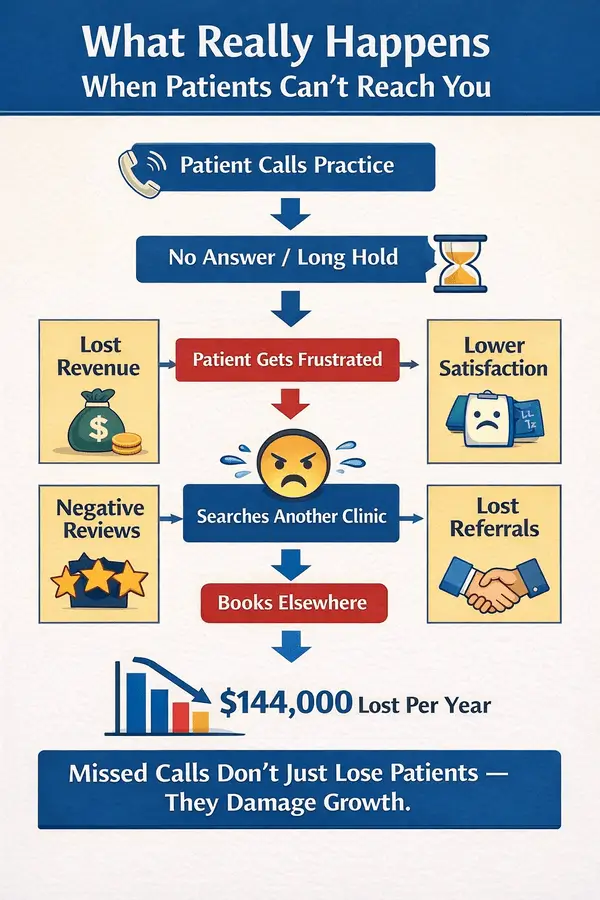
Healthcare is deeply personal, but it is also highly competitive. When a patient cannot reach your practice, they rarely wait. Most will simply call another provider.

Even a small number of missed calls can have a measurable financial impact. 

Consider a conservative example:

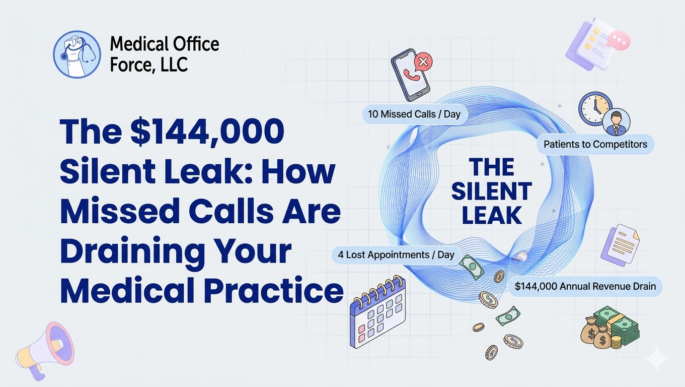
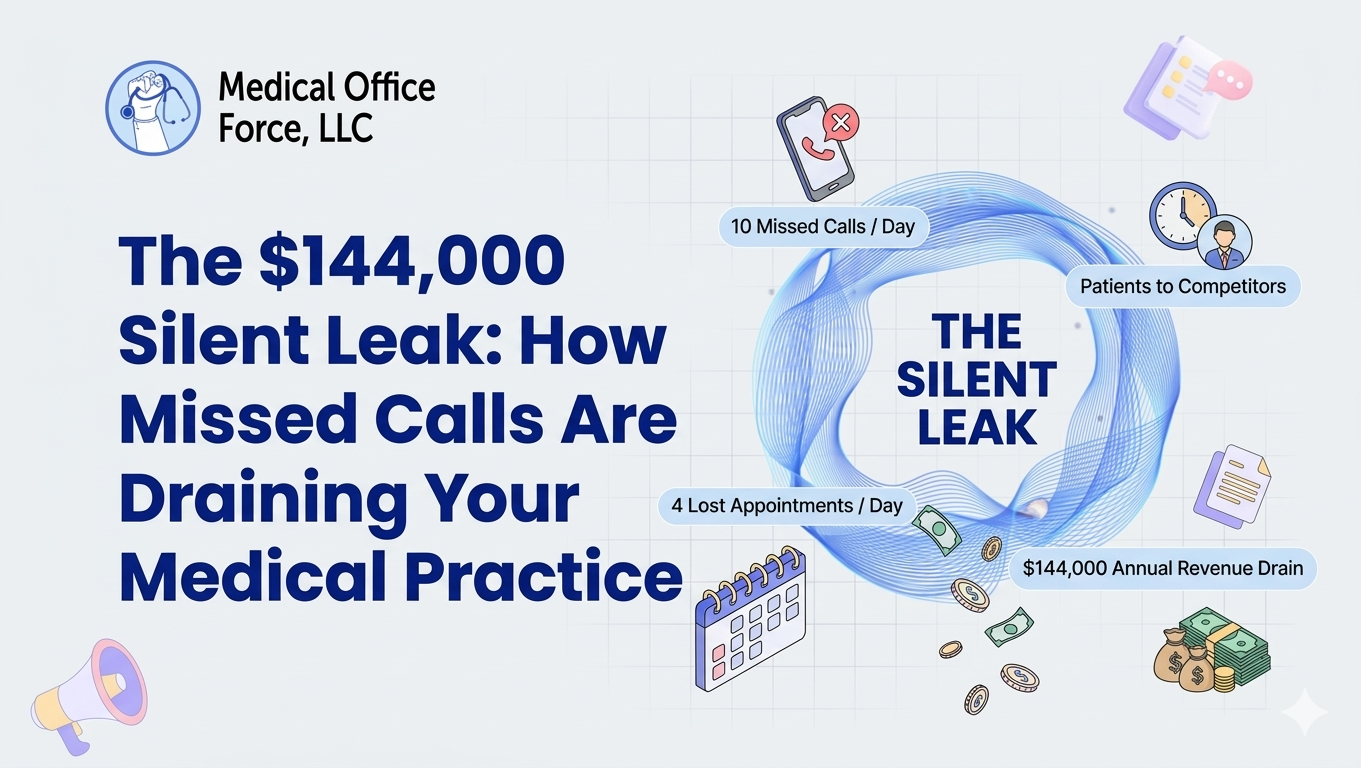
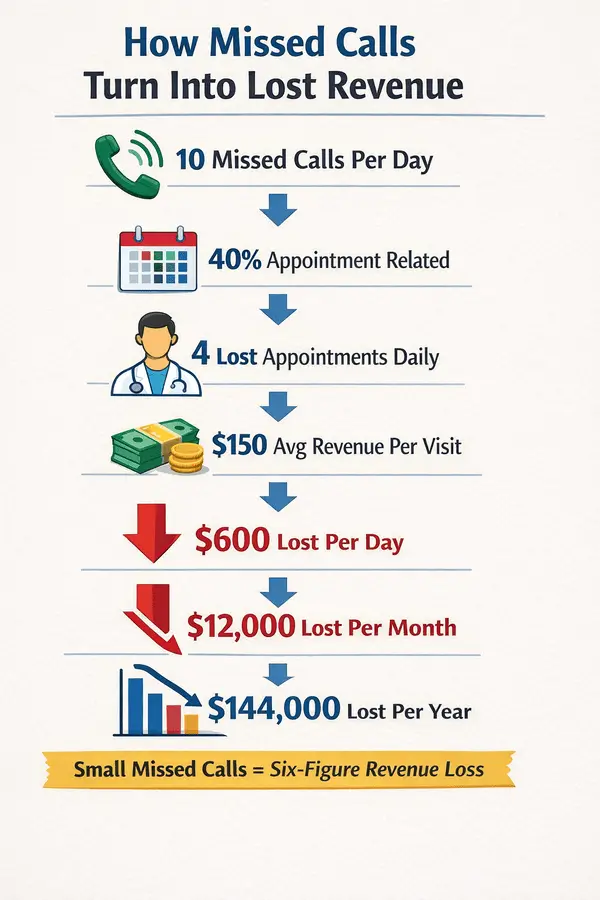
10 missed calls per day
40 percent of those are appointment related
4 lost appointments per day
Average visit value: 150 dollars

This results in 600 dollars lost per day, 12,000 dollars lost per month, and 144,000 dollars lost per year.

This calculation only reflects immediate visit revenue. It does not account for follow up care, procedures, or long term patient value.

Why Patients Do Not Call Back

When patients call a medical practice, they are often anxious or in discomfort. They are looking for reassurance and timely access to care.

If the call is not answered, that moment of trust is disrupted. Most patients do not leave a voicemail or wait for a callback. They move on to the next available provider.

This is not just a missed interaction. It is a lost opportunity to build a patient relationship.

The Reality at the Front Desk

Missed calls are rarely the result of negligence. They are usually the result of capacity limitations.

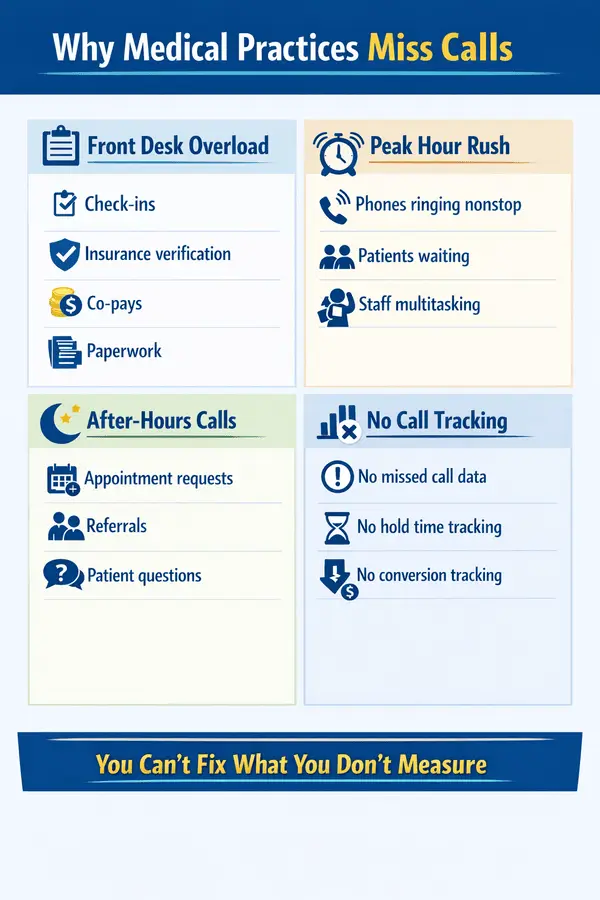
Front desk teams are responsible for multiple critical tasks at the same time. Patient check ins and check outs, insurance verification, payment collection, and in person coordination all compete for attention.

During peak hours, handling phone calls becomes increasingly difficult. Calls may be placed on hold, rushed, or missed entirely.

Over time, this affects both operational efficiency and patient experience.

The Hidden Impact on Reputation and Growth

The consequences of missed calls extend beyond immediate revenue loss.

A poor phone experience often leads to negative online reviews. Patients today actively evaluate practices based on responsiveness and ease of communication.

Missed calls can also disrupt referral relationships. If referring providers cannot reliably reach your practice, they may begin directing patients elsewhere.

Growth in healthcare depends not only on clinical excellence but also on accessibility.

Why This Problem Often Goes Unnoticed

One of the biggest challenges is lack of visibility.

Many practices do not track total incoming calls, call abandonment rates, hold times, or conversion from calls to appointments.

Without this data, it is easy to underestimate the scale of the problem.

A simple question can reveal the gap. How many calls did we miss last week?

If the answer is unclear, there is likely a missed opportunity to improve both performance and revenue.

The Solution: Strengthening Systems, Not Increasing Pressure

The answer is not to push staff harder. Most teams are already working at capacity.

The solution lies in improving systems and support. This may include structured call workflows, extended coverage, dedicated call handling support, and real time tracking.

Practices that implement these changes often see immediate improvements in both patient satisfaction and financial performance.

Conclusion

Every phone call represents a patient seeking care.

When that call is missed, the impact goes beyond a single appointment. It affects revenue, reputation, and long term growth.

By improving communication systems and reducing missed opportunities, practices can retain more patients and build a stronger, more sustainable future.

Frequently Asked Questions

How much revenue can a medical practice lose from missed calls?
Even a small number of missed calls can lead to significant losses. Missing just four appointment related calls per day can result in around twelve thousand dollars in lost monthly revenue. Over a year, this can exceed one hundred thousand dollars depending on the practice size.

Why do patients not call back if their first call is missed?
Most patients expect quick access to care. If a call is not answered, they often assume the practice is unavailable and immediately contact another provider.

What is call abandonment rate in a medical practice?
Call abandonment rate refers to the percentage of callers who hang up before reaching a staff member. A high rate usually indicates long hold times or insufficient call handling capacity.

How can medical practices reduce missed calls?
Practices can improve call handling by strengthening systems, extending coverage, and using structured workflows. Many also benefit from additional call support or automation for routine queries.

Do missed calls affect patient reviews and reputation?
Yes. Poor phone experience is a common reason for negative reviews. Difficulty in reaching a practice reduces trust and impacts patient decisions.

What is the best way to track missed calls in a clinic?
The most effective way is to use call tracking systems that monitor incoming calls, missed calls, hold times, and conversion rates. This helps identify gaps and improve performance.

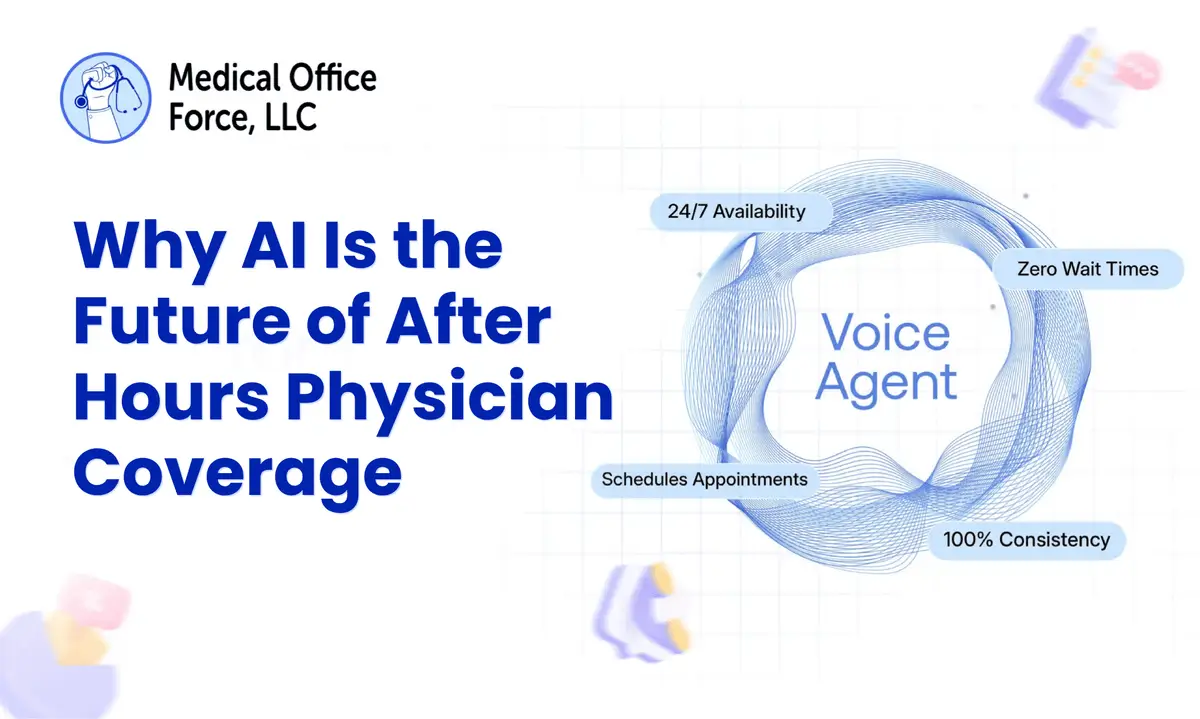
Why AI Is the Future of After Hours Physician Coverage

Why AI Is the Future of After Hours Physician Coverage

  • Subodh K. Agrawal, MD, FACC

    Medical Director, Medical Office Force LLC | Athens, Georgia
    Alumnus: SMS Medical College, Emory University, University of Alabama at Birmingham

Introduction

As a cardiologist trained at Emory University and the University of Alabama at Birmingham, and having started my medical journey at SMS Medical College in Jaipur, I have worked across multiple healthcare systems.

Across all of them, one issue remains constant. The burden of being on call continues to affect physician well being.

In 2026, traditional answering services are no longer enough. They create both clinical gaps and financial inefficiencies.

At Medical Office Force, we are moving beyond outdated systems into a new model powered by intelligent AI call agents.

The Intelligent Perimeter: How AI Transforms Your Practice

Modern AI systems are advanced voice based assistants that understand intent and context.

Precision Triage

Within seconds, the system identifies the patient and evaluates the concern. It can differentiate between minor discomfort and symptoms that may require urgent attention.

Customized Routing

      • Non urgent concerns are documented in structured format
      • Urgent issues are immediately routed to the physician on call

This ensures that no critical information is missed.

Reducing Unnecessary Emergency Visits

Immediate access to guidance helps reduce panic driven emergency visits and improves patient experience.

The ROI: The Math Behind Modern Care

Metric Traditional Answering Service AI Call Agent
Monthly Cost 600 to 1500 dollars or more 100 to 300 dollars
Error Rate 12 to 15 percent Less than 1 percent
Physician Burnout High due to unfiltered calls Lower due to filtered alerts
Annual Savings Minimal 6000 to 14000 dollars per provider

FAQs: Operation and Quality

    1. Does AI reduce the human connection

Patients often prefer faster responses. A quick and accurate interaction builds confidence better than long waiting times.

    1. How does the system identify urgent cases

Specific symptom triggers are programmed. For example, shortness of breath can lead to immediate escalation.

    1. Is the system secure

Yes. All interactions are encrypted and integrated into secure systems to maintain patient privacy.

Final Word

The future of healthcare is not about replacing physicians. It is about supporting them.

AI driven systems allow physicians to focus on critical care while ensuring patients always have access to timely and reliable communication.

Moving away from outdated on call systems is not just an upgrade. It is a necessary step toward sustainable and efficient medical practice.

References

This article is based on healthcare data and research from leading organizations including the American Medical Association, NIH, MGMA, and HHS.

  1. American Medical Association
    Physician adoption of AI and digital tools
    https://www.ama-assn.org/practice-management/digital
  2. Athenahealth Physician Sentiment Survey
    Physician burnout and workload trends
    https://www.athenahealth.com/knowledge-hub
  3. Medical Group Management Association
    Healthcare operations and AI adoption insights
    https://www.mgma.com/data
  4. U.S. Department of Health and Human Services
    Healthcare technology and patient data protection
    https://www.hhs.gov/hipaa
  5. National Institutes of Health
    Artificial intelligence in healthcare research
    https://www.nih.gov/health-information
  6. Healthcare Information and Management Systems Society
    Digital transformation in healthcare systems
    https://www.himss.org/resources
  7. McKinsey and Company Healthcare Insights
    AI impact on healthcare efficiency and cost
    https://www.mckinsey.com/industries/healthcare

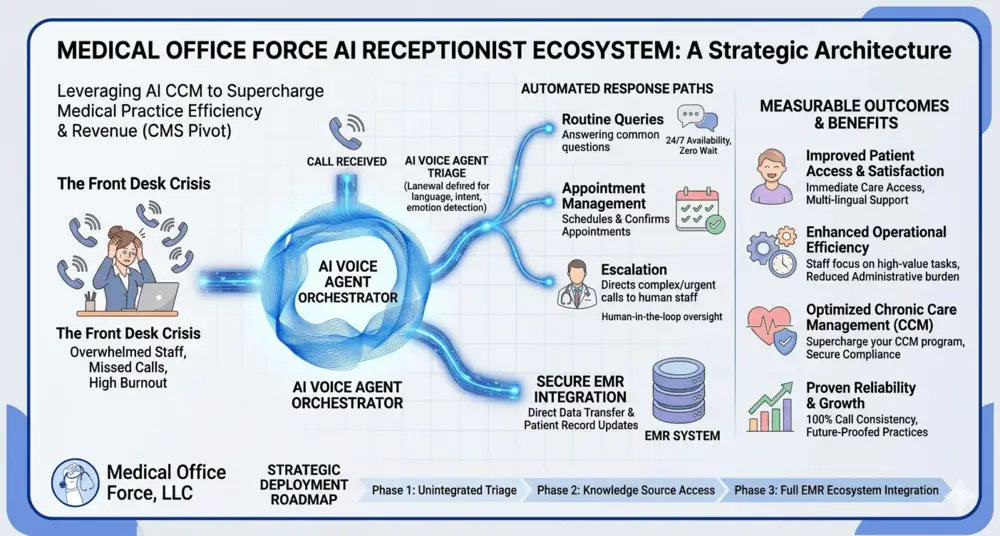
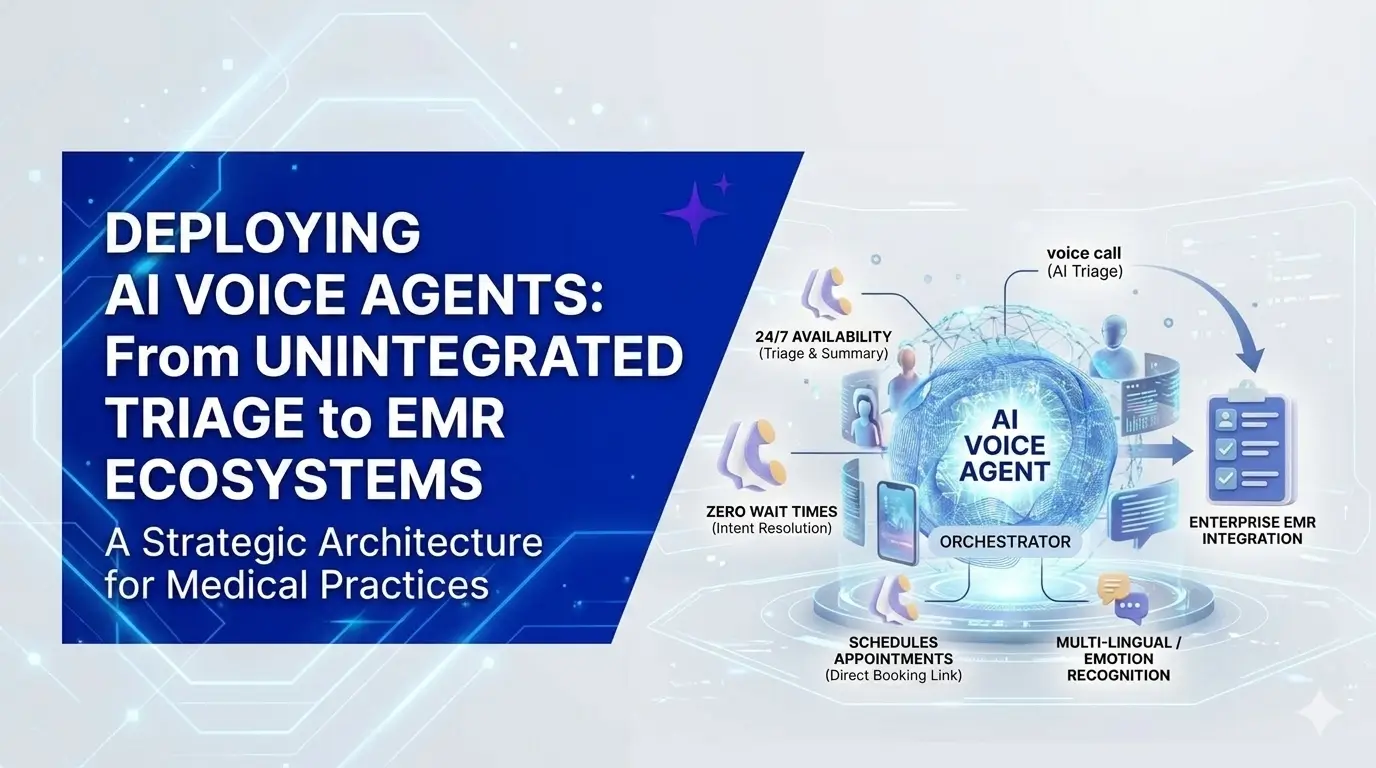
Strategic Architecture and Deployment of AI Voice Agents in Medical Practices: From Unintegrated Triage to Enterprise EMR Ecosystems

Strategic Architecture and Deployment of AI Voice Agents in Medical Practices: From Unintegrated Triage to Enterprise EMR Ecosystems

  • Judah Coody

    Judah is the Marketing Lead at Medical Office Force. He specializes in new technology growth and on practical insights that help clinics succeed in a rapidly changing healthcare landscape.

The Administrative Crisis and the Need for Automation

The modern medical practice is facing intense operational challenges. Increasing patient volumes, staffing issues, and administrative demands are posing significant challenges in providing access and efficiency in the clinics.  

The front desk is overwhelmed. They are dealing with an influx of calls, messages, and scheduling requests. They are burnt out. This is impacting the overall patient experience and employee retention.  

Additionally, medical practices are also losing a significant percentage of incoming calls. This is leading to delayed care, decreased satisfaction, and lost revenue.  

Conventional solutions such as call centers and voice response systems are not providing the solution. Instead, it is removing the personal touch that is expected.  

Artificial intelligence-based voice response systems are changing the way we handle calls. They are able to understand and manage requests in real time. However, it is important that we implement them as support agents.

Understanding the Market and Positioning Strategy

There are various options in the market for an artificial intelligence voice agent. Some systems are highly integrated, while others are quicker to deploy.

While the highly integrated systems are powerful, they also require time and effort. On the other hand, the quicker systems may not be as integrated.

The best approach would be to find a balance. First, implement the standalone system, and once the user trusts the system, move toward deeper integration.

AI Vendor Platform Comparison

Platform Target Market Integration Level Key Strength
Medical Office Force Small to mid-sized clinics Low to Medium AI voice agent for handling patient calls, reducing missed calls, and supporting front desk operations
DoctorConnect Small to enterprise clinics High Full patient engagement system with strong compliance record
Sully.ai Mid to large hospitals Very high Complete AI workforce with strong ROI
Talkie.ai Specialty practices High Deep integration with major EMR systems
Infinitus Insurance focused organizations High Handles complex communication workflows
My AI Front Desk Small clinics Low to medium Quick setup and cost effective
OmniMD Mid to large clinics Medium to high Predictive automation and analytics
Vocca.ai High volume clinics Low to medium Natural conversational experience
UnityAI Clinic networks Medium Multilingual and scalable
Smith.ai Clinics needing oversight Hybrid Combines AI with human support
Voiceoc Diverse patient base Low Multi channel communication

Designing an Unintegrated AI System for Immediate Impact

If access to the records is not possible, the system should still work effectively.

A good system should be centered on the understanding of the patient’s intent and the resolution of the request.

Instead of long recordings, the system should provide structured summaries.

This will enable the staff to act quickly without having to listen to the entire call.

In addition, the system can provide secure links to the patients through texts to enable them to make appointments.

Another factor to consider is the language of the patients.

Patients may change the language of the call as they talk.

A good system should be able to handle this.

The system should also be able to recognize emotional cues.

If the patient is upset or confused, the call should be passed to the staff with the summary of the call.

Managing Risks and Ensuring Safety

AI in healthcare must be carefully controlled. While it improves efficiency, it also carries risks if not managed properly.

AI Risks and Safety Framework

Risk Impact Solution
Misunderstanding patient intent Incorrect responses or repeated loops Ask clear follow up questions
Incorrect AI responses Risk of misinformation Use controlled and verified data sources
Giving medical advice Legal and safety concerns Immediate escalation to medical staff
Data errors Scheduling conflicts or data loss Confirm all details before finalizing
Emergency mismanagement Delay in urgent care Direct routing to staff immediately
Bias in responses Unequal patient experience Continuous monitoring and refinement

To ensure safety, the system must follow strict rules. It should never provide medical advice and must always route clinical concerns to qualified professionals.

Emergency situations must be prioritized, and patient data must be handled securely at all times.

The Role of Prompt Design and Staff Training

The effectiveness of an AI system also relies on the way it has been designed and the extent to which the staff understand it.

For accurate response, the instructions must be clear, and the way it speaks must be natural and conversational, as this would create trust in the patients.

Staff involvement in the implementation of an AI system is very important, as when they understand that it’s not replacing them but rather assisting, the process goes smoothly.

Implementation in Rural Healthcare Settings

Specific rural healthcare environments may have unique challenges, including limited resources and workforce shortages.

AI may help alleviate some of these challenges by reducing administrative tasks and improving patient communication.

The implementation of AI should be done gradually.

Training is important, as is leadership buy-in, to ensure successful implementation of AI in these environments.

30 Day Implementation Plan

Phase Timeline Focus
Phase 1 Days 1 to 7 Assess workflows and define goals
Phase 2 Days 8 to 14 Testing and pilot rollout
Phase 3 Days 15 to 21 Controlled live deployment
Phase 4 Days 22 to 30 Optimization and scaling
A phased rollout reduces disruption and builds confidence among staff.

Moving Toward Full Integration

Once it has been proven that the system is effective, then comes the time for further integration.

At first, it will be able to access internal knowledge sources for enhanced accuracy. Later on, it will be able to connect with scheduling systems and other applications.

Finally, comes the time for integration with medical records.

Frequently Asked Questions

What is an AI voice agent in medical practices?
An AI voice agent is a system that answers patient calls, manages scheduling, and handles routine communication tasks in real time.

Should AI voice agents be integrated with EMR systems immediately?
No, it is better to start with a standalone system and gradually integrate with EMR platforms once the team is comfortable.

Can AI replace front desk staff?
No, AI is designed to support staff by handling repetitive tasks while allowing them to focus on patient care.

What are the risks of AI in healthcare?
Risks include incorrect responses, misunderstanding patient intent, and delays in handling urgent situations. These can be managed with proper safeguards and human oversight.

Final Perspective

The success of AI in medical practices depends on strategy, safety, and trust.

Starting with a simple approach and expanding gradually allows practices to adapt without disruption.

AI voice agents are not replacements for human care. They are support systems that improve efficiency, reduce workload, and enhance patient experience.

Stop Missing Patient Calls: Why Your Medical Practice Needs an AI Receptionist

Stop Missing Patient Calls: Why Your Medical Practice Needs an AI Receptionist

  • Subodh K. Agrawal, MD, FACC

    Medical Director, Medical Office Force LLC | Athens, Georgia
    Alumnus: SMS Medical College, Emory University, University of Alabama at Birmingham

The modern medical front desk is under immense pressure, with staff juggling high call volumes and endless administrative tasks. At the Medical Office Force (MOF), we understand that introducing artificial intelligence can feel intimidating. However, before dismissing AI as just another tech trend the practice owners should ask themselves these three critical questions:

  • How much revenue and patient trust are you currently losing due to the industry average of 24% of inbound calls going to voicemail or being abandoned on hold?
  • If your front desk staff were completely free from navigating phone calls and answering repetitive questions about hours and insurance, how much more time could they dedicate to high-value, personalized patient care?
  •  
  • Is your practice currently equipped to capture and instantly assist the growing demographic of patients. And what about the patients who search for medical help and require immediate scheduling outside of the traditional 9-to-5 business hours?

The Frictionless Front Door: Explaining the AI Advantage

To answer the first question, practices lose immense value when patients are sent to voicemail. By adopting our unintegrated AI voice agents as a frictionless digital front door, every inbound call is answered instantly. The AI eliminates hold times, capturing revenue and preserving patient trust.

Answering the second question reveals the true value of AI: it is not a human replacement, but the ultimate complementary teammate. By absorbing the burden of repetitive inquiries such as answering basic FAQs, providing physical directions, and handling overflow routing. The AI frees your human staff to focus on complex clinical cases and empathetic in-office patient care.

Finally, to address the third question, illness and medical anxiety do not adhere to standard business hours. MOF ensures your practice remains available 24/7. A patient calling late at night gets an immediate, empathetic response and can even be scheduled for an appointment, effectively capturing off-hours demand rather than leaving patients frustrated.

Strict Constraints and Patient Safety

To build trust and ensure clinical safety, MOF helps clinics to strictly train their AI using a customized, highly structured knowledge base that prevents the system from hallucinating or generating false information. We implement hard algorithmic guardrails to guarantee the AI never provides unauthorized medical advice. If a patient asks a clinical question, the AI is programmed to trigger a fixed refusal script and immediately execute a seamless handoff to a human professional. Furthermore, the system continuously monitors conversations for urgent keywords, ensuring that any potential medical emergency is instantly escalated to your clinical team without delay.

Essential Features of an Unintegrated AI Agent

Based on leading industry white papers, a standalone AI medical receptionist must possess a specific suite of capabilities to succeed and deliver value without deep system integration. Key features include:

  • Smart Appointment Management: The ability to handle scheduling, rescheduling, and cancellations, along with sending conversational reminders to drastically reduce no-show rates.
  •  
  • Patient Intake and Triage: Guiding callers through structured digital questionnaires and intelligently routing urgent clinical needs to on-call staff.
  •  
  • Insurance and Financial Checks: Autonomously answering routine questions regarding accepted insurance networks, co-pays, and billing.
  •  
  • Effortless Prescription Refills: Processing 24/7 patient requests for medication refills and capturing the necessary details for human staff to easily follow up.
  •  
  • Multilingual Language Support: Communicating effectively in the caller’s preferred language to reduce miscommunication and improve equitable access to care.

Discrete Action Spaces & Compliance: Utilizing strict, hallucination-free conversational controls and robust security protocols—including end-to-end encryption and audit logs—to ensure trusted, HIPAA-compliant outcomes.

How a 30-Day Implementation Improves Performance

Adopting an AI agent doesn’t have to be a disruptive overhaul. In fact, a structured 30-day phased rollout is the best way to rapidly improve clinic performance while building staff confidence.

  • Days 1-7 (Preparation & Getting Started): Begin by defining clear use cases and mapping out essential call flows for your specific clinic. Establish baseline metrics, such as current documentation time and hold times, to accurately measure future success.
  •  
  • Days 8-14 (Refining the Process): Test the AI in an isolated sandbox environment. During this phase, schedule brief, focused training sessions for your staff so they understand how to manage handoffs. Maintain your existing parallel phone systems temporarily to ensure a smooth, risk-free transition.
  •  
  • Days 15-30 (Building Confidence & Reliance): Officially launch the AI in a targeted capacity. Celebrate early wins with your staff, gather user feedback, and continuously monitor adoption rates. By day 30, the AI moves from being a new tool to a highly relied-upon operational teammate, drastically reducing the administrative burden.

Works cited

  1. Top 10 AI Phone Systems for Healthcare Clinics Reviewed, accessed March 7, 2026, https://www.insighthealth.ai/blog/best-medical-ai-phone-reviews
  2.  
  3. Under the Hood: Understanding AI Voice Agents | Elion, accessed March 7, 2026, https://elion.health/resources/under-the-hood-understanding-ai-voice-agents
  4.  
  5. 10 mistakes physicians make when using AI tools | Medical Economics, accessed March 7, 2026, https://www.medicaleconomics.com/view/10-mistakes-physicians-make-when-using-ai-tools
  6.  
  7. AI Receptionist Error Handling Explained in Detail | Botphonic, accessed March 7, 2026, https://botphonic.ai/how-ai-receptionists-handle-errors-mistakes/
  8.  
  9. AI Receptionist for Medical Office: The Complete 2024 Guide to Streamlining Your Practice, accessed March 7, 2026, https://www.simbie.ai/ai-receptionist-for-medical-office/

The First 30 Days: What to Expect When Implementing AI Tools – Playback Health, accessed March 7, 2026, https://www.playbackhealth.com/post/the-first-30-days-what-to-expect-when-implementing-ai-tools

How Missed Calls Cost Medical Practices Thousands Each Month

How Missed Calls Cost Medical Practices Thousands Each Month

  • Judah Coody

    Judah is the Marketing Lead at Medical Office Force. He specializes in new technology growth and on practical insights that help clinics succeed in a rapidly changing healthcare landscape.

In a busy medical practice, the phone never really stops ringing. It rings during clinic hours, during lunch, five minutes before closing, and sometimes long after the last patient has left. Every ring represents something important. A new patient trying to book an appointment. An existing patient worried about new symptoms. A referral from another physician. A pharmacy calling for clarification.

Now imagine what happens when that call goes unanswered.

For many practices, missed calls feel like a minor operational issue. In reality, they are a silent revenue leak. Month after month, they cost medical practices thousands of dollars, often without the leadership team fully realizing it.

At Medical Office Force, we have seen firsthand how small gaps in phone coverage can create major financial consequences.

Every Missed Call Is a Missed Opportunity

Healthcare is deeply personal, but it is also highly competitive. When a patient calls a clinic and no one answers, they rarely leave a voicemail and wait patiently for a callback. Most people hang up and dial the next number they find online.

In that moment, you have not just missed a phone call. You have potentially lost:

      • A new patient visit
      • Follow-up appointments
      • Diagnostic testing revenue
      • Long-term continuity of care
      • Future referrals

Let’s put simple math behind it. If your average new patient visit brings in $200 to $300 and you miss just 5 new patient calls per day, that can easily translate into thousands of dollars in lost revenue every month. And that is only direct visit revenue, not the downstream value of that patient over time.

When you multiply that by 20 working days in a month, the financial impact becomes difficult to ignore.

The Hidden Cost of Front Desk Overload

Most practices do not ignore calls intentionally. The issue is capacity.

Front desk teams juggle check-ins, insurance verification, co-pay collections, prior authorizations, paperwork, and in-person patient questions. During peak hours, the phone becomes one more demand on an already overwhelmed team.

When the front desk is overloaded, calls may:

      • Ring out without being answered
      • Be placed on hold for long periods
      • Go to voicemail
      • Receive rushed or incomplete responses

Over time, this does more than affect revenue. It affects reputation.

Patients today expect responsiveness. A poor phone experience often translates into negative online reviews, lower patient satisfaction scores, and reduced trust in the practice. In an era where patients actively read reviews before booking, that damages compounds.

After-Hours Calls: The Overlooked Revenue Drain

What happens after 5 PM?

Many practices assume that after-hours calls are mostly non-urgent. But a significant portion includes:

      • Patients seeking next-day appointments
      • Referrals from urgent care or emergency departments
      • Questions that determine whether a patient chooses your practice or another

If these calls go unanswered or are handled by a generic answering service without proper scheduling capability, the opportunity is lost.

Patients do not want to wait until morning to secure an appointment. They want confirmation. They want reassurance. They want access.

If your practice cannot provide it, another practice will.

The True Financial Picture

Let’s look at a conservative example:

      • 10 missed calls per day
      • 40 percent of those are appointment-related
      • 4 lost appointments per day
      • Average reimbursement per visit: $150

That is $600 per day in lost revenue. Over a 20-day month, that is $12,000. Over a year, that is $144,000.

And again, this does not include ancillary services, follow-ups, procedures, or lifetime patient value.

When practices say, “We are just a little busy,” they may not realize that “a little busy” could be costing them six figures annually.

The Impact on Referrals and Growth

Missed calls also affect referral relationships.

If a referring physician’s office repeatedly struggles to reach your practice, they may redirect patients elsewhere. Referrals are built on trust and reliability. Accessibility is part of that trust.

Growth in healthcare is rarely about marketing alone. It is about operational excellence. A strong digital presence may drive calls, but if those calls are not answered consistently and professionally, marketing investments lose their effectiveness.

In other words, missed calls do not just cost revenue. They limit growth.

Patient Experience Is a Competitive Advantage

Modern patients evaluate practices the same way they evaluate other services. They expect:

      • Quick response times
      • Clear communication
      • Easy scheduling
      • Respect for their time

The phone call is often the first impression. If that first interaction is frustrating, the patient may assume the clinical experience will be similar.

On the other hand, a well-handled call builds confidence immediately. A friendly, knowledgeable voice that schedules efficiently and answers questions clearly sets the tone for the entire patient journey.

In today’s healthcare environment, experience matters just as much as clinical expertise.

Why This Problem Often Goes Unmeasured

One of the biggest challenges is visibility.

Many practices do not track:

      • Total incoming calls
      • Abandoned call rates
      • Average hold times
      • Conversion rates from call to appointment

Without data, leadership may underestimate the scope of the problem. Staff may say, “We answer most of the calls,” but without call analytics, there is no way to know how many patients hung up before reaching someone.

When practices begin reviewing real call data, the numbers are often eye-opening.

The Solution Is Not More Stress

The answer is not to push front desk teams harder. They are already working at capacity.

The solution is structure, systems, and support.

This may include:

      • Dedicated call handling teams
      • Extended hour coverage
      • Centralized scheduling support
      • Clear call protocols
      • Real-time call tracking and reporting

When phone systems are optimized and supported properly, practices see immediate improvements in both revenue and patient satisfaction.

At the Medical Office Force, we believe that operational strength is just as important as clinical excellence. When practices ensure that every patient call is answered promptly and professionally, they protect revenue, strengthen patient relationships, and position themselves for sustainable growth.

A Simple Question to Ask

If you are unsure whether missed calls are affecting your practice, start by asking one simple question:

How many calls did we miss last week?

If the answer is unclear, that alone signals opportunity.

Every ring represents a patient seeking care. In healthcare, that is not just a transaction. It is trust. It is access. It is my responsibility.

Missed calls may seem small at the moment. But over time, they quietly erode revenue, reputation, and growth potential.

The good news is that this is a solvable problem. With the right systems in place, those lost thousands each month can quickly become retained revenue and stronger patient relationships.

And in a field built on service, that is a change worth making.


SOURCES

This article is based on healthcare operational data, patient behavior studies, and guidelines from leading organizations such as the CDC, AMA, MGMA, and HHS.

Centers for Disease Control and Prevention (CDC)
Healthcare access and patient behavior insights
https://www.cdc.gov/healthcare

American Medical Association (AMA)
Practice management and patient access challenges
https://www.ama-assn.org/practice-management

Medical Group Management Association (MGMA)
Front desk workload, staffing shortages, and operational efficiency
https://www.mgma.com

Accenture Health Consumer Survey
Patient expectations and preference for quick access to care
https://www.accenture.com/us-en/industries/health

Healthcare Financial Management Association (HFMA)
Revenue cycle impact and missed opportunities in healthcare operations
https://www.hfma.org

U.S. Department of Health and Human Services (HHS)
Patient engagement and access to care standards
https://www.hhs.gov

AI Automation in Healthcare: From Administrative Survival to Clinical Sustainability

AI Automation in Healthcare: From Administrative Survival to Clinical Sustainability

  • Judah Coody

    Judah is the Marketing Lead at Medical Office Force. He specializes in new technology growth and on practical insights that help clinics succeed in a rapidly changing healthcare landscape.

AI Technologies are an ongoing discussion in the healthcare field as a far-off technology. However, AI Technologies are currently being utilized to relieve healthcare organizations from the significant pressures they have been experiencing due to the rising costs of human resources and the continuing shortage of qualified candidates, decreased revenues due to declining insurance reimbursements and increased demands from patients for immediate care and convenience.

AI Technologies’ role in healthcare has also been evolving from a “replace human workers” mentality to creating better workflow methods for the clinical staff to work with and support each other, so they can be successful with fewer resources in a more demanding healthcare environment.

The conversation among medical practices, FQHCs, RHCs, and multi-site organizations has moved from “Should we look into AI?” to “What steps do we take to utilize AI?”

The Rise of AI in Healthcare

The rapid growth of Technology within the field of Health Care is directly attributable to the significant impact that Pressure has had on the Health Care delivery system.

Administrative burden has increased steadily over the past decade. Front desks manage call volumes they were never designed to handle. Care teams spend hours on documentation and follow-ups. Billing staff navigate increasingly complex payer rules. 

Due to the increased demand for services in Health Care, there has remained limited capacity within the workforce responsible for performing these functions to provide services that Health Care systems require. Despite the increasing use of Technology by Health Care systems, the rate of growth of Technology will continue to increase to meet the demand of Patients for Health Care Services.

What AI Automation Actually Means in Healthcare

In healthcare settings, artificial intelligence (AI) automation, in practical terms, describes how computers perform tasks that are repetitive or consist of a series of steps based on established rules, and that take significant amounts of time to complete without requiring medical expertise. Unlike doctors’ evaluations or treatment selections, AI automation supports the delivery of care by facilitating workflow. There are several common tasks performed using AI automation today:
      1. Call taking and intake of the patient;
      2. Scheduling appointments and sending reminders;
      3. Determining if the patient has insurance and obtaining prior approval for treatment;
      4. Supporting documentation and transcription;
      5. Following up with the revenue cycle and making a decision on claim status; and
      6. Coordinating remote monitoring of patients.
It’s important to remember that AI automation’s true value doesn’t lie in its many functional areas but rather how they all come together to create connections and decrease the number of handoffs between people.

The Front Desk Problem No One Can Ignore

The front-desk experience represents a significant operational challenge facing healthcare-providers today.

Research has shown that a high number of phone calls received by a healthcare facility will go unanswered, particularly during peak hours. This inability to directly speak with an office staff member means lost opportunities for an appointment, delayed treatment and dissatisfied patients.

Artificial Intelligence powered telephone-receptionists and call-automation technologies help mitigate the above-mentioned issue by automatically answering all incoming calls, determining the type of caller and routing the caller to the appropriate person, website or telephone number.

These new technologies can also assist healthcare providers by managing the majority of the administrative tasks associated with making appointment(s), answering relatively simple questions, and, when necessary, referring urgent matters to members of their staff.

From an operational perspective, the primary objective of these technologies is not to eliminate the need for front-desk staff, but to allow front-desk staff to spend more of their time providing care in-person to patients and less time being interrupted.

Automation and the Clinical Workforce Shortage

As a result of the current state of staffing shortages across the healthcare sector, these shortages are now seen as being the norm.

Automation is the single most important factor that provides existing clinical teams with additional support (and capacity) to enhance the service they provide to patients. For example, by using artificial intelligence driven workflows, healthcare providers can take on tasks (chart preparation, documentation support, missing care gap identification, and follow-up reminders) that would otherwise be handled manually by members of the clinical-team.

By allowing clinical staff to have more interaction time with patients, their expertise can be used efficiently and effectively.

In rural and underserved settings, automation often becomes the difference between maintaining services and scaling them back.

AI Automation and Revenue Cycle Stability

Financial sustainability remains one of the strongest drivers of automation adoption.

Administrative inefficiencies in scheduling, coding, eligibility verification, and claims management directly impact revenue. Delays and errors compound quickly, especially in high-volume practices.

AI systems help by identifying incomplete documentation, flagging potential denials, and automating routine follow-ups. This does not eliminate billing staff. It supports them by reducing manual workload and improving accuracy.

For organizations operating on thin margins, these efficiencies are not optional. They are necessary for survival.

Compliance, Data Security, and Responsible Use

One of the most common concerns around AI automation in healthcare is compliance.

Responsible systems are designed with HIPAA requirements, secure data pipelines, role-based access, and audit trails. Automation does not remove accountability. It enhances it by reducing human error and improving consistency.

Healthcare organizations that adopt AI without addressing cybersecurity and compliance risk expose themselves to operational and legal consequences. Mature implementations treat security as foundational, not an afterthought.

Automation Is Not the Same as Delegation

A critical distinction often gets lost in AI discussions.

Automation does not mean delegating responsibility to software. Clinical oversight remains with licensed professionals. Administrative accountability remains with leadership.

Automation simply ensures that information flows accurately and efficiently so decisions can be made with clarity.

Organizations that succeed with AI understand this difference early.

How AI Automation Supports Value-Based Care

As healthcare continues to shift toward value-based reimbursement, automation becomes even more relevant.

Tracking quality measures, managing care gaps, coordinating follow-ups, and monitoring chronic conditions all require consistent processes. Manual systems struggle to scale these efforts.

AI-driven workflows help organizations meet quality benchmarks by ensuring patients receive timely outreach, documentation is complete, and care plans are followed consistently.

This directly impacts performance metrics tied to reimbursement and incentives.

What Healthcare Leaders Should Consider Before Adopting AI

AI automation is not a plug-and-play solution.

Before implementation, organizations should assess:

      • Which workflows create the most friction
      • Where staff time is being underutilized
      • How automation will integrate with existing systems
      • Whether vendors understand healthcare operations, not just technology

Technology alone does not solve operational problems. Alignment does.

The Role of Medical Office Force

At Medical Office Force, AI automation is approached as an operational strategy, not a technology experiment.

By combining intelligent automation with experienced clinical and administrative support, Medical Office Force helps healthcare organizations stabilize workflows, reduce burnout, and improve access to care.

The focus is not on replacing teams, but on strengthening them through systems that work quietly in the background, ensuring continuity and efficiency.

Looking Ahead

AI automation in healthcare is not about the future. It is about the present reality of delivering care in a strained system.

Organizations that adopt automation thoughtfully will be better positioned to adapt, grow, and serve patients effectively. Those that delay may find themselves overwhelmed by administrative burden and workforce limitations.

The goal is not to automate healthcare.
The goal is to make healthcare sustainable again.

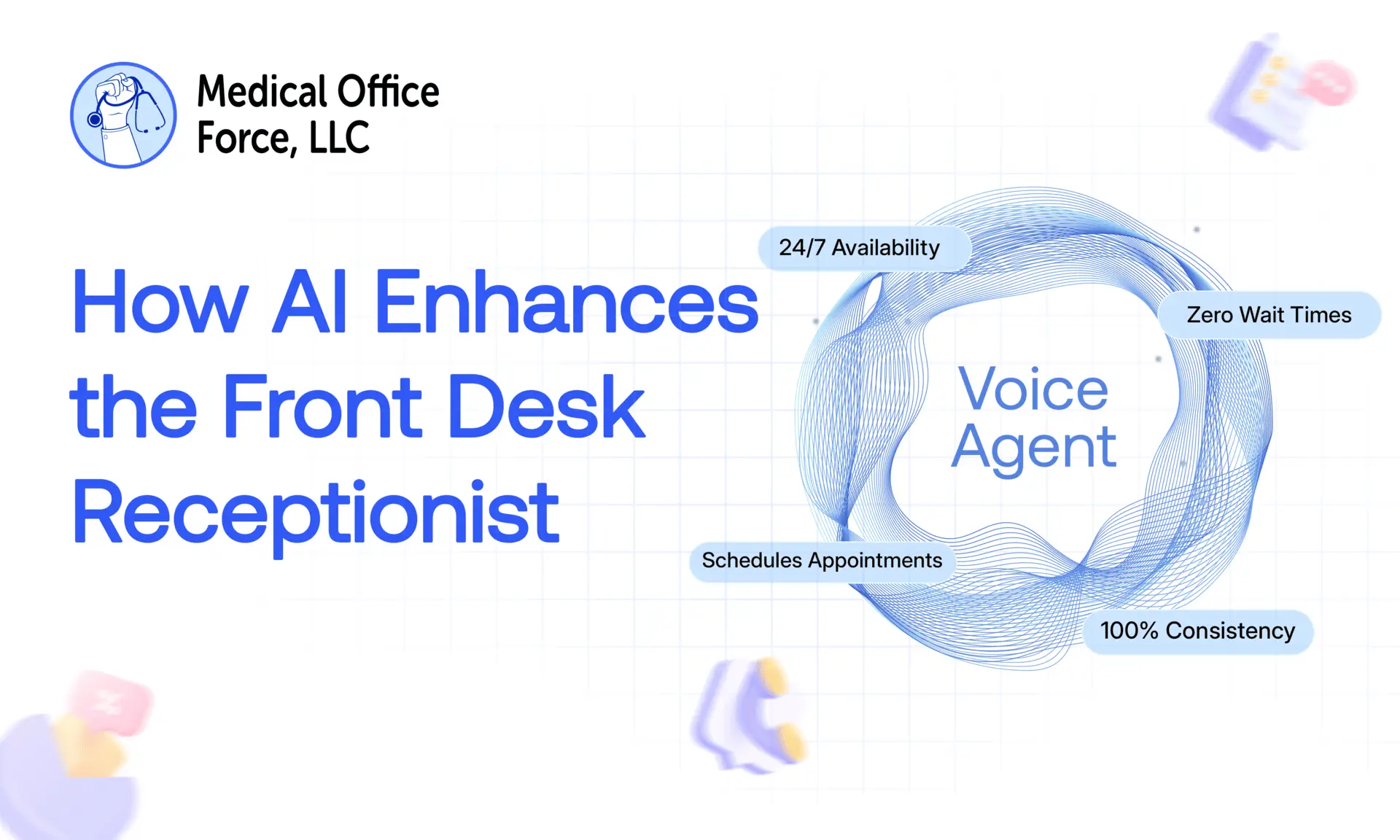
How AI Enhances the Front Desk Receptionist

How AI Enhances the Front Desk Receptionist

  • Judah Coody

    Judah is the Marketing Lead at Medical Office Force. He specializes in new technology growth and on practical insights that help clinics succeed in a rapidly changing healthcare landscape.

(Without Replacing the Human Touch)

In any medical practice, the front desk is far more than a place where phones are answered and appointments are booked. It is the first point of contact for patients, the gateway to care, and a critical driver of both patient satisfaction and practice revenue. Every incoming call represents a patient seeking help, clarity, or reassurance.

Despite its importance, the traditional front desk is often stretched thin. Busy schedules, staffing shortages, peak-hour call volumes, and growing administrative demands make it difficult for teams to keep up. Calls go unanswered, voicemails pile up, and patients become frustrated. Over time, these small breakdowns quietly affect patient retention, revenue, and staff morale.

This is where AI-enhanced front desk receptionists are changing the landscape,not by replacing human staff, but by supporting them in practical, meaningful ways.

The Reality of Front Desk Challenges in Healthcare

Front desk teams manage a wide range of responsibilities every day, including:

      • Answering and routing phone calls
      • Scheduling and rescheduling appointments
      • Verifying patient information
      • Responding to insurance-related questions
      • Managing referrals and supporting clinical staff

All of this happens while maintaining professionalism, empathy, and accuracy.

During peak hours, this workload becomes overwhelming. Phones ring continuously, patients wait on hold, and staff are forced to rush conversations. Even the most skilled receptionist can handle only one call at a time. When multiple calls come in simultaneously, the patient experience often suffers first.

Missed calls typically lead to voicemail, which many patients view as a dead end. Some may try again later, but many do not. In healthcare, this results in lost appointments, delayed care, and missed revenue. Over time, ongoing pressure leads to burnout, turnover, and further operational strain.

What Does “AI-Enhanced” Actually Mean?

An AI-enhanced front desk does not mean replacing your receptionist with a robot. Instead, it means using artificial intelligence as a digital assistant that supports your existing team.

AI front desk systems are built to handle high-volume, repetitive tasks that consume time but do not require human judgment or emotional intelligence. These systems can:

      • Answer calls instantly
      • Collect basic patient information
      • Schedule appointments using predefined rules
      • Confirm visits and send reminders
      • Provide standard practice information

By offloading routine interactions to AI, front desk staff gain the breathing room needed to focus on tasks that truly require a human touch.

How AI Supports Daily Front Desk Operations

One of the greatest advantages of AI is availability. Unlike human staff, AI does not take breaks, call in sick, or log off at the end of the day. It is available 24/7 to respond to patient inquiries during lunch hours, after clinic hours, or early in the morning.

AI also manages scheduling with consistency and accuracy. It follows practice-defined rules such as provider availability, appointment types, and visit durations. This reduces errors, prevents double-bookings, and improves overall workflow efficiency.

For patients, this means:

      • Immediate responses instead of voicemail
      • Clear instructions instead of confusion
      • Faster access to appointments and information

Reducing Front Desk Burnout

Front desk burnout is a growing concern in healthcare. Constant interruptions, repetitive questions, and the pressure to multitask take a toll on mental health and job satisfaction. When staff are overwhelmed, even the best employees struggle to meet patient expectations.

AI acts as a pressure-release valve by:

      • Absorbing call volume during busy periods
      • Handling common questions like office hours or directions
      • Managing appointment confirmations and reminders

This allows staff to work at a more sustainable pace. When receptionists are less stressed, they are more patient, attentive, and engaged, directly improving patient experience and team morale.

Improving Accuracy and Consistency

Human error is unavoidable, especially in fast-paced, high-volume environments. Small mistakes in patient details, appointment information, or communication can lead to scheduling conflicts, billing issues, and dissatisfaction.

AI systems excel at consistency. They capture patient data in a standardized manner, follow workflows precisely, and record information accurately every time. This creates smoother handoffs between the front desk, clinical teams, and billing departments.

The result is:

      • Fewer downstream errors
      • Less administrative rework
      • Improved operational efficiency

Preserving the Human Touch

One of the most common concerns about AI in healthcare is the fear of losing empathy. Patients want to feel heard and supported, especially when they are anxious, unwell, or facing complex medical decisions.

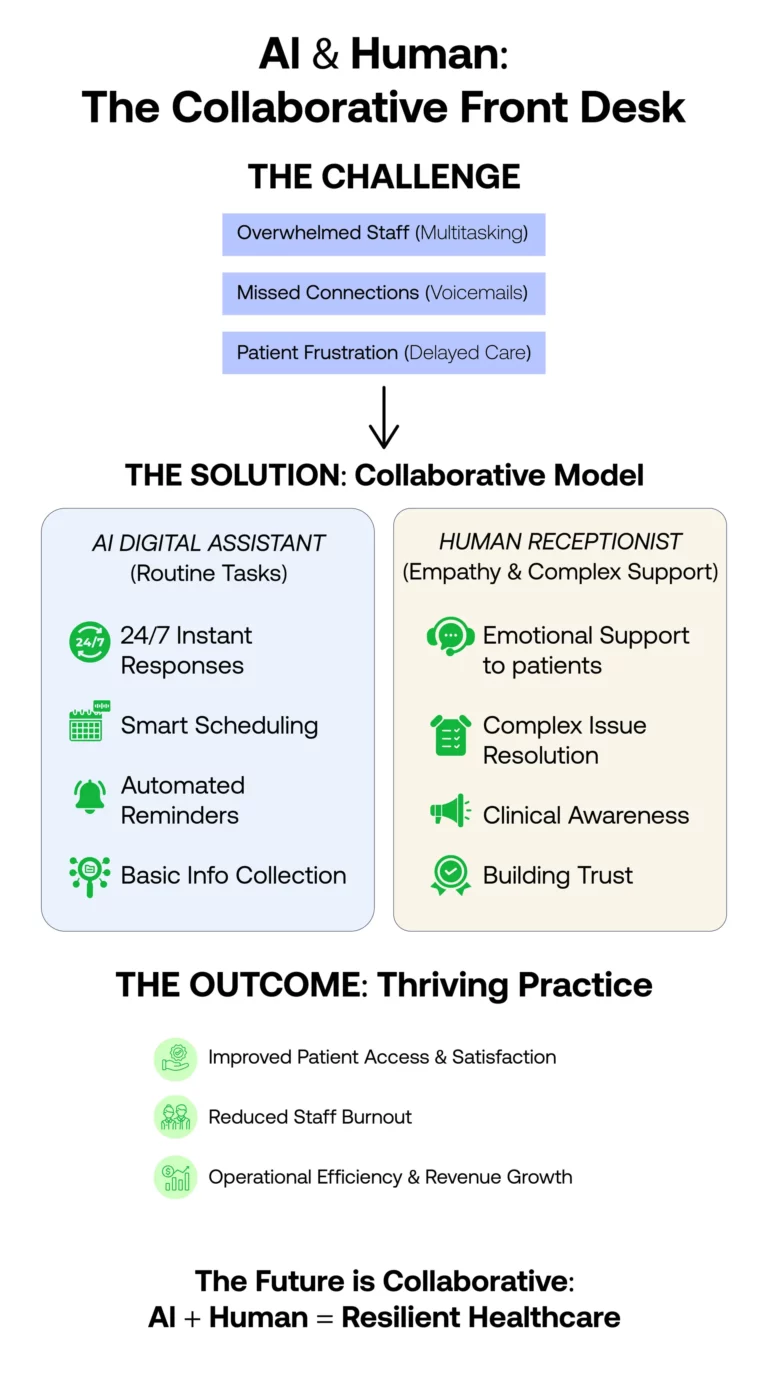
This is why AI should never operate in isolation. The most effective front desk models use a hybrid approach, where AI handles routine interactions and seamlessly transfers patients to human staff when emotional or complex support is needed.

In this model, AI enhances, not replaces the human experience. Patients still speak with real people when it matters most, without the frustration of long wait times or unanswered calls.

Why Staff Adoption and Trust Matter

Technology only delivers value when people trust it. If front desk staff see AI as a threat to their jobs, adoption will fail. However, when AI is positioned as a tool that reduces workload and stress, acceptance grows quickly.

Successful practices involve staff early, communicate clearly, and provide proper training. Over time, many receptionists become strong advocates for AI because they experience firsthand how much easier their workday becomes.

Is AI Right for Every Practice?

AI front desk solutions are not one-size-fits-all. Successful implementation requires thoughtful setup, customization to practice workflows, and a clear escalation path to human staff.

Practices must invest time in training the system on:

      • Scheduling rules
      • Provider preferences
      • Patient communication standards

When implemented correctly, most practices see meaningful improvements within 30 to 60 days.

The Bigger Picture: Better Care Through Better Access

At its core, healthcare is about access. When patients can reach a practice easily, schedule appointments without friction, and receive timely responses, they are more likely to stay engaged and compliant with care.

AI-enhanced front desk receptionists help remove access barriers while protecting what matters most the human connection. They allow practices to grow, improve efficiency, and support staff without sacrificing patient trust.

The Future of the Front Desk Is Collaborative

The future of the medical front desk is not human or AI, it is human and AI working together. As patient expectations continue to rise and healthcare operations grow more complex, practices need solutions that improve access without sacrificing care quality.

AI-enhanced front desk systems handle high-volume, routine interactions such as answering calls, scheduling appointments, confirming visits, and sharing basic practice information. This ensures patients receive immediate, accurate responses day or night without long wait times or unanswered calls.

At the same time, human front desk staff remain essential for situations that require empathy, clinical awareness, and nuanced decision-making. Patients facing complex medical concerns, emotional stress, or insurance-related questions still benefit from speaking with a knowledgeable person who understands their needs.

This collaborative model creates a better experience for everyone. Patients gain faster access and clearer communication, staff experience reduced workload and burnout, and practices operate more efficiently while protecting revenue and patient satisfaction.

By combining AI efficiency with human compassion, healthcare organizations can build a front desk that is responsive, resilient, and ready for the future.

Frequently Asked Questions

Q: What is an AI-enhanced front desk receptionist in healthcare?
A: An AI-enhanced front desk uses artificial intelligence to handle high-volume, routine patient interactions – including answering calls, scheduling appointments, sending reminders, and sharing basic practice information – 24/7, without replacing human staff for complex or emotional interactions.

Q: How many patient calls does the average medical practice miss?
A: Research shows the average medical practice misses between 34% and 42% of incoming calls during business hours – with 41% of those patients calling a competing practice rather than trying again, directly translating to lost appointments and revenue.

Q: Can AI reduce front desk burnout in healthcare?
A: Yes – a nationwide study of over 43,000 healthcare workers found that administrative staff face a burnout rate of nearly 46%, driven primarily by work overload; AI tools that automate routine scheduling and call-handling directly reduce that overload and delay burnout onset.

Q: Does CMS require medical practices to offer 24/7 patient access?
A: Yes – under 42 CFR $482.13, CMS requires providers to maintain 24-hour patient access to communication, meaning after-hours calls cannot simply go unanswered; AI receptionist tools help practices meet this regulatory requirement without overnight staffing.

Q: Will AI replace medical receptionists?
A: No – AI is designed to handle repetitive, high-volume tasks like scheduling and reminders, while human receptionists remain essential for empathetic, complex, and clinically sensitive conversations; the most effective model is a hybrid where AI and staff work together rather than one replacing the other.

Q: What types of tasks can an AI front desk handle in a medical practice?
A: AI front desk systems can answer inbound calls instantly, collect patient information, schedule and reschedule appointments based on provider rules, send SMS and email reminders, confirm visit details, and provide standard practice information – all without holding times or voicemail.

References

AI Integrations in EHR: A look into 2026

AI Integrations in EHR: A look into 2026

  • Judah Coody

    Judah is the Marketing Lead at Medical Office Force. He specializes in new technology growth and on practical insights that help clinics succeed in a rapidly changing healthcare landscape.

Artificial intelligence is changing the way medical records are kept, diagnoses are made, and medical treatments are delivered. In 2026, AI in electronic health records will advance beyond mere automation to create intelligent, proactive clinical systems that support physicians and patients. 

These changes improve workflows and decision-making, all while bolstering the quality of patient outcomes with firm commitments to privacy and data ethics.

Yet, this progress also depends on surmounting some of the long-standing challenges in data interoperability, cost, and governance. 

Understanding how AI is changing electronic health records helps us appreciate not only what’s changing today in clinical practice but also what lies ahead for a smarter, more connected healthcare future.

Advancements in Clinical Workflows

The most prominent change in 2026 involves the use of AI-powered clinical assistance that will facilitate the creation of documentation and sharpen diagnostic acumen.

Ambient clinical intelligence systems now use natural language processing to listen during doctor-patient conversations and automatically generate accurate, structured notes in real time. This advancement saves clinicians valuable time, reduces errors, and plays a major role in addressing physician burnout, a growing concern across all healthcare settings.

Enhanced clinical decision support (CDS) tools are another area of rapid progress. These systems integrate data from multiple sources, including imaging, lab results, and even genomic markers, to provide real-time diagnostic insights. The goal is not to replace the clinician’s judgment but to offer deeper, faster, and more evidence-based recommendations for complex cases.

Diagnostic integration in multi-modalities is especially impactful in fields like oncology and cardiology. For instance, integrating pathology slides, imaging data, and genetic information into a single analysis using AI enables a more holistic understanding of diseases and helps physicians select personalized treatment pathways.

Administrative Efficiency and Smarter Operations

AI is also reshaping the administrative aspects of healthcare, usually considered the most time-consuming part of clinical practice.

Now, automated billing and coding systems review clinical documentation, apply appropriate medical codes, and flag inconsistencies before submission. 

This reduces billing errors, shortens reimbursement cycles, and ensures compliance with insurance requirements.

Intelligent scheduling tools are being implemented across hospitals and clinics to predict patient no-shows, manage provider workloads, and optimize appointment flow. 

These systems learn from past patterns to make the process more efficient and patient-friendly.

Another trend that is on the rise is automated prior authorization. AI can today manage many routine approval requests and even process appeals when necessary. This improvement saves hours of manual work by administrative teams and ensures timely access to care for patients.

Patient-Centered Care and Predictive Health

Predictive health analytics identify patients who are at risk for conditions such as sepsis, heart disease, or hospital readmission by analyzing trends in EHR data. These systems enable providers to intervene earlier, shifting from reactive to preventive care.

AI-powered patient portals are evolving as well. Instead of serving only as record-keeping tools, they now deliver tailored health insights, automated medication reminders, and intelligent chatbots that help patients manage follow-ups or understand lab results more easily.

RPM integration has also become seamless. Wearable devices and connected sensors feed data directly into the EHR, giving clinicians a continuous view of every patient’s health and allowing real-time alerts when irregularities arise. This level of connectivity supports better chronic disease management and reduces hospital visits.

The Future of EHRs in 2026 and Beyond

The EHR landscape of 2026 is defined by smarter, more collaborative systems, not isolated ones.

The widespread adoption of the FHIR standard makes data sharing among providers more seamless, thus ensuring continuity in transitions of care and a single patient record across systems.

A major trend is the shift toward explainable AI, or XAI. With algorithms increasingly at the center of clinical decisions, healthcare regulators are demanding transparency into how these tools arrive at recommendations. Hospitals and developers are responding with governance frameworks that ensure that AI is safe, ethical, and accountable.

Other key characteristics include privacy-first innovation. Federated learning is one example of how AI models can learn across many healthcare organizations without actually pooling sensitive data in a single location. This keeps patient confidentiality intact while still supporting model accuracy and large-scale research.

The future role of AI in EHRs is essentially that of a co-pilot: to enhance clinical efficiency, accuracy, and ultimately patient outcomes, while leaving the human touch of care firmly in the hands of physicians.

How Medical Office Force Supports a Smarter, Patient-Focused Future

We believe that technology should enhance and not complicate patient care. Our staff keeps aligned with the latest advancements in health care innovation so that tools like EHRs and AI integration are applied in a safe, efficient, and ethical way. The focus remains on supporting each patient’s journey toward better health through accurate information, coordination of care, and trusted clinical relationships.

Frequently Asked Questions

Q1: What is FHIR and why does it matter for EHRs in 2026?
FHIR is an HL7 standard for exchanging healthcare information electronically – enabling EHRs to share patient data in a standardized way regardless of how individual systems store it internally.

Q2: Is CMS actively advancing FHIR adoption in 2026?
Yes. CMS announced that more than 60 companies pledged to work collaboratively on FHIR-based data exchange, with 21 networks committing to become CMS Aligned Networks and sharing Blue Button claims data as early as Q1 2026.

Q3: What is automated prior authorization in AI-integrated EHRs?
CMS’s Prior Authorization API – required under the CMS Interoperability and Prior Authorization Final Rule – allows providers to determine authorization requirements and submit requests directly from their EHR, automating much of the manual approval process.

Q4: What is federated learning in healthcare AI?
Federated learning is a privacy-preserving AI technique where models learn across multiple healthcare organizations without pooling sensitive patient data – ONC is actively piloting this approach to support large-scale research without compromising patient confidentiality.

Q5: What is USCDI and how does it support AI in EHRs?
USCDI is ONC’s standardized set of health data elements required for interoperability – USCDI v6 was published July 2025 with 6 new elements, and Draft USCDI v7 published January 2026 adds 30 more, expanding the data available to AI tools within EHR systems.

References