







Why Small Clinics Must Prepare for the CMS ACCESS Model in 2026

Why Small Clinics Must Prepare for the CMS ACCESS Model in 2026

  • Subodh K. Agrawal, MD, FACC

    Medical Director, Medical Office Force LLC | Athens, Georgia
    Alumnus: SMS Medical College, Emory University, University of Alabama at Birmingham

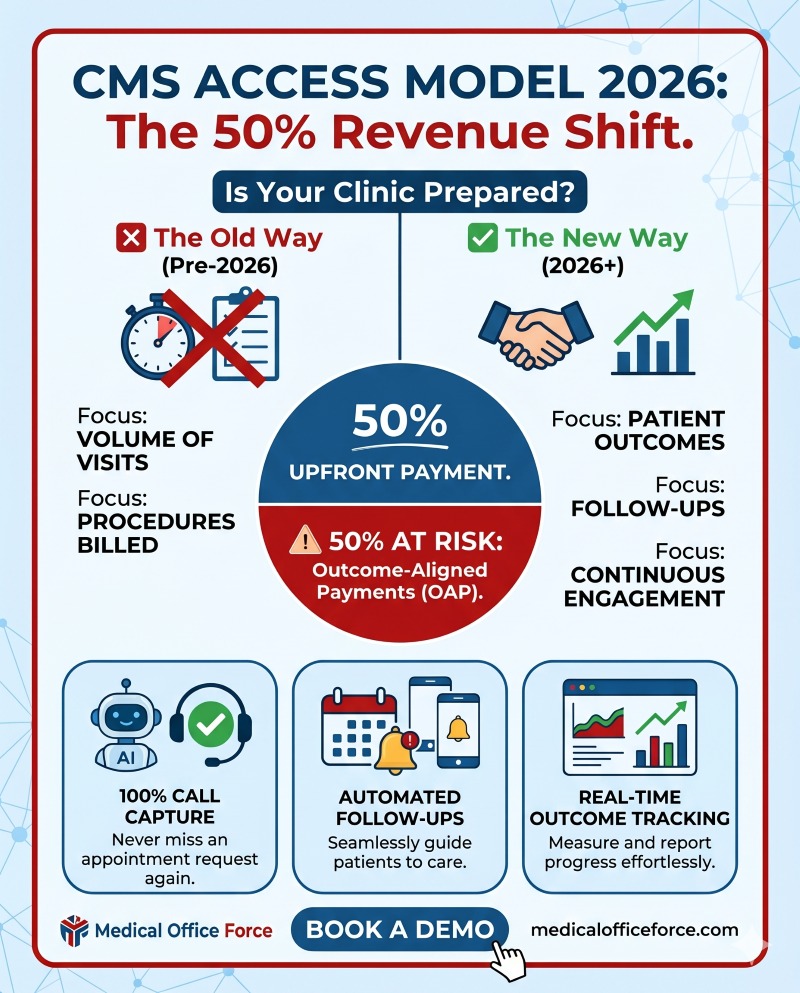
The 50% Revenue Risk Small Practices Can’t Afford to Ignore

The healthcare payment landscape is shifting from “volume” to “value.” With the introduction of the CMS ACCESS Model in 2026, small clinics are no longer just competing on patient care – they are being evaluated on Outcome-Aligned Payments (OAP).

For independent practices, this shift is the difference between financial stability and a 50% revenue loss.

What is the CMS ACCESS Model?

The CMS ACCESS Model is a new value-based care initiative that introduces Outcome-Aligned Payments (OAP). Under this model, up to 50% of clinic revenue is tied directly to measurable patient outcomes, engagement levels, and efficiency metrics.

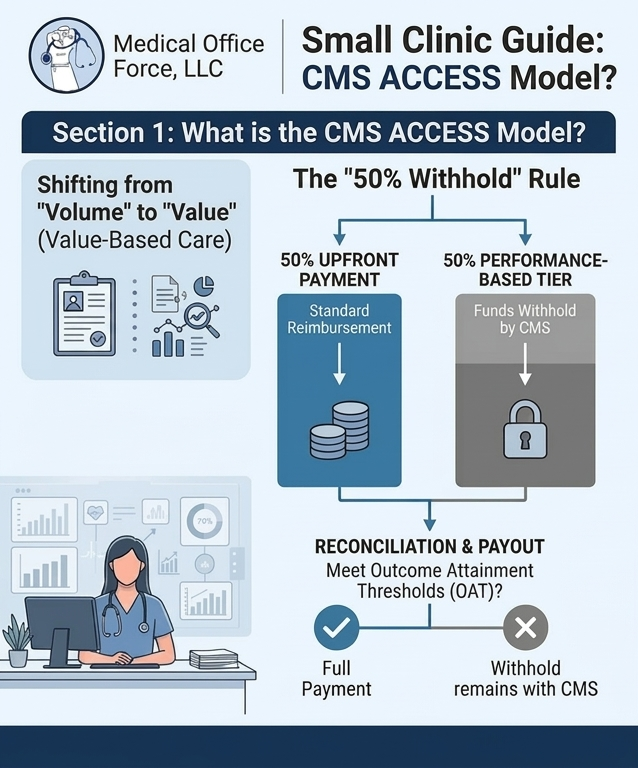
The “50% Withhold” Rule Explained

Unlike traditional fee-for-service models, the ACCESS Model splits payments into two tiers:
[See how these tiers compare to traditional FFS reimbursement models.]

50% Upfront Payment: Standard reimbursement for services rendered.

  1. 50% Performance-Based Tier: Funds held back by CMS and released only if the clinic meets specific Outcome Attainment Thresholds (OAT).
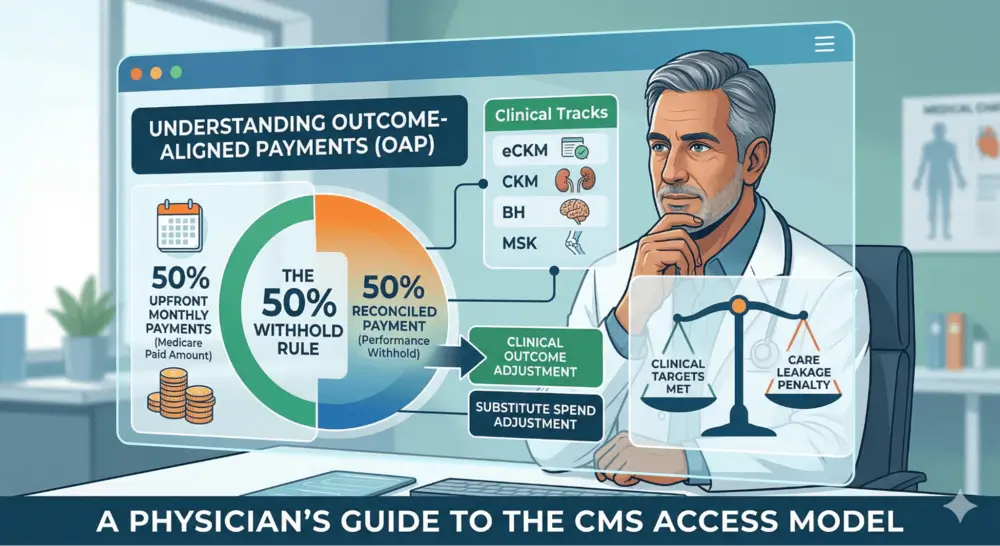
Infographic explaining the CMS ACCESS Model 50% withhold rule, showing the split between upfront payments and performance-based tiers for small clinics.

Key Challenges for Small Clinics in 2026

Large hospital systems have the overhead to manage complex reporting. Small clinics, however, face three critical “Risk Factors”:

      • Staffing Constraints: Limited front-desk support leads to missed calls and delayed follow-ups.
      • Manual Workflows: Reliance on paper or manual data entry results in missed reporting deadlines and inaccurate SST (Substitute Spend Adjustment) tracking.
      • Patient Leakage: When patients seek care outside your network due to slow response times, your clinical control and revenue both drop.

Why Patient Engagement is the Primary Revenue Driver

In an outcome-based economy, Engagement = Revenue. If a patient disengages, your outcomes suffer, and your withheld 50% remains with CMS. The Math of 2026: > Missed Patient Calls = Lower Engagement = Missed Outcomes = Lost Revenue.

How Automation Protects Your Bottom Line

To compete with larger systems, small clinics must adopt AI-driven healthcare automation. This is no longer a luxury; it is a compliance necessity.
      • AI Call Handling: Ensures 100% of patient inquiries are captured.
      • Automated Reminders: Reduces no-shows and improves OAT scores.
      • Integrated Reporting: Syncs clinical outcomes with CMS requirements automatically.

Action Plan: Preparing Your Clinic for the ACCESS Model

      1. Audit Your Communication: Identify your “Missed Call Rate.” Every missed call is a threat to your OAP.
      2. Digitize Patient Follow-ups: Implement automated systems to track care continuity.
      3. Monitor OAT Monthly: Do not wait for year-end reports. Use real-time dashboards to track performance.
      4. Eliminate Care Leakage: Use tech-enabled engagement to keep patients within your practice ecosystem.
Infographic showing a 50% revenue risk under the CMS ACCESS model

The Opportunity: Agility Over Scale

The CMS ACCESS Model rewards agility. Small clinics that leverage technology can respond faster, build deeper patient relationships, and maintain higher engagement rates than bloated hospital systems.

Conclusion: Adapt or Fall Behind

The CMS ACCESS Model is a fundamental shift in healthcare economics. By investing in patient engagement and AI-driven automation today, your clinic can secure its financial future and outperform the competition.

Frequently Asked Questions (FAQ)

How does the CMS ACCESS Model affect small clinic revenue?

It places up to 50% of total revenue at risk. This “withhold” is only paid out if the clinic meets specific patient outcome and engagement targets.

What is Outcome-Aligned Payment (OAP)?

OAP is a payment structure where a significant portion of reimbursement is tied to the quality of care and patient health results rather than the number of visits.

How can AI help clinics with the ACCESS Model?

AI handles high-volume tasks like patient scheduling, follow-up reminders, and data tracking, ensuring the clinic hits the engagement metrics required to trigger full payment.

Optimize Your Revenue with Medical Office Force

Stop losing revenue to missed calls and manual processes. Medical Office Force specializes in helping small clinics navigate the CMS ACCESS Model.

      • Zero Missed Calls
      • Automated Patient Engagement
      • Reduced Care Leakage

Book Your CMS Readiness Demo Today

A Complete Guide to CMS ACCESS Model Outcome-Aligned Payments (OAP)

cms access model payment oap explained

A Complete Guide to CMS ACCESS Model Outcome-Aligned Payments (OAP)

CMS ACCESS Model Payment Explained: A Physician’s Guide to Outcome-Aligned Payments (OAP)

  • Subodh K. Agrawal, MD, FACC

    Medical Director, Medical Office Force LLC | Athens, Georgia
    Alumnus: SMS Medical College, Emory University, University of Alabama at Birmingham

What is the CMS ACCESS Model Payment Structure?

Summary: The CMS ACCESS Model replaces fee-for-service volume with Outcome-Aligned Payments (OAP), where up to 50% of revenue is tied to hitting clinical targets over a 12-month care period.

              • Patient engagement directly impacts financial success
              • Reporting compliance is critical
              • Technology adoption is essential for scalability

The Centers for Medicare & Medicaid Services (CMS) is reshaping reimbursement with the ACCESS Model, starting July 2026. This system introduces Outcome-Aligned Payments (OAP), a system that rewards physicians based on measurable patient outcomes rather than the sheer volume of services provided.

If you’re new to the model, start with our complete guide on what the CMS ACCESS Model is.

As a practicing cardiologist, I know that a “new payment model” often translates to an added administrative burden. However, understanding how OAP payments work is the only way to protect your practice’s cash flow while delivering high-quality, coordinated care.

What Are Outcome-Aligned Payments (OAP)?

Outcome-Aligned Payments (OAP) are recurring, per-beneficiary payments designed to incentivize clinical success. 

Under this model, CMS pays for results, such as:

      • Improved patient outcomes: (e.g., Systolic Blood Pressure < 130 mmHg).
      • Patient Engagement: Reducing “care leakage” to outside providers.
      • Integrated Care: Managing comorbidities across cardio, kidney, and metabolic tracks.

This marks a major shift from traditional systems. You can explore our deep dive into CMS ACCESS Model vs. Fee-for-Service (FFS) here.

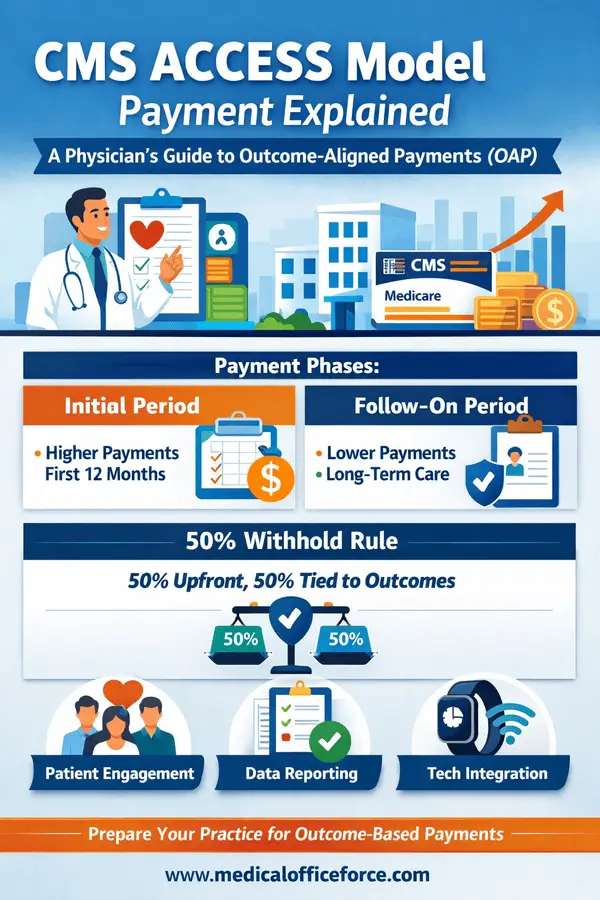
CMS ACCESS Model payment infographic showing Outcome-Aligned Payments OAP, 50 percent withhold rule, clinical tracks CKM eCKM BH MSK, and performance-based reimbursement

How the ACCESS Model Payment Structure Works

The ACCESS Model divides payments into two key phases:
  1. Initial Period (First 12 Months): 
  • Higher reimbursement tier
  • Covers onboarding, care coordination, and early clinical improvement
  • Focused on achieving the first measurable patient outcome 
  1. Follow-On Period: 
  • Lower ongoing payments
  • Focuses on maintaining patient stability and long-term outcomes

Table 1: Annual Allowed Amounts (80% Medicare / 20% Coinsurance)

Clinical Track Initial Period (Annual) Follow-On Period (Annual)
Early Cardio-Kidney-Metabolic (eCKM) $360 $180
Cardio-Kidney-Metabolic (CKM) $420 $210
Behavioral Health (BH) $180 $90
Musculoskeletal (MSK) $180 N/A (No Follow-On)

NOTE: 

For eCKM and CKM patients in rural areas, CMS adds a $15 fixed payment during the Initial Period to offset the costs of distributing connected devices like blood pressure cuffs and wearables.

The 50% Withhold Rule: Your Practice’s Risk vs. Reward

The most critical detail for practice managers is the 50% withhold. CMS pays only half of the Medicare portion monthly; the rest is reconciled after 12 months.

To receive that second 50%, practice must meet the two targets:

      1. Outcome Attainment Threshold (OAT): 50% Target
        At least 50% of your aligned patients must meet their clinical goals (e.g., 15 mmHg SBP reduction or 1% HbA1c drop).
      2. Substitute Spend Adjustment (SST): 90% Threshold
        This penalizes “care leakage.” If your patients seek defined “substitute” services from outside providers above the 90% threshold, your reconciled payment is reduced.

Dr. Agrawal’s Insight: From my experience at Emory and UAB, I’ve seen how patient leakage happens when communication breaks down. In this model, if a patient goes elsewhere for a psych eval or a device setup that you were supposed to coordinate, it costs you directly.

Reporting Requirements in the ACCESS Model

Data compliance is now a prerequisite for payment. Timely reporting is critical for maintaining eligibility and payments.

      • Baseline Data:
        Must be submitted via FHIR API within 60 days of alignment. Miss this, and the patient is unaligned, meaning you cannot bill.
      • Quarterly Reporting:
        Required every 70–110 days to maintain active billing status.
      • End-of-Period Reporting:
        For MSK and Behavioral Health tracks
        → Success can be reported at 180 days
        → Continued payments if patient remains stable
CMS ACCESS Model payment infographic showing Outcome-Aligned Payments OAP structure, 50 percent withhold rule, and value-based care workflow.

Challenges Physicians Will Face

Transitioning to the ACCESS Model comes with operational challenges:

      • Increased data tracking requirements
      • Higher dependency on technology systems
      • Risk of patient leakage affecting revenue
      • Administrative complexity in reporting

How to Succeed Under the ACCESS Model

To thrive under this payment structure, practices must shift from reactive to proactive engagement.

Key strategies:

      • Automate Outreach: You cannot manually call every patient to check their BP. You need AI-driven systems (Implement automated patient communication systems).
      • Remote Patient Monitoring (RPM): Use the rural add-on to fund the devices that provide the data you need for the OAT (Invest in remote patient monitoring (RPM))
      • Clinical Oversight: Ensure your Medical Director is reviewing outcomes quarterly, not just at the end of the year.
      • AI Call Handling: Use AI-driven call handling to reduce missed patient interactions.

Why Patient Engagement is Critical in OAP Models

Under Outcome-Aligned Payments, success depends on keeping patients consistently engaged.

If patients:

      • Miss follow-ups
      • Seek care elsewhere
      • Drop off from care plans

→ Your performance metrics and payments might suffer.

Expert Insight from Dr. Agrawal

This model makes active care delivery non-negotiable.

If you lose track of a patient and they receive care elsewhere, it’s not just a clinical gap, it’s a direct financial loss under the reconciliation model.

Conclusion: Opportunity or Risk?

The CMS ACCESS Model is a fundamental shift. For physicians in Georgia and across the country who are willing to embrace tech-enabled care, it offers: 

      1. a predictable, 
      2. monthly revenue stream. 

For those who stay with manual processes, the 50% withhold represents a significant financial risk.

FAQ: CMS ACCESS Model Payment

What is CMS ACCESS Model payment?
It is a value-based payment system where physicians are reimbursed based on patient outcomes instead of service volume.

What are Outcome-Aligned Payments (OAP)?
OAPs are payments tied to achieving measurable clinical improvements in patients.

What is the 50% withhold rule?
CMS pays 50% upfront and holds the rest until performance metrics are met at the end of the care period.

What happens if reporting deadlines are missed?
Patients may become unaligned, and providers may lose the ability to bill for their care.

How can practices improve ACCESS Model performance?
By improving patient engagement, reducing care gaps, and adopting technology solutions for communication and monitoring.

Call to Action (CTA)

If your practice is preparing for the CMS ACCESS Model, now is the time to strengthen your patient engagement and communication strategy.

At Medical Office Force, we help healthcare providers:

      • Reduce missed patient calls
      • Improve care continuity
      • Increase patient engagement
      • Support value-based care success

Book a Demo Today and see how our AI-powered voice solutions can help you succeed under outcome-based payment models.

References

What is CMS ACCESS (Advancing Chronic Care with Effective, Scalable Solutions) Model?

What is CMS ACCESS (Advancing Chronic Care with Effective, Scalable Solutions) Model?

  • Subodh K. Agrawal, MD, FACC

    Medical Director, Medical Office Force LLC | Athens, Georgia
    Alumnus: SMS Medical College, Emory University, University of Alabama at Birmingham

Summary

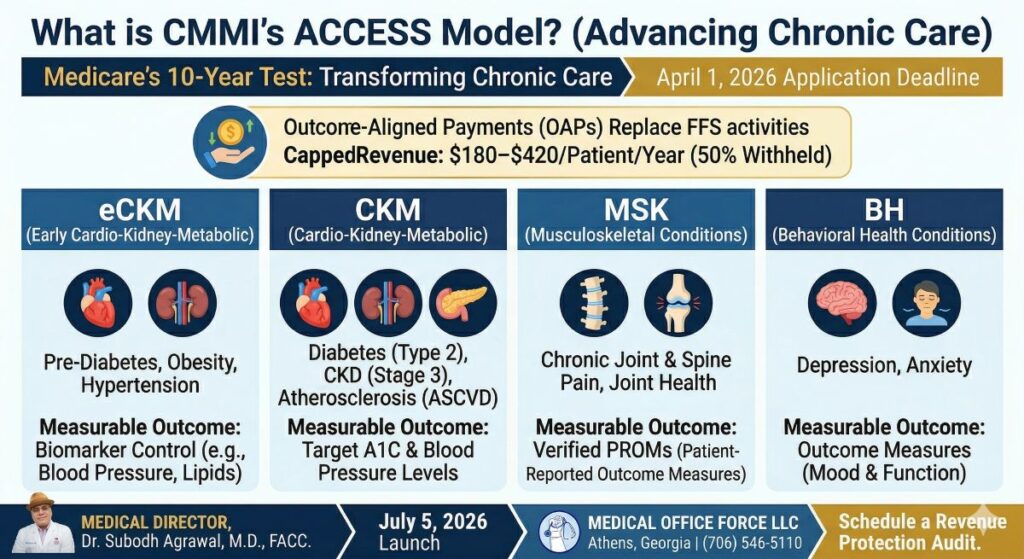
The ACCESS Model is a 10-year voluntary Medicare initiative designed to scale chronic care management through technology and Outcome-Aligned Payments (OAP). According to the official CMS ACCESS Model overview, it focuses on four clinical tracks and ties 50% of reimbursement to measurable clinical improvements.

The CMS Innovation Center (CMMI) introduced the Advancing Chronic Care with Effective, Scalable Solutions (ACCESS) Model to transform how Medicare beneficiaries with chronic conditions receive care. This model moves away from Fee-For-Service (FFS) toward a “scalable,” digital-first approach.

The 4 Clinical Tracks of the ACCESS Model

The model is structured around four distinct tracks. Practices can participate in one or more, depending on their specialty:

  • Early Cardio-Kidney-Metabolic (eCKM): Focuses on hypertension, obesity, and pre-diabetes management.

  • Cardio-Kidney-Metabolic (CKM): Designed for patients with established heart disease, CKD (Stage 3), and Type 2 diabetes.

  • Musculoskeletal (MSK): Targets chronic pain and joint health management.

  • Behavioral Health (BH): Focuses on depression, anxiety, and integrated mental health care.

The Payment Logic: How Do OAPs Work?

The ACCESS model utilizes Outcome-Aligned Payments (OAPs) instead of traditional care management codes (like CCM or RPM). As detailed in the CMS Financial Structure and Clinical Performance guide, the payments are two-tiered:

  • Year 1 (Initial Year): A higher payment range ($180 – $420 per patient) to cover technology onboarding.

  • Follow-on Years: A lower maintenance payment range ($90 – $210 per patient).

  • The 50% Clinical Outcome Adjustment: CMS withholds half of the payment, only releasing it if specific benchmarks (like blood pressure or A1C control) are met.

Key Deadlines for 2026

  • April 1, 2026: Application deadline for the first cohort.

  • July 5, 2026: Official launch of the first performance year.

  • 2033: Expected conclusion of the 10-year test period.

Frequently Asked Questions (FAQ)

How does ACCESS coordinate with my Primary Care Provider?

The model is designed to complement traditional care. Referring clinicians can receive electronic updates on patient progress and may bill a new co-management payment for reviewing these updates and coordinating care.

What are the technical requirements for participants?

Organizations must use secure, interoperable systems, including CMS APIs for enrollment and reporting. They must also designate a physician Clinical Director to oversee quality and compliance. Learn more about IT Infrastructure Support here.

What is the “FFS Exclusion Policy”?

CMS prevents “double-dipping.” If a patient is aligned with an ACCESS participant for a specific condition, other providers cannot bill overlapping services like Chronic Care Management (CCM) or Remote Patient Monitoring (RPM) for that same condition.

Strategic Verdict

The ACCESS model offers massive scale but creates a significant revenue gap for traditional clinics. Before transitioning, you must analyze your billing data.

For a deeper look at the $2,000 revenue gap this model creates, read our full analysis on High-Touch vs. High-Tech Scale here.

Schedule a Revenue Protection Audit today to see how your practice can survive these Medicare changes.

CMS ACCESS Model vs FFS and the $2,000 Revenue Gap Explained

High-Touch Healing vs. High-Tech Scale: Navigating Medicare’s New ACCESS Model

CMS ACCESS Model vs FFS and the $2,000 Revenue Gap Explained

CMS ACCESS Model vs FFS: Financial Impact, ROI, and Practice Survival Guide (2026)

  • Subodh K. Agrawal, MD, FACC

    Medical Director, Medical Office Force LLC | Athens, Georgia
    Alumnus: SMS Medical College, Emory University, University of Alabama at Birmingham

Executive Summary for Practice Leaders

The CMS ACCESS Model (Advancing Chronic Care with Effective, Scalable Solutions) is a 10-year Medicare initiative launching July 5, 2026. It replaces traditional fee-for-service Chronic Care Management (CCM) with Outcome-Aligned Payments (OAPs). While current models generate ~$2,455 per patient annually, the ACCESS Model caps payments at $180–$420, with 50% of revenue withheld based on clinical performance. This guide analyzes the ROI and the “FFS Exclusion Policy” for independent practices.

CMS ACCESS Model vs FFS Model: Key Differences

The CMS ACCESS Model and the traditional Fee-for-Service (FFS) model differ fundamentally in reimbursement and care delivery.

FFS pays providers for time, services, and procedures such as Chronic Care Management (CCM) and Remote Patient Monitoring (RPM). In contrast, the ACCESS Model uses Outcome-Aligned Payments (OAPs), offering a fixed annual payment of approximately $180 to $420 per patient, with up to 50% withheld based on clinical performance.

This represents a shift from volume-based reimbursement to performance-based care.

For over 30 years, you have been the cornerstone of healthcare in your community. At practices Athens Heart Center and Specialty Clinic, you have guided patients through life-altering diagnoses, celebrated their victories, and practiced the kind of high-touch, preventive care that requires deep trust, face-to-face connection, and personalized counseling. You championed the transition to Accountable Care Organizations (ACOs) and Advanced Primary Care Management (APCM) because they aligned with your core philosophy: investing time in keeping patients healthy.

Now, the Centers for Medicare & Medicaid Services (CMS) is introducing the Advancing Chronic Care with Effective, Scalable Solutions (ACCESS) model. Set to run over the next 10 years, ACCESS model represents a fundamental shift in how Medicare envisions the future of chronic care.

If your clinic is evaluating whether to join CMS Medicare the ACCESS model or maintain your current high-touch ACO framework, you must understand exactly what is changing clinically, what might be lost emotionally, and the stark reality of the financial reimbursement.

The Shift: From Paying for Time to Paying for Automated Outcomes

The ACCESS model is designed to expand technology-supported care for Medicare beneficiaries living with chronic conditions. Instead of paying for individual face-to-face services or the time your staff spends managing care, ACCESS tests Outcome-Aligned Payments (OAPs).

Medicare’s intention is clear: to promote access by encouraging large healthcare systems and digital-first venture companies to automate care at a massive scale. By relying on telehealth software, wearable monitors, and AI-driven coaching apps, these large entities can efficiently manage thousands of patients for a bundled rate of roughly $180 to $420 per year, per patient. Full payment is tied to achieving a measurable clinical improvement (e.g., a drop in blood pressure or A1C), with up to 50% of the payment withheld if the metric is not met.

What Patients Will Lose in the Automated Care Model

While the CMS ACCESS Model offers incredible scalability and convenience, it fundamentally alters the traditional doctor-patient dynamic:

    • The End of “High-Touch” Medicine: In a highly automated ACCESS environment, continuous remote monitoring and AI text nudges replace the physical reassurance of an office visit. Patients may lose the profound psychological comfort of sitting across from a doctor who has known their family for decades.
    • The Nuance of Healing: Algorithms are excellent at tracking data, but they cannot read body language, hold a patient’s hand after a difficult diagnosis, or navigate the complex emotional barriers to lifestyle changes.
    • Care Fragmentation: Patients may be aligned with a third-party digital health company for their ACCESS track. This shifts the daily management of their chronic disease away from your clinic, fragmenting the holistic care you have provided for years.

The Financial Reality: FFS/ACO vs. The ACCESS Model

The most critical difference for your practice’s survival is the Return on Investment (ROI) and the cost of delivering care. Under the ACCESS model, CMS applies an “FFS exclusion policy.” If a patient is aligned with an ACCESS participant for a specific track, you cannot bill overlapping Chronic Care Management (CCM) or Remote Patient Monitoring (RPM) codes for that condition.

Table 1: Procedures Paid in FFS but Bundled (Not Paid) in ACCESS
Procedure / Service Category Traditional FFS / ACO CPT Codes (Paid Separately) Under the ACCESS Model (OAP)
Remote Patient Monitoring (RPM) 99453, 99454, 99457, 99458 Bundled / Not Paid. Device cost and monitoring time are absorbed into the fixed annual OAP.
Chronic Care Management (CCM) 99490, 99439, 99491, 99487 Bundled / Not Paid. Time spent managing the aligned condition generates no extra revenue.
Principal Care Management (PCM) 99424, 99425, 99426, 99427 Bundled / Not Paid for the specific condition tracked under the ACCESS model.
Behavioral Health Integration 99484, 99492, 99493 Bundled / Not Paid if the patient is aligned to the ACCESS Behavioral Health track.

To understand the ROI, let us look at a highly engaged, complex Medicare patient with uncontrolled diabetes and hypertension over a 12-month period, requiring 40 minutes of CCM and active RPM monthly.

Table 2: Total Annual Reimbursement Comparison
Service / Billing Code (12-Month Period) Traditional High-Touch FFS/ACO Model CMMI ACCESS Model (Outcome-Aligned Payment)
Initial Setup & Education (CPT 99453) $19 (Billed once) $0 (Bundled)
Device Supply & Transmission (CPT 99454) $552 (~$46/mo x 12 months) $0 (Bundled)
RPM Monitoring: First 20 mins (CPT 99457) $576 (~$48/mo x 12 months) $0 (Bundled)
CCM Management: First 20 mins (CPT 99490) $744 (~$62/mo x 12 months) $0 (Bundled)
CCM Management: Addl. 20 mins (CPT 99439) $564 (~$47/mo x 12 months) $0 (Bundled)
Base Annual Payment for Scale/Tech $0 (Not applicable in FFS) $180 to $420 (Based on year and outcomes)
TOTAL ANNUAL REIMBURSEMENT ~$2,455 per patient (Guaranteed by time/work) $180 to $420 per patient (Tied strictly to metrics)

The financial contrast is intentional. FFS pays roughly $2,455 to fund the heavy overhead of nurses and your clinic’s human labor. The ACCESS model pays a maximum of $420 because it assumes software and data automation will do the heavy lifting, effectively requiring clinics to manage 5 to 6 times the patient volume just to break even.

What is the Difference Between CMS ACCESS Model and FFS?

The primary difference between the CMS ACCESS Model and the Fee-for-Service (FFS) model is how providers are paid.

FFS reimburses based on services and time spent delivering care, while the ACCESS Model provides fixed payments tied to patient outcomes, with significant financial risk if targets are not achieved. 

5 Self-Assessment Questions for Your Practice

Before adopting the CMMI ACCESS Model, consider:

1. What is my operational infrastructure? Do I have the massive IT support and capital to automate care for thousands of patients at $420/year, or is my clinic built to sustain high-touch human intervention?

2. What do my patients truly value? Will my veteran patients feel cared for by an algorithmic health coach, or do they rely heavily on our physical office visits for peace of mind?

3. Am I comfortable with metric-based risk? Am I willing to accept a model where up to 50% of my chronic care revenue is withheld if a patient fails to hit a specific biometric target?

4. Can my practice survive the reimbursement cliff? Can we afford to lose the $2,000+ per patient generated by CCM and RPM if those patients are enrolled in ACCESS?

5. Where do I find professional fulfillment? Do I derive satisfaction from face-to-face healing, or from overseeing population-level data dashboards?

7 FAQs: FFS/ACO vs. The ACCESS Model

    1. Why does the traditional FFS/ACO model reimburse over $2,400 while ACCESS caps at $420?

FFS reimburses for the human cost of care – paying for the time your nurses and staff spend on the phone and in the clinic. ACCESS pays for software efficiency. The lower payment reflects Medicare’s expectation that AI and automation will do the vast majority of the work.

    1. What is the Return on Investment (ROI) for an independent clinic joining ACCESS?

For a traditional clinic, the ROI in ACCESS is often negative unless they completely restructure your revenue cycle. You cannot pay clinical staff salaries on $420 a year per complex patient. A positive ROI requires managing tens of thousands of patients with minimal human touch.

    1. What is the cost of implementing the ACCESS program?

High upfront costs. You must invest heavily in proprietary software, remote monitoring logistics, and centralized data management teams capable of handling asynchronous data 24/7.

    1. What is the main clinical advantage of each model?

The ACCESS Model advantage is scale and reach, easily connecting rural patients to automated monitoring. The FFS/ACO advantage is depth and nuance, highly effective for complex, multi-morbid patients who require holistic, customized human oversight.

    1. What happens if a patient fails to reach their target metric?

In the traditional model, you are paid for the E&M work and time spent trying to help them. In the ACCESS model, because it utilizes Outcome-Aligned Payments, up to 50% of your reimbursement is withheld.

    1. If a large health system down the street joins ACCESS, what happens to my practice?

If your patients enroll in the large system’s ACCESS track, that system becomes their digital chronic care manager. Due to the FFS exclusion policy, your practice will no longer be able to bill Medicare for overlapping CCM or RPM services for those patients.

    1. Which organization is most likely to choose which model?

    • Traditional ACO/FFS: Independent practices, specialty clinics (like Athens Heart Center), and veteran physicians who prioritize patient relationships and need the $2,400+ reimbursement to fund clinical staff.
    • ACCESS Model: Massive, multi-state hospital systems, insurance companies, and venture-backed digital health startups that have the capital to build automated tech platforms and capture massive patient volume to offset the low per-patient fees.

Final Verdict: The Future of Medicare Chronic Care Programs

The CMS ACCESS Model signals a major transformation in Medicare chronic care programs.

It prioritizes:

      • Scale
      • Efficiency
      • Measurable outcomes

But it also challenges:

      • Independent practices
      • High-touch care models

# The future of healthcare may lie in balancing:
High-tech scalability with high-touch human care

Conclusion

The Medicare ACCESS Model is not just a payment reform, it’s a complete redesign of chronic care delivery under a value-based care CMS model.

For some organizations, it offers massive scale.
For others, it introduces significant financial and clinical challenges.

Understanding the trade-offs is essential before making the transition.

Don’t Navigate the ACCESS Shift Alone.

The $2,400 per-patient gap is real, but your clinical value is irreplaceable. Medical Office Force helps independent practices like Athens Heart Center optimize their existing FFS/ACO revenue while building the infrastructure needed to survive the next decade of Medicare reform.

Schedule a Revenue Protection Audit

The $100M Pivot: Why Centers for Medicare & Medicaid Services Just Supercharged Chronic Care Management

The $100M Pivot: Why Centers for Medicare & Medicaid Services Just Supercharged Chronic Care Management

  • Subodh K. Agrawal, MD, FACC

    Medical Director, Medical Office Force LLC | Athens, Georgia
    Alumnus: SMS Medical College, Emory University, University of Alabama at Birmingham

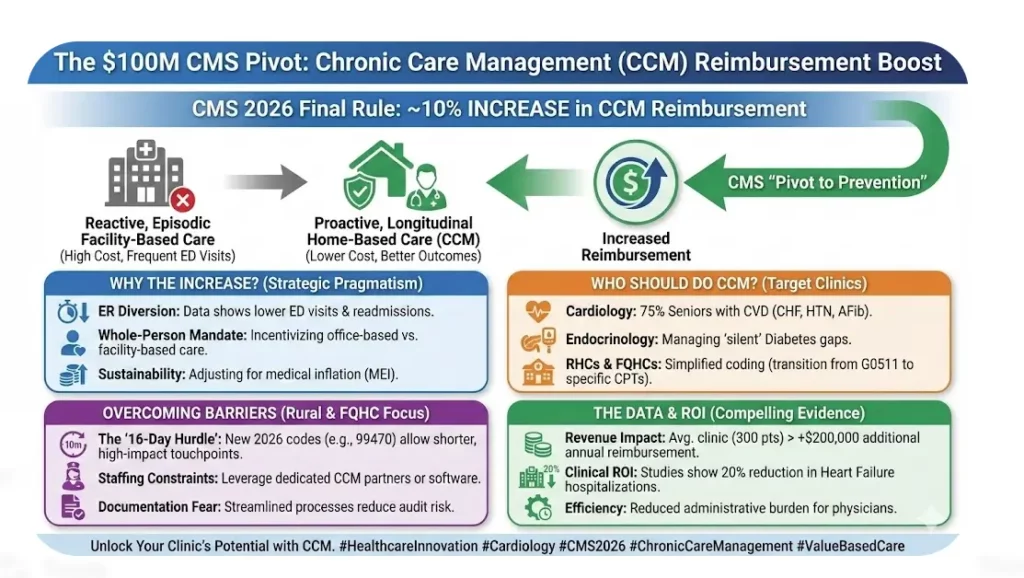
For months, healthcare leaders prepared for tightening Medicare margins. Instead, the 2026 Final Rule introduced a strategic shift that many practices have underestimated. The Centers for Medicare & Medicaid Services increased reimbursement for Chronic Care Management by nearly 10 percent. This is more than a rate adjustment. It is a clear signal about how care delivery will be valued moving forward.

For years, CCM has existed in the background. Many clinics viewed it as optional or administratively heavy. In reality, it has now become one of the most stable and predictable revenue streams available to practices managing complex Medicare populations.

Why CMS Made This Move

The logic is economic and clinical. Proactive care costs less than reactive care.

Patients enrolled in structured Chronic Care Management programs consistently demonstrate lower emergency department utilization and fewer hospital readmissions. When chronic conditions such as heart failure, diabetes, hypertension, or atrial fibrillation are monitored between visits, complications are addressed earlier. Medication adherence improves. Small issues are managed before they escalate into hospital level events.

CMS is not simply increasing payment. It is redirecting the healthcare system away from episodic, facility centered care and toward continuous, office based longitudinal management.

Another driver is sustainability. Medical Economic Index growth continues to pressure practice expenses. Staffing costs, technology investments, compliance demands, and reporting obligations have all increased. Visit based reimbursement alone cannot sustain complex panels of elderly patients with multiple comorbidities. By strengthening CCM rates, CMS is acknowledging the real work required between face to face visits.

Cardiology: The Strategic Advantage

While primary care traditionally leads CCM adoption, cardiology is uniquely positioned to benefit under the new framework.

Nearly three quarters of seniors live with some form of cardiovascular disease. Conditions such as congestive heart failure, coronary artery disease, hypertension, and atrial fibrillation require constant oversight. Medication titration, symptom tracking, lifestyle reinforcement, and coordination with primary care are ongoing processes.

Cardiologists already manage this complexity. CCM simply formalizes and reimburses the time spent doing it.

Instead of uncompensated follow up calls, medication checks, and coordination efforts, practices can structure monthly care management protocols that improve patient engagement and generate predictable recurring revenue. In a specialty heavily impacted by Medicare reimbursement shifts, CCM can act as a stabilizing financial pillar.

The Rural and FQHC Opportunity

Rural Health Clinics and Federally Qualified Health Centers stand at an important inflection point. Historically, many relied on broad bundled codes that did not fully reflect the intensity of chronic care management work. The transition away from older structures toward specific CPT based billing creates clarity and stronger reimbursement alignment.

Yet adoption in rural settings has lagged.

Why? Operational friction.

Tracking required time thresholds was viewed as cumbersome. Many clinics lacked a dedicated nurse to handle monthly outreach. Documentation requirements felt intimidating, particularly for lean teams concerned about audit exposure.

The 2026 updates ease some of these barriers. Shorter high impact touchpoints can now qualify under revised structures, reducing the rigidity of previous thresholds. When supported by structured workflows or dedicated CCM software platforms, documentation becomes standardized rather than overwhelming.

For rural clinics operating on thin margins, CCM may represent one of the few scalable revenue enhancements that does not require additional physical infrastructure.

Addressing Common Hesitations

Many physicians remain skeptical. The concerns are familiar.

“We do not have staff.”
“We do not want audit risk.”
“We are already overwhelmed.”

These concerns are valid. However, they reflect workflow design challenges rather than program flaws.

CCM does not require physicians to personally complete every minute of monthly engagement. Clinical staff operating under supervision can perform structured outreach, medication reconciliation, and care plan updates. Documentation templates reduce variability and audit risk. External CCM partners can support outreach if internal staffing is constrained.

The key is operational discipline.

The Financial Case

Consider a mid-sized cardiology clinic with 300 eligible Medicare patients enrolled in CCM. Under updated reimbursement rates, incremental annual revenue can exceed $200,000. This is recurring, predictable income tied directly to patient engagement rather than procedural volume.

In a climate where procedure reimbursement faces volatility, this diversification matters.

But revenue alone should not drive the decision.

The Clinical Return on Investment

Studies consistently demonstrate that structured chronic care management reduces hospitalizations among heart failure populations. When patients receive regular check ins, medication reviews, and early intervention, adverse events decline.

Improved outcomes translate into stronger quality metrics, better patient satisfaction, and alignment with value based payment models. As Medicare continues to emphasize risk adjustment and population health accountability, CCM becomes strategically aligned with broader system direction.

This is not a temporary incentive. It is part of a long term payment transformation.

The Bottom Line

Chronic Care Management is no longer a side program. It is a cornerstone of modern outpatient practice.

The 2026 Final Rule makes one thing clear: CMS intends to fund proactive, coordinated care. Practices that build structured CCM programs will stabilize revenue, strengthen patient relationships, and reduce avoidable acute events.

Those that ignore it will continue absorbing uncompensated care coordination while margins compress.

The pivot has already occurred. The only remaining question is whether your organization is positioned to capitalize on it.

How to Maximize Your Quality Score with Digital Health Solutions

How to Maximize Your Quality Score with Digital Health Solutions

Why Value-based care pays providers for being proactive

The U.S. health care system is undergoing a significant transition from fee-for-service to various forms of value-based care. Programs like MIPS (Merit-Based Incentive Payment System) pay providers for quality outcomes, not just for the patient visit.

This indicates that your MIPS Quality Score has become a direct contributor to your Medicare Part B reimbursement.

High Score = Up to a +9% payment adjustment

Low Score = Up to a -9% payment limit

That represents an 18% swing in revenue, necessitating performance improvement.

The financial reality of a +9% MIPS adjustment.

To understand the impact of a +9% MIPS adjustment, simply use your practice’s historic billings to Medicare Part B. If your practice bills $500,000 to Medicare Part B annually:

* +9% bonus = a +$45,000 incrementally.

* -9% penalty = a -$45,000 decrementally.

That means a $90,000 shift in revenue, solely based on quality and patient outcomes management.

MIPS & Quality Score Penalty (up to 9%)

MIPS is one of the programs launched under the CMS Quality Payment Program (QPP) to reward value and outcomes rather than volume.
Performance is assessed based on four categories, with each category providing a set percentage towards your Quality Score:

Category                                      % Weight

Quality                                              30%

Cost                                                   30%

Promoting Interoperability           25%

Improvement Activities                 15%

The final score determines if you will receive a payment adjustment of either positive, neutral, or negative on your Medicare Part B payments.

If you qualify for the performance year of 2025, and if your score falls below the performance threshold, CMS can impose up to a -9% payment cut on all Medicare Part B payments for the adjustment year! This means that the cut would not just be one time, it would be across the board with all your Medicare Part B payments for the adjustment year.

For example, a small office with $300,000 in Medicare Part B billings per year could be looking at a loss of $27,000.

A large group practice with $1.2M in billings could see a loss of $108,000.

Such losses can be avoided if your practice performs well and submits complete, timely, and accurate data!


Category

%Weight

Quality

30%

Cost

30%

Promoting Interoperability

25%

Improvement Activities

15%

Why Your Quality Score Matters More Than Ever

MIPS not only means avoiding penalties, but it also means being able to build a practice that can flourish in a value-based ecosystem. A higher Quality Score means:

1. Higher reimbursement rates due to positive payment adjustments.

2. Possibly bonus payments for very high performers.

3. Improving patient outcomes and demonstrating that you adhere to pro-quality measures.

4. Improving your practice reputation in an increasingly competitive healthcare market.

Medical Office Force (MOF) helps practices achieve these aspirations through combining industry-leading digital health user experience with human-based performance management. We clarify the complexity of MIPS into a simple and concise roadmap.

Positioning Chronic Care Management for MIPS Success

Chronic Care Management (CCM) is a Medicare benefit that enables providers to bill for the ongoing care management of patients with two or more chronic care conditions.

CCM overlaps nicely with MIPS Quality Measures, such as:   

1. Blood pressure management

2. Diabetes (A1c) management

3. Medication adherence 

4. Decreasing preventable ER visits

If providers implement CCM, there can be ongoing engagement with the patient, and it will also immediately improve your Quality Performance Score, and allow you to qualify for the +9% Medicare bonus reimbursement under MIPS.

The Added Benefits of CCM in a Value-Based Environment

1. Ongoing Accountability for Patients

Monthly engagement allows you to keep the patient engaged and identify a problem before it becomes a large one.

2. Improved Quality Outcomes

 When you are able to manage medication adherence and lifestyle adherence, patients are healthier, and there are fewer hospital transfers or admissions. 

3. Reduction in Readmissions

 If patients are not going to the ER, they are likely happier and satisfied, and your MIPS performance is improved due to a reduction in ED visits.  

4. Monthly Revenue

Average Reimbursement by Medicare is $42-$120 per patient, per month.

Using CCM with Remote Patient Monitoring (RPM) software will maximize positive outcomes for both providers and patients. CCM will allow you to bill, while RPM will allow providers time to collect, analyze, and communicate with patients the following data points: 

1. Blood Pressure 

2. Glucose 

3. Weight 

4. Oxygen Saturation 

If you are capturing data points in real-time (RPM) allows real-time intervention with the patient, supports thorough documentation for MIPS, and displays improved quality measure performance.

Example: Converting Penalties into Bonuses
Imagine you have 200 eligible CCM patients:
CCM revenue: $42 × 12 months × 200 patients = $100,800/year

MIPS score improvement → potential +$45,000 Medicare bonus
Total potential annual income: $145,800

How Medical Office Force Helps You Succeed

At Medical Office Force, we make it easy to add CCM and RPM to your practice. Here is how:

1. Clinical teams to make patient phone calls/care coordination

2. EHR integration for documentation and reporting

3. Compliance to ensure accurate billing and to get ready for an audit

4. Patient engagement for greater enrollment

We help you protect your revenue, improve your MIPS Quality score, and provide better patient outcomes.

Final Thought

CCM and RPM are not just Medicare programs; they are strategies to:

1. Maximize your MIPS Quality Score

2. Achieve the +9% Bonus

3. Provide a higher quality of proactive care

The right approach can mean tens of thousands of dollars in additional revenue, while keeping patients healthier and engaged.

 Ready to future-proof your practice in the value-based care landscape?

Contact Medical Office Force today, and start converting quality measures into revenue growth.

Frequently Asked Questions

What is the MIPS Quality Score?

The MIPS Quality Score is a performance-based score used by CMS to adjust Medicare payments based on quality, cost, interoperability, and improvement activities.

How much can providers gain or lose under MIPS?

Providers can receive up to a +9% bonus or a -9% penalty on Medicare Part B reimbursements based on their performance.

How does CCM improve MIPS performance?

CCM supports continuous patient engagement, improves chronic condition management, and helps meet key quality measures such as blood pressure and diabetes control.

What role does RPM play in MIPS success?

RPM provides real-time patient data, enabling early intervention, better documentation, and improved quality outcomes.

Is MIPS important for small practices?

Yes, MIPS directly impacts Medicare revenue, making it essential for small practices to optimize performance and avoid penalties.

checklist before starting CCM, RPM, or RTM in your practice

7 Things to Check Before Starting CCM, RPM, or RTM

checklist before starting CCM, RPM, or RTM in your practice

7 Things to Check Before Starting CCM, RPM, or RTM in Your Practice

If you’re a doctor or clinic  owner looking to improve patient care and grow your revenue, programs like Chronic Care Management (CCM), Remote Patient Monitoring (RPM), and Remote Therapeutic Monitoring (RTM) are great opportunities. But before you jump in, there are a few things you should check to make sure you’re set up for success.

In this blog, we’ll explain 7 simple things you should check before starting any of these programs.

1. Do Your Patients Qualify?

Before anything else, you need to know which patients are eligible:

-> CCM: Patients must have 2 or more chronic conditions like diabetes, hypertension, or COPD.

-> RPM: Patients must need regular health monitoring using a device.

-> RTM: Great for patients with muscle, joint, or lung issues who need help following therapy plans using apps.

Why this matters: If a patient doesn’t qualify, Medicare or insurance may not pay you.

Look through your EHR and flag eligible patients. Most clinics already have dozens of patients who qualify but haven’t been enrolled yet.

2. Pick the Right Technology

The success of CCM, RPM, and RTM depends heavily on good technology. You need tools that:

1. They are easy for patients to use

2. Track and record time spent with patients

3. Send alerts when something needs attention

4. Are HIPAA compliant and secure

For RPM, make sure the device works automatically

For RTM, make sure the app helps patients report how they’re feeling and if they’re following therapy.

 Ask for a demo before you commit. A confusing system = frustrated staff and patients.

3. Train Your Team

Even with the best tech, your program won’t work if your team isn’t ready. Make sure to:

  • Train nurses and staff on what each program is
  • Show them how to track time, check data, and follow up
  • Explain what to do when a reading is too high or too low

Assign a CCM/RPM coordinator who can manage communication with patients and track monthly time.

4. Understand How You Get Paid

These programs pay you based on time and service. Here’s a rough idea:

-> CCM: Up to $110/month per patient

-> RPM: Up to $62/month per patient

-> RTM: Up to $93/month per patient

But you must:

1. Track time correctly (minimum of 20 minutes for CCM and 16 days of data for RPM)

2. Use the correct CPT billing codes

3. Get patient consent (usually verbal or written)

4. Compliant report generation monthly

Talk to your billing team or partner with a company that specializes in these services to avoid mistakes.

5. Help Patients Understand and Join

Many patients won’t know what CCM, RPM, or RTM means. Make it simple:

1. Explain that it’s a monthly check-in or health support service

2. Show them the device or app they’ll use

3. Let them know it helps keep them out of the hospital

Have a friendly team member walk them through it. Give them a printout or video that explains what they’re signing up for. 

Medical Office Force will help with onsite registration and patient education to keep your staff focused on your practice. 

For older patients, offer to help them set up the device or app during a visit.

6. Keep Good Records

If you’re billing Medicare, you need to keep records of:

1. Patient consent

2.Time spent on care coordination or reviewing data

3. Any actions you take (calls, alerts, medication reviews)

If you don’t have proof, you could fail an audit and have to return payments.

Use software that automatically tracks everything. It saves time and keeps you safe.

7. Decide: Do It Yourself or Get Help?

Running these programs in-house takes time, people, and tools. If you’re already busy, consider outsourcing to experts.

You can:

1. Do everything in-house

2. Get help from a CCM/RPM service provider (like Medical Office Force)

3. Start small and grow over time

 Outsourcing can help you launch faster with fewer headaches, especially at the start.

Frequently Asked Questions

Q: Who qualifies for Chronic Care Management (CCM)?
A: Medicare patients with two or more chronic conditions expected to last at least 12 months – such as diabetes, hypertension, or COPD – qualify for CCM, provided their conditions place them at significant risk of death, acute exacerbation, or functional decline.

Q: What is the difference between RPM and RTM?
A: RPM (Remote Patient Monitoring) tracks physiological data like blood pressure and glucose readings using connected devices; RTM (Remote Therapeutic Monitoring) tracks therapy adherence and response for musculoskeletal or respiratory conditions using apps or digital tools – both are separately billable under Medicare.

Q: How many days of data are required to bill RPM under Medicare?
A: Medicare requires a minimum of 16 days of device data transmission within a 30-day period to bill CPT 99454 under RPM; the new 2026 code 99445 now allows billing for shorter 2–15 day monitoring windows.

Q: Is patient consent required before starting CCM or RPM?
A: Yes – CMS requires documented patient consent (verbal or written) before initiating CCM or RPM services; patients must be informed of applicable cost-sharing and their right to stop participating at any time.

Q: Can RPM documentation be audited by Medicare?
A: Yes – the HHS Office of Inspector General has formally recommended additional Medicare oversight of RPM billing; practices must maintain documented proof of consent, device data transmission days, and time spent on care management to withstand an audit.

Q: Should a small practice outsource CCM and RPM management?
A: Outsourcing is often the faster, lower-risk path for small practices – it eliminates the need to hire dedicated coordinators, invest in compliance infrastructure, and stay current with CMS billing updates, while allowing practices to launch programs within weeks rather than months.

Final Thoughts

CCM, RPM, and RTM can truly change the way your practice works:

1. Better patient care

2. Fewer hospital visits

3. More monthly revenue

But success depends on proper planning.

1. Check patient eligibility

2. Choose smart tools

3. Train your team

4. Understand billing

5. Help patients onboard

6. Track everything

7. Know when to outsource

Need help getting started? Medical Office Force offers full support to help you launch, manage, and grow your remote care programs. Let’s work together to make it easy and profitable!

Visit www.medicalofficeforce.com to learn more.

References

Why Chronic Care Management (CCM) Programs Fail—And How Medical Office Force Ensures Success

Why Chronic Care Management (CCM) Programs Fail—And How Medical Office Force Ensures Success

Why Chronic Care Management (CCM) Programs Fail—And How Medical Office Force Ensures Success

Introduction

Chronic Care Management (CCM) programs are designed to enhance care coordination and improve outcomes for patients with multiple chronic conditions. Despite their potential benefits, many CCM initiatives face challenges that hinder their effectiveness. Understanding these common pitfalls is essential for healthcare providers aiming to implement successful CCM services.

1. Insufficient Staffing and Resources

Effective CCM requires dedicated staff to manage patient care plans, monitor progress, and ensure compliance with program requirements. Many practices underestimate the resources needed, leading to overburdened staff and compromised patient care. A care manager may need to dedicate at least 20 minutes per patient per month, which can accumulate to significant time commitments when managing multiple patients.

How Medical Office Force Helps:
Medical Office Force offers virtual staffing solutions and streamlined workflows that alleviate the administrative burden on healthcare providers. By handling time tracking, care plan documentation, and patient communication, they enable practices to focus on delivering quality care without overextending their staff. Medical Office Force Medical Flow Medical Office Force

2. Lack of Patient Enrollment and Engagement

Identifying and enrolling eligible patients is a critical step in CCM. However, practices often fail to effectively communicate the benefits of the program, leading to low enrollment rates. Additionally, maintaining patient engagement over time is challenging, especially if patients do not perceive immediate benefits.

How Medical Office Force Helps:
Medical Office Force employs personalized outreach strategies and continuous engagement tools to educate patients about the benefits of Chronic Care Management (CCM). Their approach ensures higher enrollment rates and sustained patient participation, leading to better health outcomes. Medical Flow

3. Inadequate Understanding of Program Requirements

CCM programs have specific guidelines and documentation requirements set by the Centers for Medicare & Medicaid Services (CMS). A lack of understanding of these requirements can lead to non-compliance, billing issues, and ultimately, program failure. Proper training and education for staff are essential to navigate these complexities.

How Medical Office Force Helps:
With over 25 years of billing experience, Medical Office Force ensures accurate and timely billing by handling the appropriate CPT codes on behalf of partnered practices. The expertise minimizes compliance risks and optimizes revenue 

4. Resistance to Change and Workflow Integration

Implementing CCM often requires changes to existing workflows and the adoption of new technologies. Staff may resist these changes, especially if they perceive them as adding to their workload without clear benefits. Without proper change management strategies, integrating CCM into daily operations can be problematic.

How Medical Office Force Helps:
Medical Office Force provides healthcare IT solutions that seamlessly integrate with existing systems, minimizing disruption. The user-friendly platforms facilitate smooth adoption, ensuring staff can efficiently manage CCM tasks without overhauling their current workflows. Medical Office Force

5. Technological Challenges

While Electronic Health Records (EHRs) are commonly used, they may not have the necessary functionalities to support CCM activities effectively. Specialized care management software can assist in time tracking, care plan development, and reporting. However, selecting and implementing the right technology requires careful planning and investment.

Elderly couple using a tablet and smartphone to access remote patient monitoring tools as part of a chronic care management program at home.

How Medical Office Force Helps:
The comprehensive digital solutions, including Remote Patient Monitoring and Telemedicine, are designed to enhance CCM services. These tools provide real-time patient data, streamline communication, and support proactive care management. Medical Office Force


6. Financial Considerations and Sustainability

The costs associated with CCM, including staffing, training, and technology, can be significant. Practices must assess the financial viability of CCM programs, considering potential reimbursements and long-term sustainability. Without a clear financial plan, programs may become unsustainable.

How Medical Office Force Helps:
By optimizing revenue cycle management and reducing claim denials, Medical Office Force enhances cash flow for healthcare providers. The services ensure that CCM programs are financially sustainable and contribute positively to the practice’s bottom line. Medical Office Force

7. Poor Communication and Coordination

Effective CCM relies on seamless communication among healthcare providers, patients, and care managers. Breakdowns in communication can lead to fragmented care, patient dissatisfaction, and reduced program effectiveness. Establishing clear communication protocols is essential for success.

How Medical Office Force Helps:
The integrated platforms facilitate real-time communication between all stakeholders involved in patient care. This ensures coordinated efforts, timely interventions, and a cohesive approach to managing chronic conditions.

8. High Patient Attrition Rates

Retaining patients in CCM programs is a common challenge. Factors such as lack of perceived value, inconvenience, or inadequate follow-up can lead to high dropout rates. Implementing strategies to enhance patient engagement and demonstrate the program’s benefits is crucial.

How Medical Office Force Helps:
Through consistent follow-ups, personalized care plans, and patient education, Medical Office Force enhances patient satisfaction and retention. The proactive approach ensures that patients remain engaged and committed to their care plans. Medical Office Force

9. Overlooking Compliance and Legal Aspects

Ensuring compliance with healthcare regulations and maintaining patient confidentiality are paramount in CCM. Neglecting these aspects can result in legal issues and damage to the practice’s reputation. Regular audits and adherence to best practices are necessary to mitigate risks.

How Medical Office Force Helps:
Medical Office Force stays abreast of regulatory changes and ensures that all CCM activities comply with current laws and standards. The meticulous attention to compliance safeguards practices against potential legal complications.

10. Absence of Continuous Evaluation and Improvement

Without ongoing assessment, CCM programs may fail to adapt to changing patient needs or healthcare landscapes. Implementing feedback mechanisms and performance metrics allows for continuous improvement and long-term success.

How Medical Office Force Helps:
We provide analytics and reporting tools that offer insights into program performance. These data-driven evaluations enable practices to make informed decisions, refine strategies, and enhance the effectiveness of their CCM programs.

Frequently Asked Questions

Q1: What conditions qualify a patient for CCM?
Patients must have two or more chronic conditions expected to last at least 12 months or until death, placing them at significant risk of death, acute exacerbation, or functional decline.

Q2: How much time is required monthly to bill CCM?
At least 20 minutes of non-face-to-face care coordination per calendar month is required – provided by clinical staff under a physician’s direction or by the billing practitioner personally.

Q3: Does CCM actually reduce hospitalizations?
Yes. A CMS analysis found CCM reduced hospitalizations by nearly 5% and emergency department visits by 2.3%, while also improving patient satisfaction and therapy adherence.

Q4: Can CCM services be fully delegated to clinical staff?
No. The billing practitioner must retain oversight, management, and ongoing reassessment – this work cannot be delegated or subcontracted to any other individual.
Q5: Can only one provider bill CCM per patient per month?
Yes. Only one physician, NPP, RHC, or FQHC – and one hospital – can bill CCM for a patient during a calendar month.

Conclusion

Chronic Care Management programs hold significant promise for improving patient outcomes and reducing healthcare costs. However, success hinges on careful planning, adequate resources, effective communication, and continuous evaluation. By understanding and addressing the common pitfalls outlined above, and leveraging the comprehensive solutions offered by Medical Office Force, healthcare providers can enhance the effectiveness of their CCM programs and deliver better care to patients with chronic conditions.

At Medical Office Force, we understand the complexities of managing Chronic Care Management. From staffing support to compliance, billing, and patient engagement—we help you eliminate the barriers that lead most CCM programs to fail.

 Book a free demo today and see how we can streamline your CCM operations, improve outcomes, and increase revenue.

👉 Request Your Free Demo Now
Let’s build a CCM program that works—for you and your patients.

References

Source:
This blog post incorporates information from reputable sources, including the Centers for Disease Control and Prevention, the Centers for Medicare & Medicaid Services.

Tips for Better Practice Management

Tips for Better Practice Management

Medical practice management is important in any practice. Workload among physicians can become intense, and inefficient practice management will compromise their productivity and efficiency even further.
In the AMA(American Medical Association) definition of practice management, is stated that practice management relates to the improvement of the efficiency of a practice, satisfaction of the professional, and delivery of patient care.

Medical practice management involves efficient organization and control of front-office functions: registration, scheduling, and patient tracking; as well as back-office functions: referrals, payments, revenue cycle management, and patient checkout. Proper practice management should allow physicians’ undivided attention to the treatment of their patients without disruption of their workflow.

In this blog, we’ll discuss practical and actionable tips to streamline your medical practice, improve patient care, and optimize revenue cycle management. Whether you are an independent physician or part of a larger healthcare group, these insights will help you run a more efficient and patient-centered practice.

1. Technology for Seamless Operations

Technology has already disrupted the healthcare sector. Digital tools are heavily favored by healthcare services for promoting efficiency, minimizing errors, and refining the patient experience.
Some key technologies to ponder over:

Electronic Health Records (EHR): An integrated EHR system helps maintain, and reduce patient paperwork, and gives access to a patient’s history.
Practice Management Software: Scheduling, billing, and administrative tasks all become automated, thereby reducing paperwork and ensuring accuracy.

Telehealth: A virtual consultation program broadens accessibility, reduces no-shows, and reaches patients in remote areas.

2. Enhance Patient Communication and Experience

The patient-centered approach cultivates trust and nurtures long-term relationships. Here is how to make things easier for patient communication:

Clear, informative handouts are available on treatments, drugs, and procedures.

Improve online presence with a more user-friendly website and an easy-to-use patient portal.

Encourage patients to leave feedback through surveys and online reviews, leading to natural service improvement.

3. Strengthen Revenue Cycle Management

Poor revenue cycle management causes delays in reimbursements and causes the organization to be financially insecure. These operational setups will foster a healthy financial workflow:

1. Automate billing and coding so that fewer errors are committed and claims are processed faster.

2. Verify patient insurance to avoid denials.

3. Co-payments  should be collected at check-in to facilitate low outstanding balances.

4. Observe key financial metrics  like collection rates and accounts receivable to assess the department’s performance.

4. Keep Up-to-Date with Regulatory Compliance

Regulations in healthcare keep changing, and cooperating with them should matter to avoid legal problems and loss of credit.
Ensure:

-Your practice is HIPAA-compliant concerning patient data.

-Staff training is implemented regularly for compliance, keeping the staff abreast of changes.

Audit and inspection documentation and policies are in place. 

5. Put Data into Analytics for a Smarter Way of Doing Business

Informed decision-making, reinforced by data, will render two-pronged benefits: better operational efficiency and improved patient care.
Apply analytics and:

-Watch the patient flow trends to schedule accordingly.

-Track the billing tendencies involved in claim denial.

-Help outline patient issues for improvement of the services and patient education.

6. Get a Strong Marketing Plan in Place

Having a marketing strategy in place attracts new patients and builds goodwill. Things to consider:

-SEO your practice website for search engine visibility.
-Social media should work for you, chatting with patients and sharing helpful content.

-Good online reviews will help increase credibility and referrals.

7. Cultivate a Creative and Flexible Culture

Healthcare moves fast due to change; to be disruptive means enhancing change, promoting innovation, and technical advancements.
Do ensure:

-Staff brainstorming sessions to capture ideas around new and innovative solutions.

-Investments in new medical technology to boost efficiencies and patient outcomes.

8. Patient Experience:

Remote Patient Monitoring (RPM):

1. Allows practices to provide proactive care, improving patient engagement and satisfaction.

2. Enhances workflow efficiency, reducing administrative workload.

3. Helps providers make data-driven decisions for better health outcomes.

4. Requires investment in training and adapting to new technologies.

Chronic Care Management (CCM):

1. Strengthens patient-practice relationships through consistent follow-ups and care coordination.

2. Increases patient satisfaction by offering personalized, ongoing support.

3. Improves financial stability through Medicare reimbursement programs.

4. Requires structured workflows to manage multiple chronic patients effectively.

5. Demands strong documentation practices to ensure compliance and reimbursement eligibility.

Patient-Centered Benefits of Improved Practice Management

Decrease Hospitalizations : Early intervention, regular monitoring, and better care coordination reduce the need for hospital visits.

Improves the Health of the Patients : Consistent care and proper follow-ups help in managing chronic conditions and improving overall well-being.

Increase Lifespan : Better health management and reduced complications contribute to longer, healthier lives.

Increase Compliance : Simplified care plans, clear communication, and automated reminders help patients stick to their treatment plans.

Inefficient practice management doesn’t just slow operations, it directly impacts revenue, patient satisfaction and physician burnout. 

How Medical Office Force Can Help

At Medical Office Force (MOF), we specialize in optimizing practice management, from revenue cycle management to patient-centered care solutions like RPM and CCM. Our expert team ensures that your practice operates smoothly, stays financially healthy, and delivers the best possible care to your patients.

By streamlining billing processes, maximizing reimbursements, and integrating seamlessly with your existing systems, we help healthcare providers reduce administrative burdens and focus on patient care.

If your practice needs help improving efficiency, increasing revenue, or enhancing the patient experience, Reach out to us today.

Book your consultation now, and let the Medical Office Force empower your practice for success.

FAQs

What is medical practice management?
Medical practice management refers to the coordination of administrative, financial, and clinical operations within a healthcare practice. It includes scheduling, billing, compliance, patient communication, and workflow optimization to improve efficiency and patient outcomes.

Why is practice management important in healthcare?
Effective practice management improves operational efficiency, reduces administrative burden, enhances patient satisfaction, and ensures consistent revenue flow through better billing and compliance processes.

How can small clinics improve practice management?
Small clinics can improve practice management by adopting digital tools such as EHR systems, automating billing processes, improving patient communication, and using data analytics to make informed decisions.

What are the biggest challenges in medical practice management?
Common challenges include staffing shortages, inefficient workflows, claim denials, regulatory compliance, and managing patient expectations while maintaining operational efficiency.

How does technology improve practice management?
Technology improves practice management by automating administrative tasks, reducing errors, enhancing patient engagement, and providing real-time data insights for better decision-making.

What is the role of revenue cycle management in practice management?
Revenue cycle management ensures that healthcare providers receive timely payments by managing billing, coding, insurance verification, and claims processing efficiently.

How do RPM and CCM improve patient outcomes?
Remote Patient Monitoring (RPM) and Chronic Care Management (CCM) improve outcomes by enabling continuous monitoring, early intervention, better patient engagement, and reduced hospitalizations.
 
Featured Image

Boost Patient Retention with Chronic Care Management

Featured Image

Boost Patient Retention with Chronic Care Management

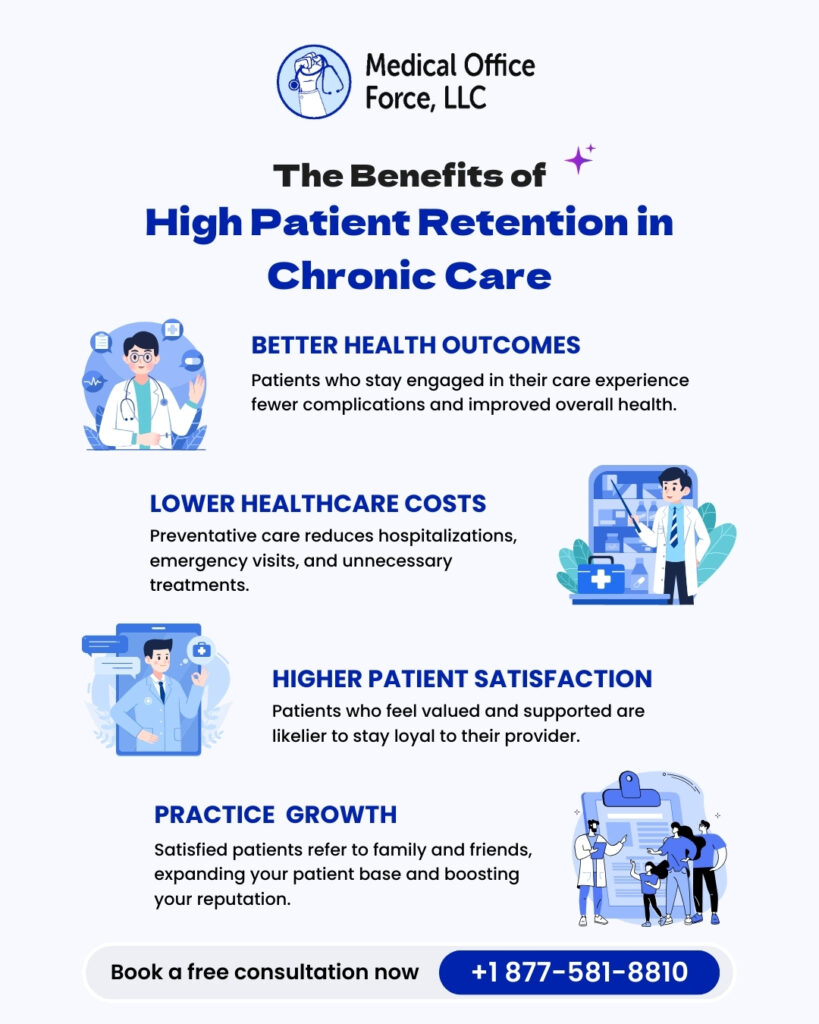
Patient retention is more than keeping appointments; it builds trust, cultivates long-term relationships, and delivers sustainable care. For patients with chronic diseases, staying engaged in their healthcare journey is critical for improved outcomes and overall well-being. How do healthcare professionals ensure that patients remain committed to their care plans?

The answer lies in Chronic Care Management (CCM). Through active management of patient’s health, customized support, and technology, providers can enhance engagement, satisfaction, and retention. Here’s how CCM can convert patient loyalty into a long-term commitment and improve patient outcomes.

How Chronic Care Management Increases Patient Retention

Proactive Engagement : Staying Connected Beyond Meetings

Patients appreciate being taken care of even when they are not in their scheduled appointments. Regular check-ins via phone, text, or telehealth underscore their importance to your practice. Whether it is a friendly reminder about an upcoming appointment or an informal “How are you today? these check-ins build trust and make it more likely patients will stay engaged.

Individualized Care Strategies : Making Sure Patients Feel Heard and Understood

Healthcare is not one-size-fits-all, and patients know that. When care plans are tailored to their individual needs, preferences, and goals, they feel valued and respected. This personal attention fosters loyalty, as patients will stick with a provider who genuinely cares about their well-being.

Effortless Collaboration : Reducing the Burden of Care Management

Many long-term condition patients coordinate multiple specialists, therapies, and medications. CCM ensures smooth coordination of healthcare professionals, eliminating guesswork and ensuring that no minute detail is missed. When patients experience easy, hassle-free care, they are far more likely to stay loyal to your practice.

Post Image

Instant Help through Remote Patient Monitoring (RPM)

Wearable gadgets and home monitoring systems enable providers to monitor essential health information instantly. This not only minimizes hospital visits but also comforts patients’ confidence that their health is being proactively managed—even remotely. When patients realize their provider is only a step ahead, they feel more secure and engaged.

Round-the-Clock Support Availability : Health Issues Don’t Adhere to Timetables

When patients know that help is available at any time whether through nurse hotlines, drug support programs, or online services they gain confidence in their healthcare provider. The assurance of immediate relief fosters long-term loyalty and minimizes the likelihood of switching providers.

Educating Patients : Empowering People to Take Charge

An educated patient is an engaged patient. Providing educational resources on chronic disease, self-care practices, and lifestyle modifications helps patients make better health decisions. When people feel more in control of their health, they are more likely to stay committed to their care plan and healthcare team.

Preventing Hospital Readmissions : Keeping Patients in the Right Place

No one wants to return to the hospital unless necessary. CCM’s proactive approach helps prevent readmissions by supporting medication compliance, monitoring symptoms, and acting early when possible issues arise. Those patients who are faced with fewer disruptions in their normal lives have a greater sense of appreciation for the care of their providers.

Addressing Social Determinants of Health: Overcoming Barriers to Access to Care

Financial challenges, transportation problems, or hunger issues may complicate the control of chronic conditions. CCM programs help bridge these gaps by connecting patients to community resources so they receive support ensuring their treatment remains continuous.

Emphasis on Mental and Emotional Health

Dealing with a chronic illness impacts mental health. Patients need more than a doctor’s care—they also want emotional support. Monthly visits, support groups, and stress reduction materials help patients feel heard and supported, making them more attached to their providers.

Improving Retention & Reducing Attrition

Each patient contact is a chance to reaffirm allegiance.

Providers must:

  • Treat patients respectfully and hear them out.
  • Foresee problems and setbacks before they occur.
  • Keep up with appointments to reduce wait times.
  • Pre-screen appointments ahead of time to eliminate no-shows.
  • Call patients when visits are past due.
  • Ask patients to complete surveys to solicit feedback and enhance service.
  • Institute a recall system to arrange follow-up visits before departure.

The Future of Patient Retention is Proactive Care

Patient retention isn’t about keeping patients, it’s about providing them with reasons to never want to leave. Chronic Care Management offers the framework, assistance, and proactive interaction that keeps patients engaged in their health and their healthcare provider. By investing in CCM initiatives, you’re not merely retaining patients, you’re changing lives.

FAQs

1. What is Chronic Care Management (CCM)?
Chronic Care Management (CCM) is a Medicare-supported service that provides ongoing care coordination for patients with two or more chronic conditions. It includes regular check-ins, medication management, and continuous monitoring to improve health outcomes.

2. How does CCM improve patient retention?
CCM improves patient retention by maintaining continuous engagement through follow-ups, personalized care plans, and proactive communication, making patients feel supported beyond office visits.

3. Is CCM only for elderly patients?
No, CCM is primarily designed for Medicare patients but can benefit any individual managing multiple chronic conditions who requires continuous care coordination.

4. How does CCM reduce hospital readmissions?
CCM helps reduce hospital readmissions by identifying early warning signs, ensuring medication adherence, and providing timely interventions before conditions worsen.

5. What is the role of Remote Patient Monitoring (RPM) in CCM?
RPM enhances CCM by collecting real-time patient data such as blood pressure or glucose levels, allowing providers to detect issues early and adjust treatment plans proactively.

6. Does CCM improve patient satisfaction?
Yes, CCM improves patient satisfaction by offering personalized attention, continuous communication, and easier access to healthcare support.

7. Can small practices implement CCM effectively?
Yes, with structured workflows, technology, and support services, even small practices can successfully implement CCM and improve both patient outcomes and retention.

Take Action Today

If you are ready to increase patient retention and better outcomes, begin implementing CCM in your practice. A well-supported patient is a loyal patient, and a loyal patient guarantees the long-term success of the healthcare organization.

What are you doing today to enhance patient engagement and retention?