What is Remote Patient Monitoring
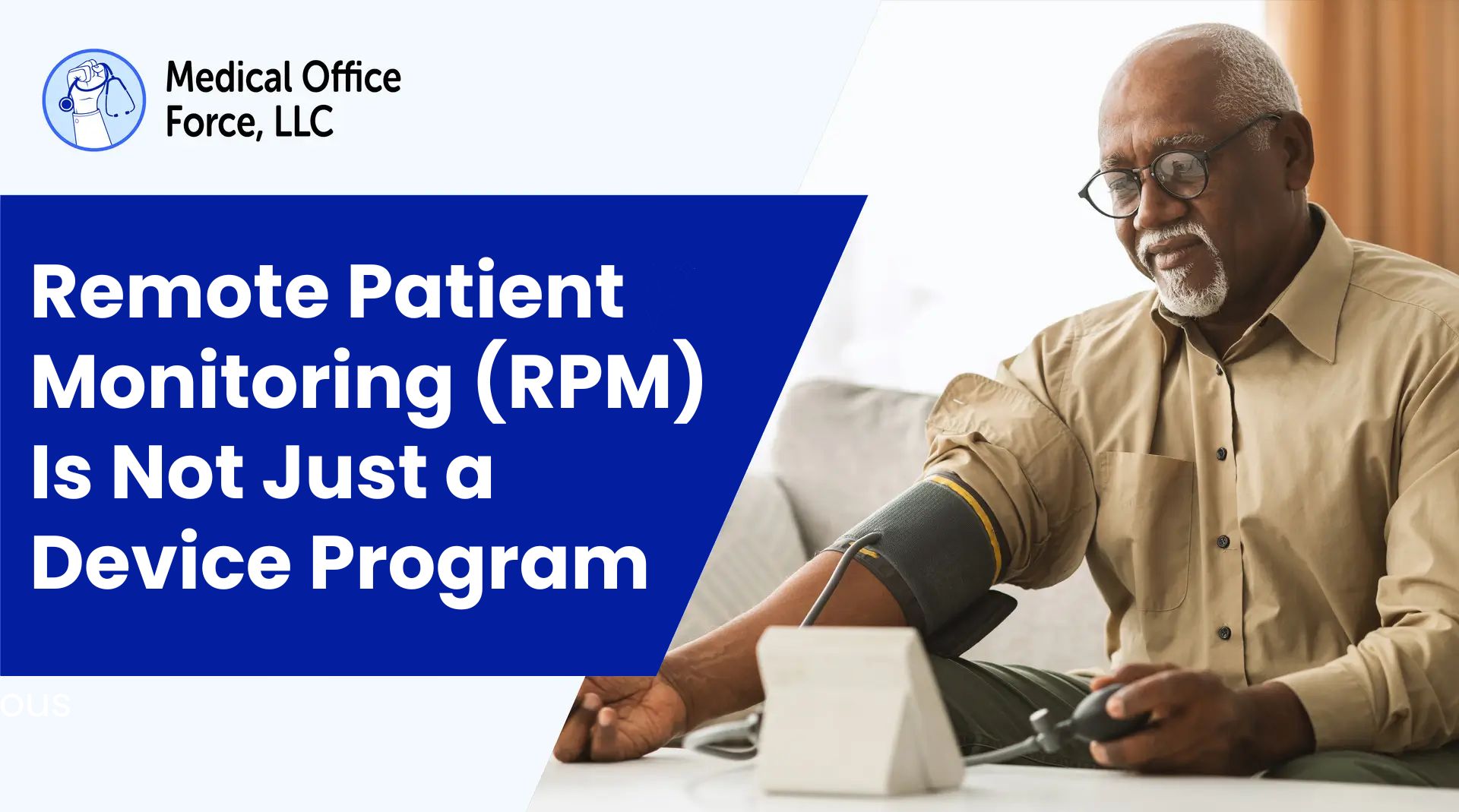
Remote Patient Monitoring is a healthcare model where patient data is collected remotely and used by providers to manage conditions proactively.
Why is RPM more than a device program
Because devices only collect data. Outcomes improve when that data is monitored, interpreted, and acted upon.
Does RPM improve patient outcomes
Yes. Continuous monitoring allows early detection of issues and better chronic disease control.
Which patients benefit most from RPM
Patients with hypertension, diabetes, heart disease, and other chronic conditions benefit the most.
How can practices implement RPM successfully
By building structured workflows, ensuring continuous monitoring, and integrating RPM into daily operations.




Very Helpful!
Thank you for sharing this informative post. Very insightful.
This is an important distinction. RPM delivers value only when it’s embedded into clinical workflows and active follow-up, not when it’s treated as a box-checking exercise.
Helpful and informative.
Not only a device, but a touch when PT uses it makes them feel that we are connected everywhere.
Great way to explain how the RPM solution helps patients feel connected while keeping providers informed, delivering highly accurate and consistent performance.
RPM not only helps track progress but also empowers patients to take a more active role in their care.
Great read! This really explains why RPM is more than just devices and data. The focus on patient engagement and continuous care makes a big difference. Thanks for sharing such useful insights
Very informative, thanks for sharing.
Life-saving program that helps patients to be taken care of in real time by the Medical Office Force team.
As usual great insight.
Very helpful and informative.
RPM provides healthcare remotely between the visits. Thank you for sharing the blog.
Well said. RPM delivers real value when it extends care beyond visits and strengthens patient-provider connections.
This clearly highlights RPM as a care-first model that drives continuous, patient-centered care beyond just devices and data. thanks for sharing
Great insight. This blog clearly explains why RPM is more than just devices.
Informative Blog. Keep posting more information like this.
Thank you for sharing! Very helpful and informative.
RPM delivers care, engagement, and healthier results. Thank you for sharing.
Great read, thanks for sharing the information
Very helpful and informative.
Very informative
Very useful information
Very informative !!
I like the way you put light on RPM , lets spread the knowledge. Thank you for sharing the blog
RPM is not confined to measuring vitals and flag anomalies, its broader purpose is to drive holistic health improvement and actively engage patients in their care.
Very helpful and informative.
Very informative !!