Q: What is an AI-enhanced front desk receptionist in healthcare?
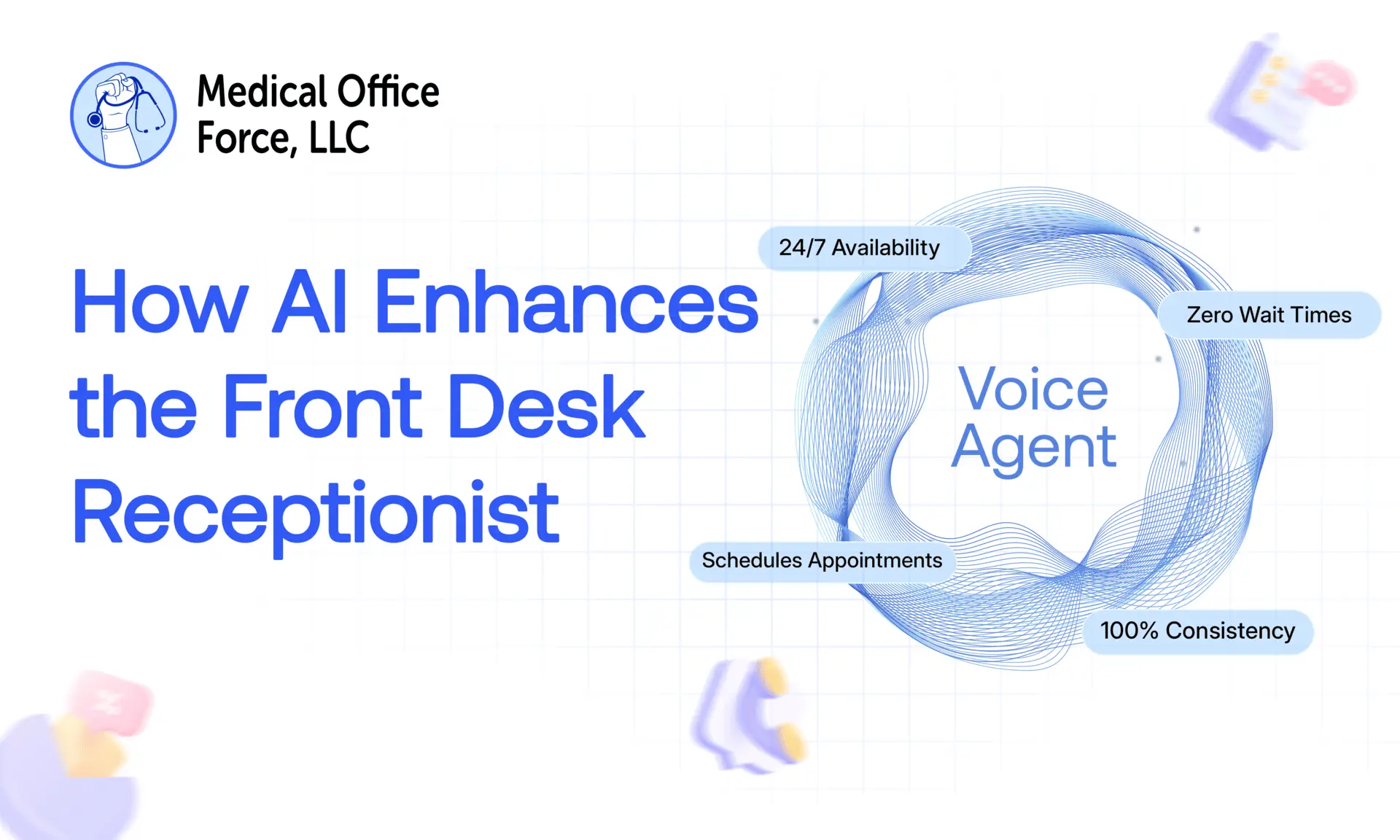
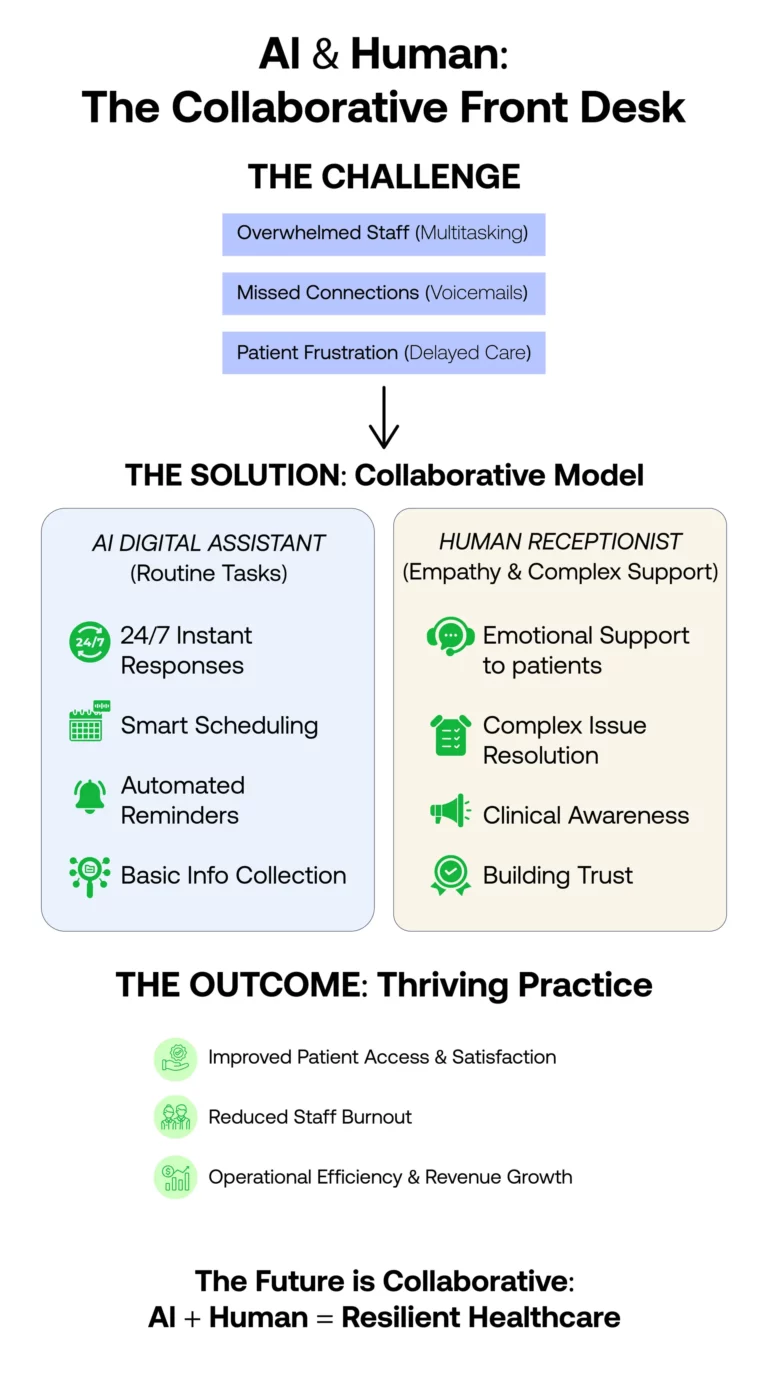
A: An AI-enhanced front desk uses artificial intelligence to handle high-volume, routine patient interactions – including answering calls, scheduling appointments, sending reminders, and sharing basic practice information – 24/7, without replacing human staff for complex or emotional interactions.
Q: How many patient calls does the average medical practice miss?
A: Research shows the average medical practice misses between 34% and 42% of incoming calls during business hours – with 41% of those patients calling a competing practice rather than trying again, directly translating to lost appointments and revenue.
Q: Can AI reduce front desk burnout in healthcare?
A: Yes – a nationwide study of over 43,000 healthcare workers found that administrative staff face a burnout rate of nearly 46%, driven primarily by work overload; AI tools that automate routine scheduling and call-handling directly reduce that overload and delay burnout onset.
Q: Does CMS require medical practices to offer 24/7 patient access?
A: Yes – under 42 CFR $482.13, CMS requires providers to maintain 24-hour patient access to communication, meaning after-hours calls cannot simply go unanswered; AI receptionist tools help practices meet this regulatory requirement without overnight staffing.
Q: Will AI replace medical receptionists?
A: No – AI is designed to handle repetitive, high-volume tasks like scheduling and reminders, while human receptionists remain essential for empathetic, complex, and clinically sensitive conversations; the most effective model is a hybrid where AI and staff work together rather than one replacing the other.
Q: What types of tasks can an AI front desk handle in a medical practice?
A: AI front desk systems can answer inbound calls instantly, collect patient information, schedule and reschedule appointments based on provider rules, send SMS and email reminders, confirm visit details, and provide standard practice information – all without holding times or voicemail.



Transformation through AI which is rapidly becoming an essential need for truly productive outcomes in every sphere. Thank you for expanding on it in relation to the Front desk receptionist.
Great Information
Thanks for the informative overview.
Very informative—AI enhancing the workflows.
Love the information. We are living in the modernized world and introducing of AI in our clinic is really a steps ahead of other clinics.
Ai would certainly help making what’s good even better.
Great Information
Well said. AI as the front desk is a game changer for efficiency and access, especially in healthcare. streamlining workflows and reducing administrative burden.
A great explanation of how AI can relieve front desk pressure without losing the human connection. When routine calls are handled efficiently, staff can focus on patients who truly need personal support.
Informative.
True to the present world scenerio the one, AI is the future, and if we want to grow, we need to grow with it. It will definitely create a lot of good changes as part of the reception, which raises the revenue strength of the concern. This Great change=High growth aspects
Informative and perfectly explains how AI can improve access while preserving the human touch.
Very informative information.
The best insight is that by combining AI efficiency with human compassion, healthcare organizations can build a front desk that is responsive, resilient, and ready for the future.
Loved this post!
An excellent overview of the real challenges front desk teams face and how AI can support—not replace—the human touch while improving access, efficiency, and staff well-being.”
This really captures the reality of today’s front desk. AI works best when it removes friction, not people. Letting AI handle repetitive calls and scheduling gives staff the space to focus on empathy, problem-solving, and patient trust. That balance is what actually improves access, reduces burnout, and protects revenue. The future isn’t automated or manual, it’s collaborative.
Great article but we have to understand that future of the medical front desk is not human or AI, it is human and AI working together.
Better access for patients, better balance for staff. Very informative blog. Thanks for sharing.
AI empowers the front desk to work smarter—faster processes, fewer errors, and better patient experiences.
AI enhances front desk receptionists by automating routine tasks (scheduling, FAQs), enabling 24/7 availability, personalizing guest experiences with data, and routing complex queries to staff, freeing humans for higher-value interactions, boosting overall efficiency, reducing wait times, and improving customer satisfaction
Great article—AI isn’t replacing front desk staff, it’s empowering them to deliver faster, more efficient, and more patient-focused care.
Thanks for sharing these insights—thoughtful use of AI can support care teams, streamline workflows, and improve patient experiences and outcomes.
I am going to read this properly.
Great information!
Great Article, How AI effectively acting as a virtual front desk support to ensure continuously support with zero waiting time.
Thank you for sharing these valuable insights on how AI and collaboration can enhance patient access and care.
Thank you for sharing these valuable perspectives on how AI and people can work together to enhance patient access to care. The emphasis on collaboration highlights how technology, when thoughtfully integrated, can empower care teams, streamline experiences, and ultimately improve patient satisfaction and outcomes.
“A very informative and insightful read explaining how AI-powered front-desk systems significantly enhance operational efficiency, improve patient experience, and streamline workflow management.”
Informative and insightful blog
Great features. i am amazed to know how ai is enhancing practices.
A very informative read on how AI powered front desks clearly enhance efficiency
Great insights
Great insights on how AI is transforming front desk operations.
Article is explained very well!
This is a great breakdown of how AI can enhance access to care without losing the human connection. The hybrid model you described feels like the most practical and patient-friendly path forward.
Great article—AI isn’t replacing front desk staff, it’s empowering them to deliver faster, more efficient, and more patient-focused care.
Every ohysician owner need to read and decide is it time to modernized the clinic front desk? Love the information, thank you for sharing.