How Missed Calls Cost Medical Practices Thousands Each Month
In a busy medical practice, the phone never really stops ringing. It rings during clinic hours, during lunch, five minutes before closing, and sometimes long after the last patient has left. Every ring represents something important. A new patient trying to book an appointment. An existing patient worried about new symptoms. A referral from another physician. A pharmacy calling for clarification.
Now imagine what happens when that call goes unanswered.
For many practices, missed calls feel like a minor operational issue. In reality, they are a silent revenue leak. Month after month, they cost medical practices thousands of dollars, often without the leadership team fully realizing it.
At Medical Office Force, we have seen firsthand how small gaps in phone coverage can create major financial consequences.
Every Missed Call Is a Missed Opportunity
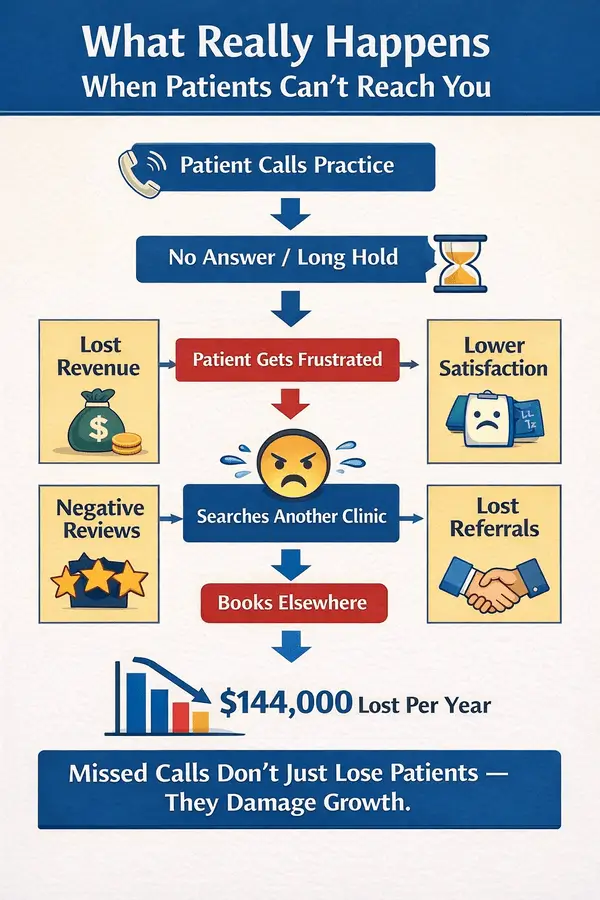
Healthcare is deeply personal, but it is also highly competitive. When a patient calls a clinic and no one answers, they rarely leave a voicemail and wait patiently for a callback. Most people hang up and dial the next number they find online.
In that moment, you have not just missed a phone call. You have potentially lost:
A new patient visit
Follow-up appointments
Diagnostic testing revenue
Long-term continuity of care
Future referrals
Let’s put simple math behind it. If your average new patient visit brings in $200 to $300 and you miss just 5 new patient calls per day, that can easily translate into thousands of dollars in lost revenue every month. And that is only direct visit revenue, not the downstream value of that patient over time.
When you multiply that by 20 working days in a month, the financial impact becomes difficult to ignore.
The Hidden Cost of Front Desk Overload
Most practices do not ignore calls intentionally. The issue is capacity.
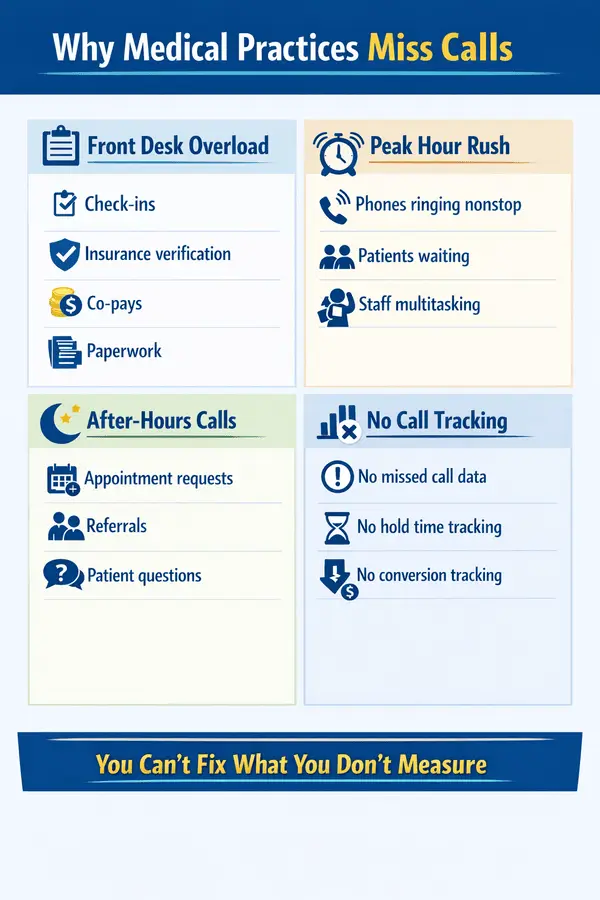
Front desk teams juggle check-ins, insurance verification, co-pay collections, prior authorizations, paperwork, and in-person patient questions. During peak hours, the phone becomes one more demand on an already overwhelmed team.
When the front desk is overloaded, calls may:
Ring out without being answered
Be placed on hold for long periods
Go to voicemail
Receive rushed or incomplete responses
Over time, this does more than affect revenue. It affects reputation.
Patients today expect responsiveness. A poor phone experience often translates into negative online reviews, lower patient satisfaction scores, and reduced trust in the practice. In an era where patients actively read reviews before booking, that damages compounds.
After-Hours Calls: The Overlooked Revenue Drain
What happens after 5 PM?
Many practices assume that after-hours calls are mostly non-urgent. But a significant portion includes:
Patients seeking next-day appointments
Referrals from urgent care or emergency departments
Questions that determine whether a patient chooses your practice or another
If these calls go unanswered or are handled by a generic answering service without proper scheduling capability, the opportunity is lost.
Patients do not want to wait until morning to secure an appointment. They want confirmation. They want reassurance. They want access.
If your practice cannot provide it, another practice will.
The True Financial Picture
Let’s look at a conservative example:
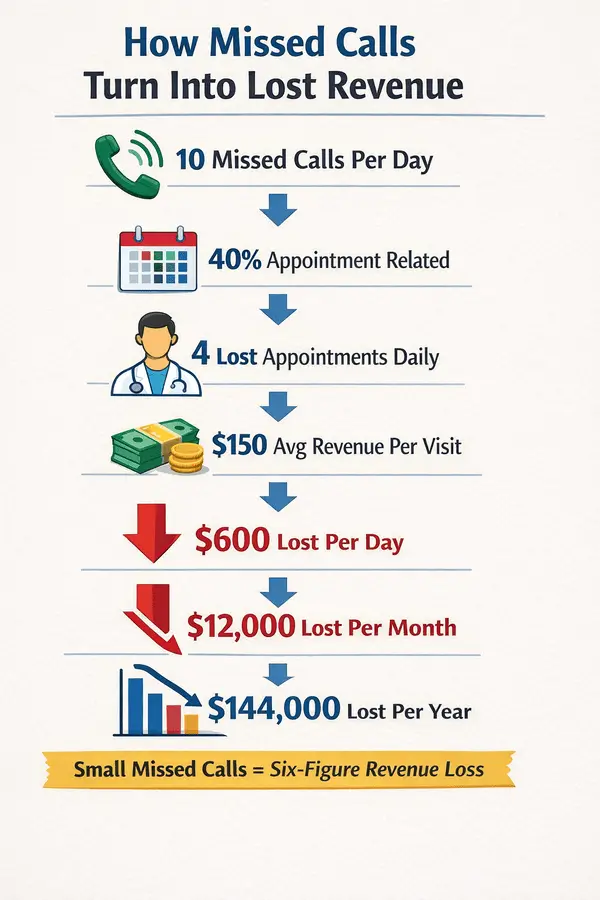
10 missed calls per day
40 percent of those are appointment-related
4 lost appointments per day
Average reimbursement per visit: $150
That is $600 per day in lost revenue. Over a 20-day month, that is $12,000. Over a year, that is $144,000.
And again, this does not include ancillary services, follow-ups, procedures, or lifetime patient value.
When practices say, “We are just a little busy,” they may not realize that “a little busy” could be costing them six figures annually.
The Impact on Referrals and Growth
Missed calls also affect referral relationships.
If a referring physician’s office repeatedly struggles to reach your practice, they may redirect patients elsewhere. Referrals are built on trust and reliability. Accessibility is part of that trust.
Growth in healthcare is rarely about marketing alone. It is about operational excellence. A strong digital presence may drive calls, but if those calls are not answered consistently and professionally, marketing investments lose their effectiveness.
In other words, missed calls do not just cost revenue. They limit growth.
Patient Experience Is a Competitive Advantage
Modern patients evaluate practices the same way they evaluate other services. They expect:
Quick response times
Clear communication
Easy scheduling
Respect for their time
The phone call is often the first impression. If that first interaction is frustrating, the patient may assume the clinical experience will be similar.
On the other hand, a well-handled call builds confidence immediately. A friendly, knowledgeable voice that schedules efficiently and answers questions clearly sets the tone for the entire patient journey.
In today’s healthcare environment, experience matters just as much as clinical expertise.
Why This Problem Often Goes Unmeasured
One of the biggest challenges is visibility.
Many practices do not track:
Total incoming calls
Abandoned call rates
Average hold times
Conversion rates from call to appointment
Without data, leadership may underestimate the scope of the problem. Staff may say, “We answer most of the calls,” but without call analytics, there is no way to know how many patients hung up before reaching someone.
When practices begin reviewing real call data, the numbers are often eye-opening.
The Solution Is Not More Stress
The answer is not to push front desk teams harder. They are already working at capacity.
The solution is structure, systems, and support.
This may include:
Dedicated call handling teams
Extended hour coverage
Centralized scheduling support
Clear call protocols
Real-time call tracking and reporting
When phone systems are optimized and supported properly, practices see immediate improvements in both revenue and patient satisfaction.
At the Medical Office Force, we believe that operational strength is just as important as clinical excellence. When practices ensure that every patient call is answered promptly and professionally, they protect revenue, strengthen patient relationships, and position themselves for sustainable growth.
A Simple Question to Ask
If you are unsure whether missed calls are affecting your practice, start by asking one simple question:
How many calls did we miss last week?
If the answer is unclear, that alone signals opportunity.
Every ring represents a patient seeking care. In healthcare, that is not just a transaction. It is trust. It is access. It is my responsibility.
Missed calls may seem small at the moment. But over time, they quietly erode revenue, reputation, and growth potential.
The good news is that this is a solvable problem. With the right systems in place, those lost thousands each month can quickly become retained revenue and stronger patient relationships.
And in a field built on service, that is a change worth making.

Missed calls don’t just affect scheduling, they quietly drain revenue and patient relationships.