


Remote Patient Monitoring has become one of the fastest growing areas in healthcare. Practices are using RPM to manage chronic disease, improve patient outcomes, reduce hospitalizations, and generate recurring Medicare reimbursement.
But there is one question that often gets overlooked during RPM implementation: Are the devices being used actually appropriate for clinical monitoring?
Many healthcare organizations focus heavily on enrollment, workflows, and billing. Yet the success of any RPM program starts with the device collecting the data. If the data is inaccurate, delayed, or unreliable, the entire program is compromised. That is why FDA compliance matters.
Why FDA Compliance Matters in Remote Patient Monitoring
RPM is not simply a technology program. It is a clinical program.
Providers make treatment decisions based on the information transmitted from patient devices. Blood pressure readings, glucose measurements, oxygen levels, and weight fluctuations can all influence patient care plans.
According to the U.S. Food and Drug Administration, medical devices intended for diagnosis, treatment, monitoring, or prevention must meet regulatory standards designed to ensure safety and effectiveness. Providers can explore these core framework expectations via the official FDA Medical Devices Portal. When providers trust the data, they can confidently intervene before small issues become major medical events.
What Does FDA Approval Mean for RPM Devices?
Many practice owners hear terms like "FDA approved" or "FDA cleared" without fully understanding what they mean. In simple terms, FDA oversight helps ensure that medical devices perform as intended and meet established standards for safety and effectiveness.
For Remote Patient Monitoring programs, this provides confidence that the physiologic data being collected can support clinical decision making. This is especially important when providers are adjusting medications, monitoring chronic disease progression, or responding to concerning patient trends. The goal is simple: Reliable data leads to better clinical decisions.
The Most Common RPM Devices Used in Clinical Practice
Different RPM programs monitor different conditions. The device selected should align with the patient's diagnosis, treatment goals, and clinical needs.
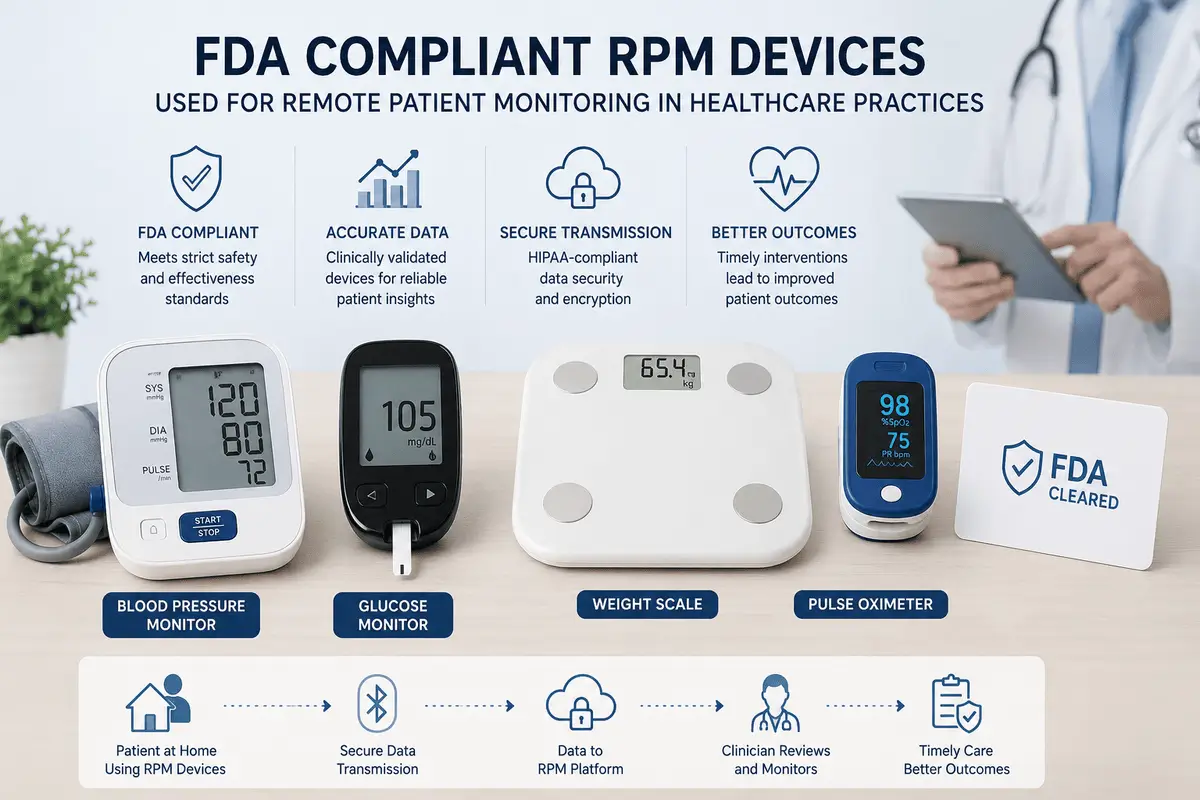
Blood Pressure RPM Devices
Blood pressure monitoring remains one of the most widely used RPM applications. Patients with hypertension often benefit from daily or frequent monitoring between office visits. This allows providers to identify worsening trends early and make medication adjustments before complications occur.
Blood pressure RPM programs have become particularly valuable as cardiovascular disease continues to affect millions of Americans. According to the American Heart Association, nearly half of U.S. adults have high blood pressure or are taking medication to manage it, as detailed on the AHA Hypertension Resource Page.
Glucose Monitoring Devices for RPM
Diabetes management is another major area where RPM creates significant value. Connected glucose monitoring devices allow providers to track blood sugar trends remotely and identify potential issues before they become emergencies. For patients struggling with diabetes control, continuous access to glucose data often leads to more informed treatment decisions and improved outcomes.
According to the Centers for Disease Control and Prevention, more than 38 million Americans are living with diabetes. Practice managers can review the latest updates on the official CDC Diabetes Basics Portal.
Weight Scale RPM Devices
Weight monitoring may sound simple, but it can provide critical clinical information. For patients with congestive heart failure, even small increases in weight may signal fluid retention days before symptoms become severe. Early intervention can help prevent emergency department visits and hospital admissions. This makes connected weight scales one of the most valuable RPM tools for chronic disease management.
Pulse Oximeter RPM Devices
Pulse oximeters monitor oxygen saturation levels and can play an important role in respiratory and cardiovascular care. Patients with chronic lung disease, sleep-related breathing disorders, or certain cardiac conditions may benefit from remote oxygen monitoring. These devices became particularly important during the rapid expansion of virtual care and remote monitoring programs across the healthcare industry.
Why Consumer Devices Are Not Always Enough
Many patients already own wearable devices that track health information. Smartwatches, fitness trackers, and consumer wellness products provide useful insights. However, consumer devices are not always appropriate for clinical RPM programs.
A consumer fitness tracker is designed primarily for wellness monitoring. An FDA regulated medical device is designed to support clinical decision making. That distinction becomes important when providers are making treatment recommendations based on patient generated data.
Risks of Using Non-FDA Approved RPM Devices
One of the biggest mistakes healthcare organizations make is selecting RPM devices based solely on cost. While lower cost consumer products may appear attractive initially, they can introduce significant risks:
- Inaccurate readings may lead to poor clinical decisions.
- Data transmission problems may result in missed interventions.
- Patient confidence may decline when readings appear inconsistent.
- Documentation and compliance challenges may become more difficult during audits.
When patient care depends on the information being collected, device accuracy matters. Poor quality data can undermine the entire purpose of an RPM program.
Examples of FDA Cleared RPM Devices Commonly Used in Clinics
Specific device selection varies by specialty, patient population, and RPM vendor. However, many successful RPM programs utilize FDA cleared devices within the following categories:
- Blood pressure monitoring systems
- Connected glucose monitoring devices
- Remote weight scales
- Medical grade pulse oximeters
- Cardiac monitoring technologies
Because device approvals and classifications evolve over time, practices should verify current device status directly through the FDA Medical Device Database.
FDA Compliance Is Only One Piece of the Puzzle
Even the best device will not produce results if the operational process is broken. Successful RPM programs require:
- Proper patient onboarding
- Device education
- Data review workflows
- Clinical escalation protocols
- Accurate documentation
- Billing compliance oversight
Technology alone does not create successful RPM programs. Consistent operational execution does.
A Simple Self Assessment
Ask yourself:
- Do we know whether our RPM devices are FDA cleared?
- Are patients using clinically validated equipment?
- Can we confidently explain our RPM workflow during an audit?
- Are we reviewing patient data consistently?
- Do we have processes in place to respond when concerning readings appear?
If any of these questions create uncertainty, it may be time to evaluate your RPM infrastructure more closely.
Frequently Asked Questions
1. Do RPM devices need FDA clearance?
Many devices used for clinical monitoring should have appropriate FDA clearance for their intended medical use.
2. Can consumer fitness trackers be used for RPM billing?
Not all consumer devices meet the requirements for clinical RPM programs.
3. What is the difference between FDA approved and FDA cleared?
The FDA uses different regulatory pathways depending on the device category and risk profile.
4. Why does FDA compliance matter?
It helps ensure that devices provide reliable and clinically useful information.
5. What RPM devices are most commonly used?
Blood pressure monitors, glucose monitoring devices, weight scales, and pulse oximeters are among the most common.
6. Can inaccurate RPM data affect patient care?
Yes. Clinical decisions are often based on the information transmitted from RPM devices.
7. How can practices strengthen RPM compliance?
By using validated devices, maintaining documentation, and following structured monitoring workflows.
The Bottom Line
Remote Patient Monitoring is much more than a reimbursement opportunity. It is a clinical care model built on data. The quality of that data depends directly on the devices collecting it. Practices that prioritize FDA compliant RPM devices create stronger programs, improve patient trust, reduce compliance risk, and position themselves for long term success.
Take the Next Step
If your practice is expanding its RPM services, device selection should be part of the strategic conversation from the beginning. Medical Office Force helps healthcare organizations build scalable RPM programs that support compliance, improve patient engagement, and strengthen long-term operational performance.
Because successful Remote Patient Monitoring is not just about collecting data. It is about collecting data you can trust.
Informative and helpful in explaining why FDA cleared devices are essential for accurate data collection and compliant remote patient monitoring programs.