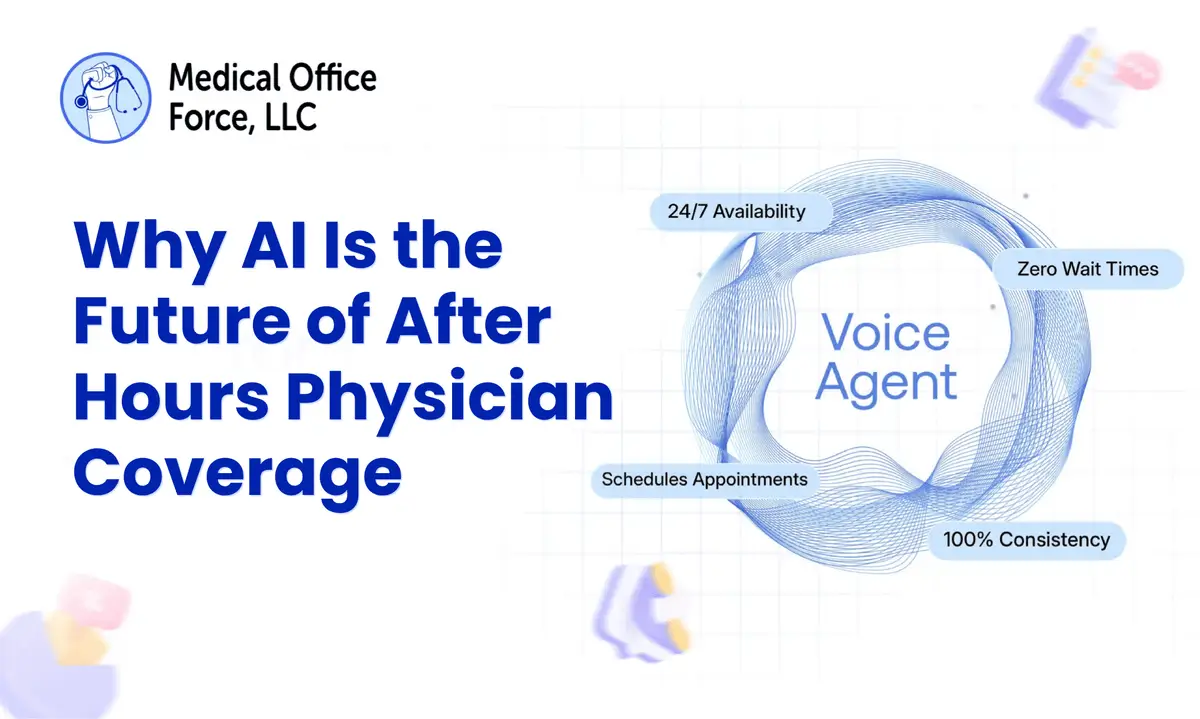
Why AI Is the Future of After Hours Physician Coverage
By Subodh K. Agrawal, MD, FACC Medical Director, Medical Office Force LLC | Athens, Georgia Alumnus: SMS Medical College, Emory University, University of Alabama at Birmingham
Introduction
As a cardiologist trained at Emory University and the University of Alabama at Birmingham, and having started my medical journey at SMS Medical College in Jaipur, I have worked across multiple healthcare systems.
Across all of them, one issue remains constant. The burden of being on call continues to affect physician well being.
In 2026, traditional answering services are no longer enough. They create both clinical gaps and financial inefficiencies.
At Medical Office Force, we are moving beyond outdated systems into a new model powered by intelligent AI call agents.
The Intelligent Perimeter: How AI Transforms Your Practice
Modern AI systems are advanced voice based assistants that understand intent and context.
Precision Triage
Within seconds, the system identifies the patient and evaluates the concern. It can differentiate between minor discomfort and symptoms that may require urgent attention.
Customized Routing
Non urgent concerns are documented in structured format
Urgent issues are immediately routed to the physician on call
This ensures that no critical information is missed.
Reducing Unnecessary Emergency Visits
Immediate access to guidance helps reduce panic driven emergency visits and improves patient experience.
The ROI: The Math Behind Modern Care
Metric
Traditional Answering Service
AI Call Agent
Monthly Cost
600 to 1500 dollars or more
100 to 300 dollars
Error Rate
12 to 15 percent
Less than 1 percent
Physician Burnout
High due to unfiltered calls
Lower due to filtered alerts
Annual Savings
Minimal
6000 to 14000 dollars per provider
FAQs: Operation and Quality
Does AI reduce the human connection
Patients often prefer faster responses. A quick and accurate interaction builds confidence better than long waiting times.
How does the system identify urgent cases
Specific symptom triggers are programmed. For example, shortness of breath can lead to immediate escalation.
Is the system secure
Yes. All interactions are encrypted and integrated into secure systems to maintain patient privacy.
Final Word
The future of healthcare is not about replacing physicians. It is about supporting them.
AI driven systems allow physicians to focus on critical care while ensuring patients always have access to timely and reliable communication.
Moving away from outdated on call systems is not just an upgrade. It is a necessary step toward sustainable and efficient medical practice.
References
This article is based on healthcare data and research from leading organizations including the American Medical Association, NIH, MGMA, and HHS.
Great line in this blog “The future of healthcare is not about replacing physicians. It is about supporting them.” great way to differentiate between importance of both AI and physicians in the healthcare.
subodh agrawalMarch 25, 2026
Is there any reason the medical practices still using after hour call centers?

Great line in this blog “The future of healthcare is not about replacing physicians. It is about supporting them.” great way to differentiate between importance of both AI and physicians in the healthcare.
Is there any reason the medical practices still using after hour call centers?