Medical Office Force

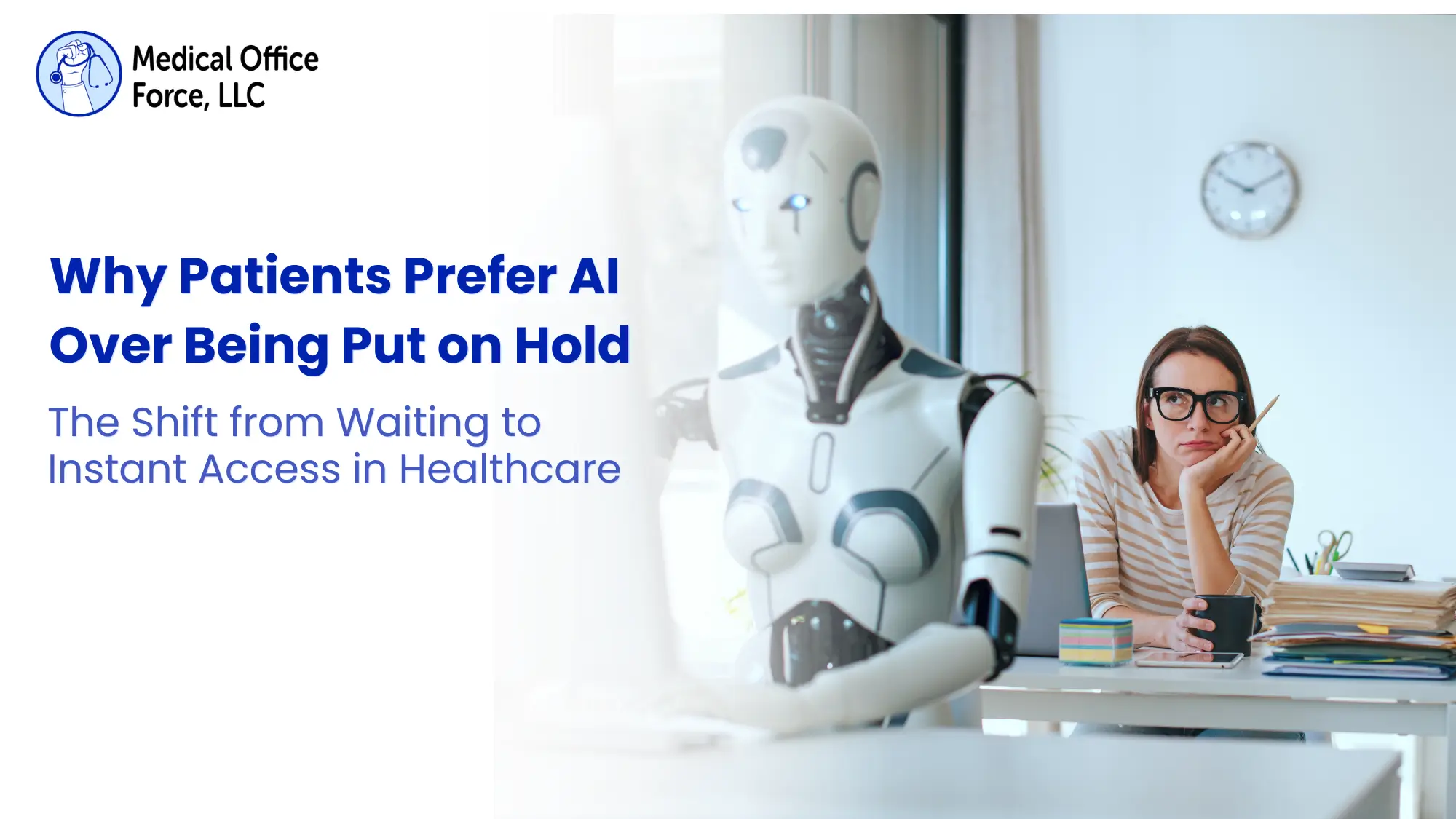
A medical office worker sitting at a desk looking bored or waiting, contrasted with a sleek white humanoid robot representing AI instant access in healthcare.

Share on

Why Patients Prefer AI Over Being Put on Hold

The Shift from Waiting to Instant Access in Healthcare

Last updated on May 16, 2026

The Real Problem Is Not Staffing

It Is Waiting

Every medical practice experiences the same challenge.

Phones ringing during peak hours.
Patients placed on hold.
Front desk teams trying to manage multiple tasks at once.

From the practice perspective, this is a capacity issue.

From the patient perspective, it feels like neglect.

And in healthcare, perception matters.

What Happens When a Patient Is Put on Hold

When a patient calls a clinic, they are not just making a routine inquiry.

They may be:

      • Trying to book an urgent appointment
      • Experiencing new symptoms
      • Following up on test results
      • Seeking reassurance

Being placed on hold introduces uncertainty and frustration.

Most patients do not wait.
They hang up and call another provider.

Research across healthcare communication patterns shows that patients expect immediate access and are less likely to tolerate delays in response

Why AI Feels Better Than Waiting

Patients are not choosing AI over humans. They are choosing responsiveness over delay. AI voice systems provide something traditional workflows cannot. Immediate engagement.

Instant Response

Every call is answered immediately. There is no hold music, no waiting, no uncertainty.

Clear Direction

Patients are guided step by step instead of navigating confusing call menus.

Consistent Experience

Every interaction is structured, accurate, and predictable. This creates trust from the very first interaction.

The Psychology Behind Patient Preference

Waiting creates anxiety.

In healthcare, anxiety is already high.

When a patient is placed on hold:

      • They feel their concern is not a priority
      • They become unsure if help is available
      • Their stress increases

Immediate response, even from AI, reduces that anxiety.

It provides reassurance that the system is working and help is available.

Where AI Makes the Biggest Impact

AI improves communication at the most critical touchpoints.

Appointment Scheduling

Patients can book appointments without delays or callbacks

Patient Intake

Information is collected accurately during the first interaction

After Hours Access

Patients receive responses even outside clinic hours

Call Routing

Urgent issues are identified and escalated immediately This ensures no opportunity or patient concern is missed.

What This Means for Medical Practices

Improved patient experience directly impacts revenue.

Practices using AI driven communication systems often see:

      • Lower call abandonment rates
      • Higher appointment conversion
      • Improved patient satisfaction
      • Reduced front desk overload

Digital health adoption data from the American Medical Association supports the role of AI in reducing administrative burden and improving operational efficiency

Addressing the Common Concern

Does AI Remove the Human Touch

This is the most common question.

The answer is no.

AI handles repetitive, high volume tasks.
Human staff focus on meaningful patient interactions.

The result is better care, not less.

Self Assessment: Is Your Practice Losing Patients on Hold

Ask yourself:

      1. Do patients frequently wait on hold
      2. Are calls abandoned before being answered
      3. Is your front desk overwhelmed during peak hours
      4. Are after hours calls going unanswered
      5. Do patients complain about responsiveness

If yes, the issue is not staffing.
It is system design.

Frequently Asked Questions

1. Do patients really prefer AI

Patients prefer immediate response and clarity, which AI provides

2. Does AI replace front desk staff

No. It supports staff by handling repetitive communication tasks

3. Can AI handle complex conversations

It manages routine interactions and escalates complex cases

4. Is AI available after hours

Yes. It provides continuous access to patients

5. Does AI improve patient satisfaction

Yes. Faster response times lead to better patient experience

6. Is patient data secure

Yes. Systems are designed to meet healthcare privacy standards

7. Can small practices benefit from AI

Yes. Smaller practices often see the greatest improvement

The Bottom Line

Patients are not choosing technology over people.

They are choosing access over waiting.

In modern healthcare, responsiveness is not optional.
It is expected.

AI enables practices to meet that expectation consistently.

Take Action

If your patients are being placed on hold, you are already losing opportunities.

Medical Office Force helps practices implement AI driven communication systems that ensure every call is answered, every patient is guided, and every opportunity is captured.

Because in healthcare, the first interaction defines the entire experience.

For more information, write to contact@medicalofficeforce.com


Share Your Thoughts

No comments yet — be the first to comment!

Leave a Comment

Your email address will not be published. Required fields are marked *