

Proposed Fee Schedule Changes 2026 Nephrology

Nephrology in 2026: Can CKD Care Coordination Survive the Fee Schedule Cuts?

Chronic kidney disease (CKD) impacts millions of Americans. Good care coordination nurses, pharmacists, dietitians and doctors working together between visits slows disease, prevents hospital admission and allows patients to be healthier longer. But 2026 is an important year, as Medicare makes major changes to how it pays clinicians. This has nephrology practices asking: Can CKD care coordination survive these fee schedule changes?
The short answer is: Yes, but only if practices know how to adapt. Here, we explain what’s changing, why it matters for CKD care, and provide actionable options for practices to protect both patient care and revenue.

The Growing Challenge of Kidney Disease in America

About 1 in 7 U.S. adults (approximately 35 million people) have CKD. The disease is more prevalent with older age and among people with diabetes and high blood pressure. When clinics deliver ongoing, organized care between visits (tracking labs, adjusting medications, coaching dietary and fluid intake), they are able to slow kidney decline and reduce preventable hospital visits. These care coordination activities are sometimes reimbursed by Medicare, using time-based care coordination codes.

What changed in 2026 (the payment headlines you need)

A new Physician Fee Schedule (PFS) proposal for 2026. Please note that CMS published a CY-2026 PFS proposed rule in July 2025 where they update payment policies for many services.

1. One of the proposed changes is an “efficiency adjustment” which would eliminate work RVUs for many services that are not time-based. At the same time CMS suggested different conversion factors for certain APM participants versus non-participants. 

2. Time-based care management does specifically exclude efficiency adjustments. CMS’s proposal acknowledged that codes that are paid for based on the documented amount of time spent (e.g. chronic care management) are not subject to that proposed efficiency adjustment. This meant that the payment protection exists for time-based care codes. This distinction is important for CKD programs that denote their coordinated care duration based on monthly minutes. 

3. Dialysis facility payments go up slightly.
The ESRD Prospective Payment System for 2026 was proposed with an increased base rate of $281.06, which is an overall projected increase of about 1.9% for dialysis facilities which is beneficial, but not a replacement for the physician practice revenue.

4. Care management rules and concurrency limits still have real-world meaning and significance. Medicare is still allowing CCM (Chronic Care Management), PCM (Principal Care Management), TCM (Transitional Care Management) and ESRD MCP (monthly capitation payment) family, all with strict prohibitions for billing the same patient with overlapping codes (hospital-induced codes, for example, CCM can’t be billed in the same month that ESRD MCP claims for dialysis can be billed)! It is really important that you follow the rules to avoid denials.

What does this mean for CKD care coordination?

Some good news: Codes that pay for time spent coordinating care (the total monthly minutes spent by clinicians and clinical staff) are mostly protected from the proposed efficiency cut. In 2026, practices that can document time-based care work in order to bill for what they are doing have a much stronger reimbursement foundation.    

The Challenge Ahead: Payments for some one-off or non-time-based services could be cut under the efficiency change. Practices that rely on episodic non-time based services may be responding to more pressure.     

Dialysis patients are different: When a patient moves to dialysis, the ESRD MCP payment codes apply, and Medicare prohibits billing CCM at the same time. So the financial opportunity for CKD coordination is upstream, before the patient moves to dialysis.

Taking the next practical steps for nephrology practices

Focus upstream – Enroll patients earlier in CCM/PCM. Identify CKD patients with Stage 3–5 CKD who were not on dialysis and enroll them in CCM or in PCM appropriately. Care Attribution for pre-End Stage Renal Disease patients is the only safe revenue anchor available to nephrologists under the 2026 proposal.

Create workflows- Consistent monthly workflows are necessary to create billable time, including medication reconciliation, laboratory checks, medication titration (RAAS inhibitors, SGLT2s), dietary counseling, and contacting patients for missed laboratories. Document clinical staff and practitioner time at a minimum every month moving forward. Going forward, it is financially important to record time.

Use Transitional Care Management (TCM) properly. Following hospital stays (for example, admissions for fluid overload) bill TCM for immediate post-discharge care and then transition to CCM for continued care management – uses resources efficiently and decreases readmissions while ensuring short and long-term revenue when TCM is done well.

Prevent concurrency errors. Know which codes can’t be billed together (e.g., CCM and ESRD MCP in the same calendar month). Implement EHR checks or billing rules so staff don’t inadvertently submit conflicting claims. This will help prevent denials and audits.

Embrace virtual supervision and team-based care. The proposed updated regulations for 2026 support tele-supervision, telehealth flexibilities that allow RNs, pharmacists, and navigators to do much of the coordinating under physician supervision, which lowers the cost per minute but maintains quality.

Track results and show your value. Document avoided admissions, stabilized labs, and medication adherence. These outcomes are areas of contractual support for value-based models (like KCC) and build the business case for care coordination.

How Medical Office Force (MOF) Can Support Nephrology Practices

Medical Office Force specializes in taking the Administrative, Billing, and Workflow burden off busy clinical teams so they can provide better care while protecting revenue. Here is how MOF can work with you in your nephrology program:

1. Coding and Compliance Expertise. We ensure CCP, PCP, TCM, MCP, and related codes are billed correctly, concurrency rules are followed, and CMS guidance is adhered to – reducing denials and audit risk.

2. Revenue Cycle Optimization. We fine-tune claim submissions, reduce rejections and expedite collections so that care-coordination work translates into predictable cash flow even as the fee-for-service changes.

3. Workflow Design for a “Minutes Engine“. Medical Office Force assists nephrology practices to construct standardized care-coordination workflows that make it simpler to capture and document every billable minute through Chronic Care Management (CCM) and Remote Patient Monitoring (RPM). They build workflows that capture activities such as nurse follow-up phone calls, pharmacist-led medication review, dietitian counseling sessions, and even documentation templates, as part of protecting the time that isn’t otherwise billed for. This comprehensive methodology helps practices ensure that they are providing consistent and high-quality patient care and maximizing revenue or profitability by protecting the time that they weren’t able to bill for.

4. Performance report(RCM), and model support. For providers participating in value-based care models like Kidney Care Choices, Medical Office Force manages the tracking and reporting of key outcomes. This allows nephrology practices to clearly demonstrate cost savings, prove eligibility for shared savings programs, and prepare financially for 2026 and beyond. In addition, we provide tools to support Remote Therapeutic Monitoring (RTM) and Chronic Care Management (CCM), helping practices strengthen patient engagement while aligning with CMS reporting requirements.

Conclusion

When the 2026 Medicare proposals are evaluated, there will be defined winners and losers. The practices that survive and thrive will be those that:

1. Can successfully execute the time-based care coordination plan for pre-ESRD patients,

2. Start tracking and documenting monthly minutes (the minutes engine)

3. Avoid a billing concurrency error (i.e., avoid billing CCM with MCP),

4. Utilize virtual supervision and team-based workflows to keep costs down, 

If your practice requires assistance in any of the items stated above – coding, staffing,etc.
Medical Office Force can do the heavy lift, so your clinical team can concentrate on caring for your patients. With the right operational changes implemented, even under the aforementioned 2026 medicare models, CKD care coordination is positioned to not just survive 2026, but may become the basis for a stronger nephrology program focused on value.

Abbreviations Used:

CKD – Chronic Kidney Disease
CCP – Comprehensive Care Plan
PCP – Primary Care Physician
TCM – Transitional Care Management
MCP – Monthly Capitation Payment

Sources

CMS, Calendar Year (CY) 2026 Medicare Physician Fee Schedule (PFS) Proposed Rule (CMS-1832-P). July 2025. Centers for Medicare & Medicaid Services

CMS, CY 2026 End-Stage Renal Disease (ESRD) Prospective Payment System (PPS) Proposed Rule (CMS-1830-P). June/July 2025. Centers for Medicare & Medicaid Services+1

CMS, MLN Booklet: Chronic Care Management (CCM), June 2025. Centers for Medicare & Medicaid Services

NIDDK / USRDS, CKD statistics and 2024 Annual Data Report. NIDDKUSRDS

 In-House vs. Outsourcing Medical Billing Services

In-House vs. Outsourced Medical Billing: Choosing the Right Strategy for Your Practice

Medical Billing (in most instances) is the backbone of a healthcare organization’s financial health. Whether to keep medical billing in-house or hire a third-party medical billing company is one of the most important decisions healthcare providers and practice managers must make. The optimal decision varies based on numerous factors, including the age of the practice, the size of the local labor market, and the practice’s financial health.

Beyond clinical services, billing and RCM might be the most essential functions of your practice. Since your practice’s cash flow depends heavily on them, the choice between in-house and outsourced billing must not be made lightly. Before concluding, it’s crucial to thoroughly assess your budget, staffing, and patient volume metrics.
In this blog, we explore the  Clearly “advantages and disadvantages” of both in-house and outsourced medical billing models to help healthcare practices, especially small to mid-sized providers, make an informed decision.

In-House Medical Billing

Advantages:

  1. Control Over Billing Processes: Practices maintain full oversight and can respond quickly to discrepancies.
  2. Custom Workflow Capabilities: Processes and tools can be tailored to the specific needs of the practice.
  3. Proximity and Coordination: Staff are present on-site, making communication between clinical and billing teams easier.
  4. Stronger Patient Relationships: Familiarity with patients enhances service and trust.
  5. Return on Investment: If you’ve already invested in software and trained billing personnel, continuing in-house billing may offer better ROI.

Disadvantages:

  1. Higher Costs: Includes employee salaries, benefits, training, and technology maintenance.
  2. Liability Oversight: Missed encounter forms and unprocessed claims can go unnoticed without strong oversight.
  3. Staffing Risks: Illness or turnover among a small billing team can significantly impact cash flow.
  4. Regulatory Burden: Continuous education and training are required to stay compliant with billing laws and standards.

Outsourced Medical Billing

Advantages:

  1. Cost Savings: Outsourcing is typically more economical for startups and practices facing staff turnover.
  2. Access to Industry Experts: Leverage experienced professionals who stay updated with changing regulations.
  3. Advanced Technology: Vendors offer up-to-date billing platforms, reporting tools, and performance dashboards.
  4. Performance Accountability: Vendors operate under contracts that define service-level expectations, including success rates for denial management.
  5. Scalability and Flexibility: Vendors can scale operations quickly without the delays of hiring and training.

Disadvantages:

  1. Reduced Oversight: Some providers may struggle with relinquishing control of financial operations.
  2. Variable Costs: Most vendors charge a percentage of collections, making monthly billing expenses harder to predict.
  3. Hidden Fees: Outsourcing contracts may include unexpected costs; reading fine print is essential.
  4. Communication Delays: Geographic and organizational separation can cause inefficiencies in issue resolution.
  5. Patient Disconnect: Third-party representatives may lack the personal connection patients expect.

(Source: U.S. Department of Health and Human Services – www.hhs.gov)

RCM Services Industry Trends and Government Guidelines

1. According to the American Hospital Association, over 90% of U.S. hospitals outsource at least one RCM function due to cost and performance benefits.

2. The Office of Inspector General (OIG) emphasizes the importance of regular audits to maintain compliance.

3. HIPAA-compliant data exchange is essential for all outsourced RCM providers.

When In-House Billing Makes Sense

1. Your practice has low patient volume.

2. Experienced billing staff are already in place.

3. You value full internal control over financial workflows.

4. You can afford ongoing training and tech upgrades.

When Outsourcing is the Right Fit

1. Your practice is growing or frequently experiences claim denials.

2. Internal billing is not cost-effective or sustainable.

3. You want to reduce administrative workload.

4. You need expert help with compliance and payer requirements.

Hybrid RCM Models: A Balanced Approach

Some practices adopt a hybrid model, outsourcing complex RCM tasks like coding and denial management while keeping patient-facing billing in-house. This strategy allows for flexibility, control, and efficiency.

Conclusion:

In-house billing provides full control and stronger patient relationships but comes with higher costs and staffing risks.
Outsourcing offers efficiency, access to advanced tools, and professional expertise, but it requires providers to manage vendor relationships and potential variability in cost.

There’s no universal solution. Practices must carefully consider size, staff availability, compliance risk, and growth trajectory before choosing a billing model.

At Medical Office Force, we help providers… streamline your billing and improve your bottom line that match their specific needs and operational goals.

Medical Office Force supports healthcare providers across the U.S. with expert staffing and operational solutions. Our services include RCM support, regulatory compliance advisory, and back-office administration.


Let us help streamline your revenue cycle today.

Resources:

1. Centers for Medicare & Medicaid Services (CMS): www.cms.gov

2. U.S. Department of Health and Human Services (HHS): www.hhs.gov

3. Office for Civil Rights (OCR): www.hhs.gov/ocr

10 Strategies to Optimize Your Revenue Cycle Processes

10 Strategies to Optimize Your Revenue Cycle Processes

Optimizing the revenue cycle is essential for ensuring financial stability and delivering quality care in today’s healthcare environment. Efficient processes improve cash flow, reduce administrative burdens, and increase patient satisfaction.
Below are ten strategic areas that every healthcare organization should focus on to enhance its revenue cycle performance.

1. Improve Patient Registration and Insurance Verification

Inaccurate data entry during patient intake is a leading cause of claim denials and delayed payments.

Ensure all patient demographic and insurance information is verified before each visit.

Automate insurance eligibility checks and incorporate verification tools into the registration workflow.

Encourage staff to double-check policy numbers, coverage details, and referral or authorization requirements in real time.

Statistic: 64% of healthcare executives report that patient misidentification errors occur more frequently than the 8-10% industry standard, impacting claim accuracy.
Link: Patient Identification Errors

2. Strengthen Medical Coding Accuracy

Coding errors lead to payment delays, underpayments, and compliance issues.

Employ certified professional coders who are trained in CPT, ICD-10, and HCPCS updates.

Regularly audit coding processes to identify errors, omissions, or patterns of misbilling.

Use coding software and AI tools to enhance accuracy and flag potential issues before claims are submitted.

Statistic: The FY 2024 Medicare Fee-for-Service improper payment rate was 7.66%, with coding errors being a significant contributor.
Link: CERT Reports

3. Implement Real-Time Claim Scrubbing tool

Claim scrubbers identify and correct errors before submission, reducing the chances of denial.

Integrate scrubbing tools into your EHR or billing software to review claims against payer rules.

Customize scrubbing rules to reflect current payer policies, preventing delays caused by policy mismatches.

Establish a feedback loop so denied claims inform future scrubbing adjustments.

Statistic: The 7.66% improper payment rate in FY 2024 includes errors that claim scrubbing could potentially reduce.
Link: Comprehensive Error Rate Testing

4. Leverage Data Analytics for Better RCM Insights

Use dashboards and analytics tools to track KPIs such as clean claim rate, days in A/R, denial rate, and collection rate.

Analyze denial trends to identify the most common causes and correct them at the source.

Monitor payer behavior and performance to negotiate better contracts or escalate recurring issues.

Share analytics with staff and leadership to foster accountability and promote process improvements.

Statistic: CMS employs predictive and machine learning analytics to detect fraud, though specific RCM analytics metrics are not detailed.
Link: Data Analytics and Systems Group

5. Enhance Patient Financial Communication and Collection

As patient responsibility grows, clear communication about financial obligations is essential.

Offer pre-service cost estimates and break down what insurance will and won’t cover.

Provide digital payment options like portals, mobile payments, and auto-pay systems.

Offer financial counseling or payment plans to reduce unpaid balances and improve collections.

Statistic:  Out-of-pocket spending was $505.7 billion in 2023, or 10% of total national health expenditures.
Link: NHE Fact Sheet

6. Build an Effective Denial Management System

Don’t just resubmit denied claims—investigate root causes and implement preventive measures.

Categorize denials by type, payer, and reason to identify recurring problems.

Automate denial tracking and follow-up tasks to reduce delays in reprocessing claims.

Develop standard appeal letter templates and a systematic process for managing appeals.

Statistic: Approximately 10% of Medicare claims are denied, necessitating robust denial management systems.
Link: Comprehensive Error Rate Testing

7. Stay Compliant with Evolving Regulations and Payer Guidelines

Compliance errors can lead to revenue loss, audits, and penalties.

Conduct regular training sessions on HIPAA, CMS regulations, and payer policy updates.

Keep billing and coding staff informed about new documentation or coding requirements.

Perform internal compliance audits quarterly to catch and correct discrepancies.

Statistic: The Office of Inspector General (OIG) reported in 2024 that 30% of audited healthcare providers faced penalties for non-compliance with CMS billing regulations, costing $1.2 billion in fines. (Source: OIG Semiannual Report to Congress, www.oig.hhs.gov)
Link: Source Page: OIG Semiannual Report to Congress, Fall 2024. Exact page: https://oig.hhs.gov/reports

8. Integrate Practice Management and Billing Systems

Lack of system integration leads to data silos, inefficiencies, and duplicated efforts.

Ensure your EHR, practice management system, and billing platform communicate seamlessly.

Streamline the workflow from scheduling to charting to billing for better data accuracy and staff efficiency.

Use integrated systems to automate tasks like eligibility checks, claims submission, and patient follow-ups.

Statistic: A 2023 AHRQ study found that hospitals with integrated EHR and billing systems reduced claim submission errors by 18% compared to those with siloed systems.
Link: Source Page: AHRQ Health IT Integration Report. 
Note: This AHRQ report on health IT integration explicitly discusses error reductions from integrated systems.

9. Outsource Complex or Time-Consuming RCM Functions

Some RCM tasks, like appeals, aged A/R follow-up, or credentialing, may be better handled by experts.

Outsourcing to a trusted partner can improve efficiency and reduce overhead.

Choose vendors with a strong track record in healthcare RCM and familiarity with your specialty.

Monitor outsourced performance closely through SLAs and regular reporting.

Statistic: CMS data from 2024 shows that 35% of Medicare-participating hospitals outsourced denial management, reducing appeal processing time by 25%.
Link: (Source: CMS Hospital Cost Reports, www.cms.gov)

10. Invest in Continuous Staff Training and Development

Your revenue cycle is only as strong as the people managing it.

Provide ongoing education in billing, coding, payer policy updates, and patient communication.

Encourage certifications and cross-training to create a more versatile workforce.

Foster a culture of accountability and quality improvement across all departments.

Statistic: The OIG noted in 2023 that 40% of billing errors in Medicaid claims were attributed to inadequate staff training, leading to $15 billion in improper payments.
Link:(Source: OIG Medicaid Fraud Control Unit Report, www.oig.hhs.gov)

Conclusion

Optimizing your revenue cycle requires a coordinated effort across people, processes, and technology. It’s not just about reducing denials or speeding up collections—it’s about creating a streamlined system that supports financial health while delivering a better experience for both staff and patients.

At Medical Office Force, we understand the challenges practices face with RCM. Our specialized services help streamline processes, boost collections, and improve your bottom line. Whether you’re handling RCM in-house or seeking an expert partner, we’re here to help you succeed.

 Explore our revenue cycle solutions at www.medicalofficeforce.com

10 Reasons to Outsource Your Medical Billing

outsource medical billing

10 Reasons to Outsource Your Medical Billing

Outsourcing isn’t exactly a new idea, but it can feel like a bit of a gamble when it comes to medical billing. That’s mainly because medical billing and coding are closely linked, and if your service provider isn’t skilled at picking the right codes, you could end up with some pretty messy bills, leading to significant losses. However, outsourcing can be a smooth experience when done right, freeing you up to focus on your main business strategies. Here are some compelling reasons to consider outsourcing your medical billing:

1. Increased Control: A common myth is that outsourcing your medical billing means losing control over your business processes. In reality, many find they have a better grip on their billing and finances thanks to a trained and dedicated outsourced billing team. This enhanced control can lead to operational benefits that truly make outsourcing worthwhile.

2. Increased Revenues: Outsourcing medical billing can save companies a significant amount of time and money on salaries, office space, and the costs associated with purchasing, upgrading, and maintaining billing software. By cutting down on overhead costs and ensuring timely claim submissions, businesses can see a boost in revenues as reimbursements increase.

3. Better Safety: Handing over your billing processes to a third-party service provider is a safe move. Reputable outsourcing companies offer a transparent billing process, and most are HIPAA-compliant with secure medical billing practices to protect against hacking attempts. Companies need to know their data is kept confidential, and trusted outsourcing providers have the necessary security measures and infrastructure to ensure a safe environment for medical billing operations.

4. Changing Regulations: The landscape of medical billing is always shifting, with rules and regulations that seem to change on a dime. Keeping track of all these updates can be a real headache for any firm. But when you outsource your medical billing needs, your partner takes on the responsibility of staying current with all the latest changes. This means you can free up your time to focus on other important areas of your operations.

5. Reduced Labor Costs: Did you know that companies typically spend around 30-40% of their collections on medical billing? By outsourcing these tasks, businesses can cut down on unnecessary expenses. You won’t need to hire a dedicated medical billing team, which also saves you the costs associated with training and keeping them informed about the latest regulations.

6. No Capital Investment: Outsourcing medical billing means you can skip the hefty expenses of purchasing billing software or the latest equipment. You also won’t have to worry about the costs of software upgrades. Since you don’t have to invest in a complete billing system, your overall costs drop significantly, and in many cases, you can get started without any upfront capital investment at all.

7. More Time for Patients: When you hand off your medical billing to a third-party provider, healthcare professionals can dedicate more time to their patients instead of getting bogged down in billing tasks. It just makes sense to focus your efforts on what you do best—providing quality patient care—while letting experts handle the ancillary business functions.

8. Access to Trained Specialists: Many offshore service providers employ skilled professionals who have extensive experience and a deep understanding of the business needs related to outsourced medical billing and coding. They meticulously review and follow up on all payments, ensuring that carriers are reimbursing the correct amounts. Every outstanding claim is monitored until it is fully processed and paid, which helps to minimize overhead costs.

9. Adherence to ICD 10: The latest version of the International Classification of Diseases, known as ICD 10, is becoming a significant concern for the medical community. The recent coding updates have greatly affected time management and payment results for healthcare providers. By outsourcing medical billing, you can ensure that all coding changes introduced by ICD-10 are managed by the outsourcing company, many of which are already familiar with the extensive regulations involved.

10. Happy Patients: For many patients, visiting the hospital can be a lengthy and, at times, unpleasant experience. They not only have to navigate various medications and care instructions but also grasp the associated costs. A knowledgeable and friendly staff can help keep patients satisfied during their stay, while an expert service provider manages all financial concerns. This way, patients won’t be burdened with financial issues and can communicate directly with the professional medical billing team of the service provider, leading to a more effective and efficient workflow for everyone involved.

How Medical Office Force (MOF) helps in medical billing outsourcing

At Medical Office Force, we take a personalized, strategic approach to medical billing outsourcing. Our expert team works as an extension of your practice, ensuring accurate coding, timely claim submission, and consistent follow-up on denials and unpaid claims. By leveraging the latest technology, regulatory knowledge, and proven processes, we help healthcare providers maximize reimbursements, reduce billing errors, and maintain full transparency in their revenue cycle. With MOF by your side, you can confidently shift the process of billing while staying focused on delivering outstanding patient care.

***We are also proud to offer Health IT products certified under the Office of the National Coordinator for Health Information Technology’s

(ONC) Health IT Certification Program. The ONC CERTIFIED HIT® is a registered trademark of the U.S. Department of Health and Human Services (HHS), further reflecting our commitment to high standards and innovation in healthcare technology.

Revenue Cycle Management in Georgia - Featured image

Revenue Cycle Management in Georgia: Enhancing Financial Stability for Healthcare Providers

Revenue Cycle Management in Georgia - Featured image

Revenue Cycle Management (RCM) is the backbone of a healthcare provider’s financial well-being. Effective RCM processes ensure that medical services are correctly billed and payments are collected in an orderly fashion. While the healthcare industry in Georgia is fast evolving, medical practices and hospitals must maximize their earnings and minimize claim denials by adopting advanced RCM strategies.
This blog will discuss the importance of RCM, the challenges faced by healthcare providers in Georgia, and best practices to optimize the revenue cycle.

Understanding Revenue Cycle Management

RCM  is a comprehensive process that includes patient registration, insurance verification, coding, claims submission, payment collection, and denial management. The goal of RCM is to streamline financial transactions between providers and payers while guiding both through ensuring compliance with state and federal regulations. Learn more via our Exploring Revenue Cycle Management Services to Maximize Practice Revenue.”

The Georgia healthcare system is comprised of a mix of large hospitals, small clinics, and specialty practices. Each facility must navigate complex reimbursement policies, insurance regulations, and evolving healthcare reforms to maintain financial stability.

Healthcare Provider team is discussing on RCM services in Georgia

Challenges Faced by Providers in Revenue Cycle Management in Georgia

Healthcare providers in Georgia are faced with various challenges in their revenue cycle management including the following:

  • Insurance and Payer Complexities

In Georgia, the payer landscape consists of Medicaid, Medicare, and private payers which have very different reimbursement rules. Understanding and coping with these policies is integral in minimizing claim denials.

  • High Claim Denial Rates

This is a common problem for healthcare providers within the greater Georgia claims processing context. Denials may arise from incorrect coding or missing documentation with no prior authorization. Hence, effective handling of these denials is vital as it prevents losses in revenue. Check our Denial Management Services for solutions.

  • Regulatory Compliance

Federal laws such as HIPAA and those pertaining to Georgia have to be complied with by all healthcare providers. Non-compliance can translate to fines and loss of patients’ confidence in the service.

  • Patient Payment Problems

The increased out-of-pocket payment costs translate into hardships for many patients in Georgia regarding settling their medical expenses. Active and effective patient collection strategies must be implemented to maintain good cash flow. See our Patient Billing and Collection Solutions for support.

Best Practices for Optimizing RCM in Georgia

To overcome these roadblocks, healthcare providers should have in place all the above-mentioned best practices of RCM.

  • Adopt Advanced RCM Software

Automated RCM solutions should be used since they make billing, coding, and claims transactions incredibly easy to do by eliminating errors and increasing efficiency.

  • Ensure Accurate Medical Coding

Reducing claim denials is attributed to accurate coding. Consistent training of coders and strong AI coding tools usage are prerequisites to accuracy in coding. Read Maximize Reimbursements: 5 Proven Strategies to Minimize Claim Denials for best practices.

  • Strengthen Denial Management Strategies

A robust denial management process should be in place by recognizing all kinds of patterns in the denials received, reporting mistakes, and resubmitting claims within minimum time. Explore Denial Management in Healthcare for expert guidance.

  • Enhance Patient Payment Collections

Flexible payment plans, visible online payment channels, and straightforward billing statements will increase the chances of payments being made or collected quickly from patients. Check our Patient Billing Solutions for strategies.

  • Outsource RCM Services

There are several healthcare providers in Georgia who engage third-party RCM service providers for the handling of their cumbersome billing and collections processes to streamline their revenue cycle.

Doctor assisting patient with tablet for healthcare payment solutions in Georgia

The Role of RCM Service Providers in Georgia

Many organizations provide custom RCM services in Georgia that allow healthcare professionals to streamline their financial operations. Their services comprise billing, coding, denial management, and compliance. Outsourcing RCM has the potential to enhance revenue growth, decrease administrative expenses, and meet changing regulatory requirements.

Conclusion

Effective Revenue Cycle Management is crucial for healthcare providers in Georgia to maintain financial stability and deliver quality patient care. By leveraging advanced RCM solutions, improving denial management, and enhancing patient collections, providers can maximize revenue and streamline operations. Adapting to changing healthcare policies and partnering with RCM experts can further strengthen the financial health of medical practices across Georgia.

At Medical Office Force (MOF), we specialize in providing comprehensive RCM solutions tailored to the needs of healthcare providers in Georgia. Our expertise in billing, coding, and denial management ensures maximum revenue optimization and seamless financial operations. Partner with MOF today-Contact Us to streamline your revenue cycle and enhance your practice’s financial health.

Tips for Better Practice Management

Tips for Better Practice Management

Medical practice management is important in any practice. Workload among physicians can become intense, and inefficient practice management will compromise their productivity and efficiency even further.
In the AMA(American Medical Association) definition of practice management, is stated that practice management relates to the improvement of the efficiency of a practice, satisfaction of the professional, and delivery of patient care.

Medical practice management involves efficient organization and control of front-office functions: registration, scheduling, and patient tracking; as well as back-office functions: referrals, payments, revenue cycle management, and patient checkout. Proper practice management should allow physicians’ undivided attention to the treatment of their patients without disruption of their workflow.

In this blog, we’ll discuss practical and actionable tips to streamline your medical practice, improve patient care, and optimize revenue cycle management. Whether you are an independent physician or part of a larger healthcare group, these insights will help you run a more efficient and patient-centered practice.

1. Technology for Seamless Operations

Technology has already disrupted the healthcare sector. Digital tools are heavily favored by healthcare services for promoting efficiency, minimizing errors, and refining the patient experience.
Some key technologies to ponder over:

Electronic Health Records (EHR): An integrated EHR system helps maintain, and reduce patient paperwork, and gives access to a patient’s history.
Practice Management Software: Scheduling, billing, and administrative tasks all become automated, thereby reducing paperwork and ensuring accuracy.

Telehealth: A virtual consultation program broadens accessibility, reduces no-shows, and reaches patients in remote areas.

2. Enhance Patient Communication and Experience

The patient-centered approach cultivates trust and nurtures long-term relationships. Here is how to make things easier for patient communication:

Clear, informative handouts are available on treatments, drugs, and procedures.

Improve online presence with a more user-friendly website and an easy-to-use patient portal.

Encourage patients to leave feedback through surveys and online reviews, leading to natural service improvement.

3. Strengthen Revenue Cycle Management

Poor revenue cycle management causes delays in reimbursements and causes the organization to be financially insecure. These operational setups will foster a healthy financial workflow:

1. Automate billing and coding so that fewer errors are committed and claims are processed faster.

2. Verify patient insurance to avoid denials.

3. Co-payments  should be collected at check-in to facilitate low outstanding balances.

4. Observe key financial metrics  like collection rates and accounts receivable to assess the department’s performance.

4. Keep Up-to-Date with Regulatory Compliance

Regulations in healthcare keep changing, and cooperating with them should matter to avoid legal problems and loss of credit.
Ensure:

-Your practice is HIPAA-compliant concerning patient data.

-Staff training is implemented regularly for compliance, keeping the staff abreast of changes.

Audit and inspection documentation and policies are in place. 

5. Put Data into Analytics for a Smarter Way of Doing Business

Informed decision-making, reinforced by data, will render two-pronged benefits: better operational efficiency and improved patient care.
Apply analytics and:

-Watch the patient flow trends to schedule accordingly.

-Track the billing tendencies involved in claim denial.

-Help outline patient issues for improvement of the services and patient education.

6. Get a Strong Marketing Plan in Place

Having a marketing strategy in place attracts new patients and builds goodwill. Things to consider:

-SEO your practice website for search engine visibility.
-Social media should work for you, chatting with patients and sharing helpful content.

-Good online reviews will help increase credibility and referrals.

7. Cultivate a Creative and Flexible Culture

Healthcare moves fast due to change; to be disruptive means enhancing change, promoting innovation, and technical advancements.
Do ensure:

-Staff brainstorming sessions to capture ideas around new and innovative solutions.

-Investments in new medical technology to boost efficiencies and patient outcomes.

8. Patient Experience:

RPM:

1. Allows practices to provide proactive care, improving patient engagement and satisfaction.

2. Enhances workflow efficiency, reducing administrative workload.

3. Helps providers make data-driven decisions for better health outcomes.

4. Requires investment in training and adapting to new technologies.

CCM:

1. Strengthens patient-practice relationships through consistent follow-ups and care coordination.

2. Increases patient satisfaction by offering personalized, ongoing support.

3. Improves financial stability through Medicare reimbursement programs.

4. Requires structured workflows to manage multiple chronic patients effectively.

5. Demands strong documentation practices to ensure compliance and reimbursement eligibility.

Patient-Centered Benefits of Improved Practice Management

Decrease Hospitalizations : Early intervention, regular monitoring, and better care coordination reduce the need for hospital visits.

Improves the Health of the Patients : Consistent care and proper follow-ups help in managing chronic conditions and improving overall well-being.

Increase Lifespan : Better health management and reduced complications contribute to longer, healthier lives.

Increase Compliance : Simplified care plans, clear communication, and automated reminders help patients stick to their treatment plans.

How Medical Office Force Can Help

At Medical Office Force (MOF), we specialize in optimizing practice management, from revenue cycle management to patient-centered care solutions like RPM and CCM. Our expert team ensures that your practice operates smoothly, stays financially healthy, and delivers the best possible care to your patients.

By streamlining billing processes, maximizing reimbursements, and integrating seamlessly with your existing systems, we help healthcare providers reduce administrative burdens and focus on patient care.

If your practice needs help improving efficiency, increasing revenue, or enhancing the patient experience, Reach out to us today.

Book your consultation now, and let the Medical Office Force empower your practice for success.

Understanding Healthcare Denial Management Services

Denial Management in Healthcare

Understanding Healthcare Denial Management Services

Denial Management in Healthcare

Medical billing is a complex system, in which, denial management represents enormous financial and operational hurdles. Claim denials are an ongoing challenge that puts an on healthcare providers’ finances and administrative workloads. These denied claims may result in lost income and revenue cycle inefficiencies if a robust denial management plan is not implemented.

The Medical Group Management Association (MGMA) states that claim denials are manageable and recoverable under comprehensive and sufficiently aggressive processes. This blog will discuss the denial management processes, frequently occurring reasons for claim denial, the best denial management practices, and how optimally handled denial management can contribute towards revenue.

What Can Denial Management Do?

Denial management services within the healthcare setting refer to identifying, resolving, and taking measures to prevent claim denials to achieve maximum reimbursement. It includes studying denied claims to search for patterns, correcting the mistakes, and taking steps to prevent similar denials in the future.

Why Is Denial Management Important?

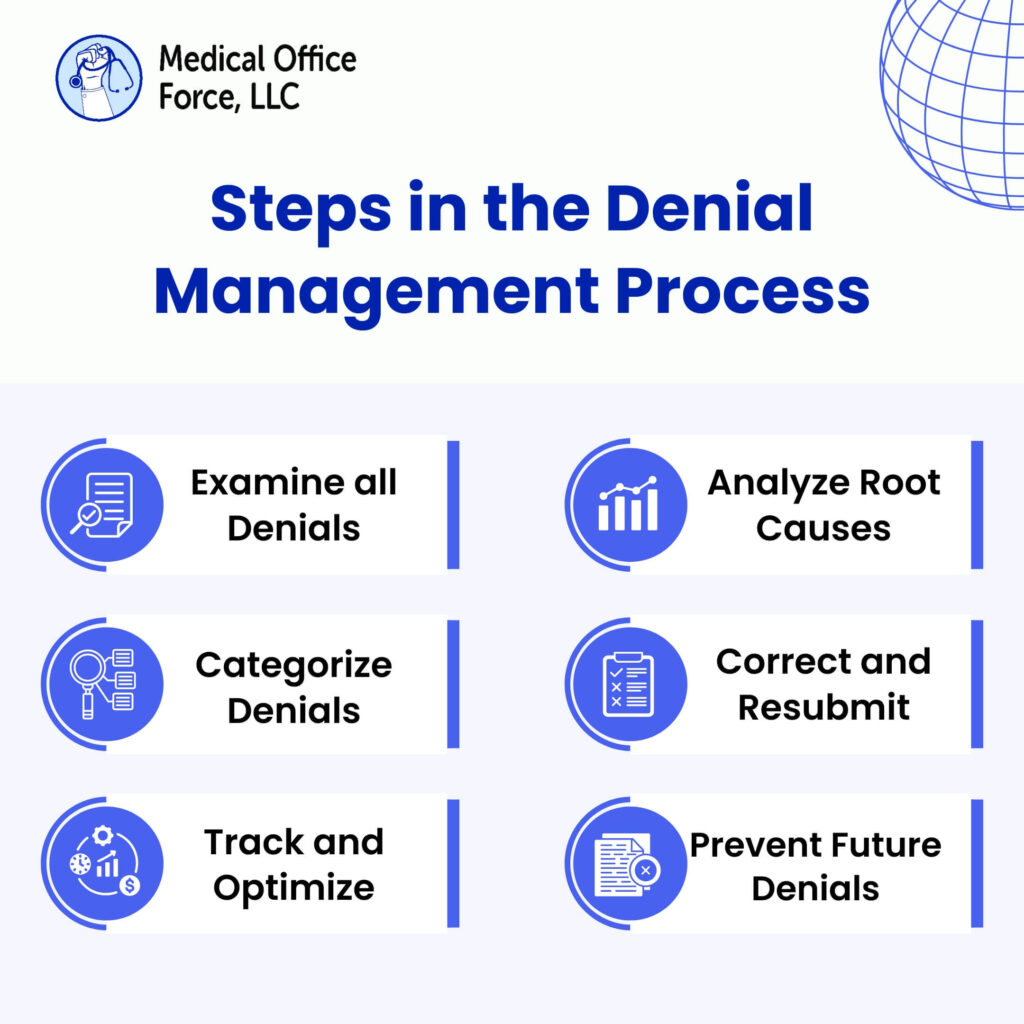
Images showing steps in the denial management process including examining denials, analyzing root causes and resubmitting claims.

Increases patient satisfaction by improving billing concerns and issues Common Reasons for Denied Claims:

1. Timely filing of claims: Claims submitted after the payers’ deadline are automatically denied.

2. Subscriber Identification: Mismatched patient information leads to rejection.

3. Services : Services not covered under the patient’s insurance plan.

4. Bundled Services: Incorrect bundling of services may lead to denials.

5. Incorrect use of modifiers: Improper use of coding modifiers can trigger denials.

6. Discrepancies in Data: Inconsistent or missing data results in claim rejection

How Does Denial Management Contribute to Revenue Optimization?

Effective denial management minimizes revenue loss and accelerates reimbursements. On identifying and rectifying denied claims, practices can:

1. Maximize revenue potential

2. Improve cash flow stability

3. Reduce administrative costs.

4. Enhance overall financial performance

At Medical Office Force, we specialize in denial management services, providing expert solutions to help medical practices streamline operations, reduce claim denials, and optimize revenue.

 Medical billing team analyzing healthcare denial reports and performance charts on a screen

Key Performance Indicators (KPIs) for Denial Management

Monitoring KPIs helps assess the effectiveness of denial management efforts:

1. Denial Rate : Percentage of claims denied by payers.

2. Denial Reasons : Identification of common denial causes.

3. Days in Accounts Receivable (AR) : Time taken to collect payments.

4. Denial Resolution Turnaround Time: Speed of resolving denied claims.

5. Denial Appeal Success Rate: Percentage of successfully appealed denials.

How Can Claim Denials Be Minimized With A Better Medical Practice?

Claim denials are best dealt with by using an efficient approach. Claim errors that result in denied claims and are costly can be mitigated by adopting effective preset approaches.

1. Patient Registration: Record insurance and patient details accurately.

2. Documentation: Omitting coding mistakes requires detailed and accurate medical documentation.

3. Staff Training: Coding and billing mistakes diminish with regular education on updates.

4. Submission of Claims: Claims are submitted on time to avoid denial due to late filing.

5. Regular Audits: Review submission aids in identifying mistakes that harm claims.

What Comes After A Claim Has Been Denied?

Minimizing any potential loss that can come from a denied claim can be handled by:

1. Timely Action: Make use of all documentation that can help to prove the claim.

2. Review the Denial Reason: Investigate the claim reimbursement and reason for denial.

3. Gather Necessary Documentation: Compiling all necessary evidence to support the claim.

4. Decide if A Reasonable Appeal Needs To Be Made: If any strong evidence does not back the denial, consider the claim appeal process, as some claim denials can be eliminated through an appeal.

5. Quick Action: To increase the likelihood of making a successful appeal, do so within the deadlines provided.

Two-thirds of rejected claims are recoverable according to the Journal of AHIMA. Denial management supports revenue recovery which is imperative and should be effortless to manage.

Best Practices in Denial Management

To reduce denials and improve efficiency, the following best practices can be considered:
-Maintaining detailed records and documentation
-Regular analysis of denial trends and metrics.
-Avoiding backlogs by immediately addressing denials.
-Implementing preventive strategies by monitoring common reasons for denials.
-Assigning a dedicated team for denial management.
-Utilizing advanced software for tracking and resubmitting claims.
-Maintaining open communication with insurance providers.
-Monitoring key performance indicators (KPIs) for continuous improvement.
-Avoid bulk submissions and prioritize accurate claims
-Regularly auditing the process to avoid gaps
-Avoiding mistakes made in previous denials
-Verifying insurance verification thoroughly before service
-Hold on to payer submission and appeal deadlines
-Keeping track of pending and appealed claims.

Doctors happy with Medical Office Force's denial management specialists

Conclusion

Denial control in healthcare is not just about fixing mistakes, it’s about preventing them. Medical practices can substantially reduce denials and improve financial stability by implementing robust strategies, bringing in automation, and staying proactive.

At Medical Office Force, we assist healthcare providers in streamlining their denial control procedure, making sure quicker reimbursements and reduced revenue loss.

Contact us today to learn more about our denial control offerings and the way we will help optimize your revenue cycle. Transform your practice’s monetary health with effective denial control!

Resources:
https://www.ahima.org/
https://www.cleveland.com/
https://www.nih.gov/
https://www.mayoclinic.org/

Featured Image

Maximize Reimbursements: 5 Proven Strategies to Minimize Claim Denials

Featured Image

Navigating the complexities of healthcare reimbursements can feel like a daunting task for medical practices. Claim denials not only delay payments but also create unnecessary administrative burdens, impacting your revenue cycle and patient satisfaction. At Medical Office Force (MOF), we understand how frustrating this can be. That’s why we’ve compiled five proven strategies to help you minimize claim denials and maximize reimbursements, ensuring your practice runs smoothly and efficiently.

Let’s explore these actionable tips, backed by trusted resources and expert insights, to help you streamline your revenue cycle and keep your focus on patient care.

1. Ensure Accurate and Complete Documentation

The foundation of a clean claim lies in accurate and complete documentation. Errors in patient information, coding, or missing details are among the top reasons for claim denials. According to the American Health Information Management Association (AHIMA), incomplete or incorrect documentation can lead to significant revenue loss.

How to Implement:

  • 1. Double-check patient demographics: Verify patient names, insurance IDs, and policy numbers.
  • 2. Use up-to-date coding systems: Ensure your team is trained on the latest ICD-10 and CPT codes.
  • 3. Audit claims before submission: Implement a pre-submission review process to catch errors early.

By prioritizing accuracy, you can reduce the likelihood of denials and speed up the reimbursement process.

2. Utilize Technology for Claims Management

Manual claims processing is inefficient, error-prone, and delays reimbursements, impacting healthcare providers’ revenue and workflow. Investing in advanced claims management software can automate and streamline the process, reducing the risk of denials. Tools like electronic health records (EHRs) and revenue cycle management (RCM) systems can flag errors, track claims, and provide real-time updates.

Post Image

How to Implement:

  • 1. Choose the right software : Look for solutions that integrate with your existing systems and offer denial management features.
  • 2. Train your staff : Ensure your team is proficient in using the technology to maximize its benefits.
  • 3. Monitor performance : Regularly review system reports to identify trends and areas for improvement.

3. Stay Updated on Payer Policies and Regulations

Insurance payer policies and healthcare regulations are constantly evolving. Staying informed about these changes is crucial to avoiding claim denials. For instance, payer-specific requirements for prior authorizations or medical necessity documentation can vary widely.

How to Implement:

  • 1. Subscribe to payer newsletters : Many insurance companies provide updates on policy changes.
  • 2. Attend webinars and training sessions : Organizations like AHIMA offer resources to keep you informed.
  • 3. Designate a compliance officer : Assign a team member to monitor regulatory updates and communicate them to your staff.

By staying proactive, you can ensure your claims align with current guidelines, reducing the risk of denials.

4. Implement a Robust Denial Management Process

Despite following the best practices, some claim denials are unavoidable. However, the way you address and resolve them plays a crucial role in minimizing revenue loss, improving cash flow, and ensuring a smoother reimbursement process for healthcare providers. A robust denial management process involves identifying the root cause of denials, appealing them promptly, and implementing corrective actions to prevent recurrence.

How to Implement:

  • 1. Categorize denials : Track common reasons for denials, such as coding errors or missing information.
  • 2. Appeal strategically : Prioritize high-value claims and ensure appeals are submitted within payer deadlines.
  • 3. Analyze trends: Use denial data to identify patterns and address systemic issues.
Post Image

5. Train and Empower Your Staff

Your team plays a critical role in minimizing claim denials. Regular training and empowerment can enhance their skills and confidence, leading to fewer errors and more efficient claims processing.

How to Implement:

  • 1.Provide ongoing education : Offer training sessions on coding, documentation, and compliance.
  • 2.Encourage collaboration : Build a bridge of communication between billing, coding, and clinical staff to address issues proactively.
  • 3.Recognize achievements: Celebrate successes to motivate your team and reinforce positive behaviors.

Empowered employees are more likely to take ownership of their work, resulting in cleaner claims and faster reimbursements.

Bonus Tip: Partner with Experts

Sometimes, the best way to minimize claim denials is to seek expert help. Partnering with a trusted medical billing and coding service can provide access to specialized knowledge and resources, allowing you to focus on patient care.

At MOF, we offer tailored solutions to optimize your revenue cycle and reduce claim denials. Our team of experts stays updated on the latest industry trends and regulations, ensuring your practice stays ahead of the curve.

The Bottom Line

Minimizing claim denials and maximizing reimbursements is not a one-time effort—it’s an ongoing process that requires attention to detail, the right tools, and a proactive approach. By implementing these five strategies, you can streamline your revenue cycle, reduce administrative burdens, and improve your practice’s financial health.

Remember, every denied claim represents lost revenue and wasted resources. By taking control of your claims process, you can ensure your practice thrives in today’s competitive healthcare landscape.

At MOF, we’re here to support you every step of the way. Join forces with us to create a more resilient, efficient, and successful healthcare practice together!

The Role of Denial Management in Healthcare Revenue Cycle Optimization

The Role of Denial Management in Healthcare Revenue Cycle Optimization

In the complex world of healthcare revenue cycle management, claim denials can be a significant challenge. Effective denial management is crucial for ensuring financial stability and optimizing revenue cycles in healthcare organizations. By understanding the denial management process in medical billing, practices can minimize revenue loss, improve cash flow, and enhance patient satisfaction. This blog explores the role of denial management in healthcare, its impact on revenue cycle optimization, and how denial management services can help medical providers achieve financial success.

Understanding Denial Management in Healthcare

Denial management is a systematic process aimed at identifying, analyzing, and resolving claim denials by insurance companies. A denial occurs when a submitted medical claim is rejected or not reimbursed due to various reasons, including coding errors, missing information, or policy exclusions. Without a strong denial management strategy, healthcare providers risk losing significant revenue and facing operational inefficiencies.

The goal of denial management is to minimize rejections, streamline resubmissions, and ensure claims are processed efficiently. This process not only helps healthcare providers recover lost revenue but also enhances compliance with payer requirements and reduces administrative burdens.

The Impact of Claim Denials on Healthcare Revenue Cycle

Claim denials can severely disrupt a healthcare organization’s revenue cycle. When a claim is denied, it requires additional time and resources to investigate, correct, and resubmit. This leads to delayed payments, increased administrative costs, and cash flow issues.

According to industry reports, nearly 10-15% of all submitted claims are denied, and over 60% of denials are never resubmitted, leading to substantial financial losses. This makes it imperative for healthcare providers to implement effective denial management strategies that reduce claim rejections and enhance revenue cycle efficiency.

Essential Stages of the Denial Management Process in Medical Billing

A well-structured denial management process can significantly reduce claim denials and improve reimbursement rates. The following are essential steps in effective denial management:

1. Identifying the Root Cause of Denials: 

Analyzing denial patterns is the first step in understanding why claims are being rejected. Common reasons for denials include:

  • 1. Incorrect patient information
  • 2. Missing or incomplete documentation
  • 3. Coding errors and incorrect modifiers
  • 4.Lack of prior authorization
  • 5. Timely filing issues
  • 6. Non-covered services

2. Tracking and Categorizing Denials

Healthcare providers should categorize denials based on their root causes, such as administrative, clinical, or technical errors. This allows for targeted improvements in claim submissions.

3. Implementing Corrective Measures

Once the causes are identified, providers can take corrective actions, such as:

  • 1. Training staff on accurate documentation and coding practices
  • 2. Verifying patient eligibility and coverage details before submitting claims
  • 3. Implementing automated claim-scrubbing tools to detect errors before submission

4. Resubmitting Corrected Claims

Correcting denied claims and resubmitting them within the insurer’s deadline is crucial. Providers should ensure they adhere to each payer’s specific guidelines to maximize reimbursement.

5. Monitoring and Continuous Improvement

Denial management is a continuous and dynamic process that demands consistent oversight, analysis, and proactive intervention to minimize claim rejections and enhance revenue cycle efficiency. Healthcare organizations should regularly review denial trends and implement process improvements to minimize future claim rejections.

The Role of Denial Management Services in Revenue Cycle Optimization

Given the complexities of claim processing, many healthcare providers turn to denial management services to streamline their revenue cycle operations. These specialized services offer expertise in handling denials, improving reimbursement rates, and reducing administrative burdens. Some key benefits of outsourcing denial management include:

1. Expert Analysis and Resolution: Trained professionals identify patterns, rectify errors, and ensure claims meet payer requirements.

2. Faster Claim Processing Advanced technologies help track denials in real time, leading to quicker resolution and reimbursement.

3. Improved Compliance : Professional denial management services ensure adherence to ever-changing insurance regulations and policies.

4. Enhanced Revenue Recovery: Effective resubmission strategies help recover revenue that would otherwise be lost due to claim denials.

Best Practices to Reduce Claim Denials

To minimize denials and optimize revenue cycles, healthcare providers should adopt the following best practices:

1. Invest in Advanced Technology: Use electronic health records (EHR) and automated claim submission tools to reduce errors.

2. Regular Staff Training : Ensure billing teams are well-trained in medical coding, documentation, and payer guidelines..

3. Proactive Eligibility Verification : Confirm patient insurance coverage and policy requirements before treatment.

4. Standardized Denial Tracking : Maintain a centralized system to track and analyze denial trends for process improvement.

5. Strong Communication with Payers : Establish clear communication channels with insurers to resolve claim issues efficiently.

Conclusion

Effective denial management in healthcare is essential for maintaining a healthy revenue cycle and ensuring financial stability. By implementing a strong denial management process in medical billing, healthcare providers can significantly reduce claim rejections, improve cash flow, and enhance overall operational efficiency.

Partnering with professional denial management services can further streamline processes, reduce administrative burdens, and maximize revenue recovery. Healthcare organizations can achieve long-term financial success and provide better patient care by staying proactive and continuously refining denial management strategies. 

For expert solutions in revenue cycle management, visit Medical Office Force today!

Exploring Revenue Cycle Management Services to Maximize Practice Revenue

In today’s rapidly evolving healthcare landscape, financial stability and operational efficiency are crucial for the sustainability of medical practices and hospitals. Effective healthcare revenue cycle management (RCM) serves as the backbone of achieving these goals, streamlining the complex processes that encompass patient care and financial reimbursement. From reducing billing errors to improving cash flow, exploring the nuances of revenue cycle management services can significantly enhance your practice’s profitability while enabling you to focus on delivering quality patient care.

Understanding the Healthcare Revenue Cycle

The healthcare revenue cycle involves a series of interconnected processes, starting from patient registration and ending with the collection of final payments. These steps ensure that providers are appropriately reimbursed for the care they deliver. However, inefficiencies in this cycle—such as coding errors, claim denials, and outdated billing practices—can lead to financial losses and administrative burdens.

This is where revenue cycle management companies step in to optimize financial operations and efficiency. By utilizing their expertise, providers can optimize their billing and reimbursement workflows, ensuring a smoother revenue cycle management process and reducing overhead costs.

post image

Why Revenue Cycle Management is Crucial

The importance of effective RCM in medical billing cannot be overstated. It secures timely payments and ensures compliance with evolving regulations and payer requirements. Key benefits of adopting robust revenue cycle management services include:

1.Streamlined Processes: From scheduling appointments to claim submission, the RCM process minimizes inefficiencies that delay reimbursements.

2.Improved Financial Performance: Reducing denials and errors boosts cash flow and maximizes revenue potential.

3.Compliance Assurance: Staying updated with healthcare regulations ensures adherence to payer requirements, reducing legal risks.

4.Enhanced Patient Experience: Transparent billing and simplified payment options improve patient satisfaction and loyalty.

Steps of Revenue Cycle Management

The steps of revenue cycle management outline the structured approach to optimizing financial processes in a healthcare setting:

1.Patient Registration: Accurate collection of patient demographics and insurance details.

2.Insurance Verification: Confirming coverage and eligibility to avoid future claim rejections.

3.Charge Capture: Documenting services are provided to ensure accurate billing.

4.Coding: Translating medical services into standardized codes for proper reimbursement.

5.Claim Submission: Sending clean claims to payers to reduce processing delays.

6.Denial Management: Addressing rejected claims to recover payments efficiently.

7.Payment Posting: Recording payments and reconciling accounts.

8.Patient Billing: Issuing statements and managing outstanding balances.

By effectively managing these steps, practices can minimize revenue leakage and ensure financial stability.

RCM in Medical Billing: A Game-Changer

The integration of RCM in medical billing is a game-changer for practices of all sizes. By automating tasks such as claim submissions and payment tracking, revenue cycle management companies empower healthcare providers to focus on their core competency—patient care.

For instance, hospitals with robust hospital revenue cycle management systems can handle high patient volumes without compromising on financial efficiency. Likewise, smaller practices can utilize medical revenue cycle management solutions to compete in an increasingly complex market.

RCM systems also incorporate advanced analytics to provide actionable insights, enabling providers to identify bottlenecks and optimize their workflows.

Choosing the Right Revenue Cycle Management Partner

With numerous revenue cycle management companies available, selecting the right partner is critical for success. Here are key factors to consider:

1.Experience and Expertise: Choose a company with a proven track record in managing RCM healthcare services.

2.Technology and Automation: Ensure the company uses advanced tools to automate repetitive tasks and reduce human error.

3.Customization: Opt for a partner that tailors solutions to your specific practice needs.

4.Transparency: Look for a company that provides detailed performance reports and maintains open communication.

5.Support and Training: Ensure they offer ongoing support and training to your staff for seamless integration.

Revenue Cycle Management in Hospitals

Hospitals often face unique challenges in managing their healthcare revenue cycle, including handling high patient volumes, managing multiple specialties, and adhering to stringent compliance standards. Hospital revenue cycle management services focus on optimizing these complexities by implementing centralized billing systems, reducing claim denials, and ensuring accurate documentation.

For hospitals, adopting advanced RCM healthcare solutions is no longer optional—it’s a necessity. Advanced systems handle billing and integrate with electronic health records (EHR) to streamline workflows and improve data accuracy.

post pic

The Role of Revenue Cycle Management Services in Improving Practice Revenue

Investing in professional revenue cycle management services is one of the most effective ways to maximize practice revenue. These services not only address operational inefficiencies but also provide insights into patient payment behavior, enabling practices to implement better financial policies.

Moreover, RCM healthcare solutions ensure compliance with payer contracts, reducing the risk of penalties or revenue loss. For instance, automated coding tools help eliminate errors, while real-time analytics enable providers to track key performance indicators (KPIs) and make informed decisions.

The Future of Revenue Cycle Management

The future of medical revenue cycle management lies in embracing innovation. Artificial intelligence (AI), machine learning, and predictive analytics are revolutionizing the way providers manage their revenue cycles. These technologies not only enhance accuracy but also identify potential issues before they escalate, ensuring a proactive approach to financial management.

Furthermore, patient-centric RCM solutions are gaining traction, offering features such as mobile payment options and transparent billing. This shift not only improves collections but also enhances patient satisfaction, building long-term loyalty.

Conclusion

In a competitive and highly regulated industry, efficient healthcare revenue cycle management is the cornerstone of financial success. Whether you’re a small practice or a large hospital, exploring the right revenue cycle management services can help you navigate the complexities of medical billing, improve cash flow, and enhance patient satisfaction.

By leveraging advanced technologies and partnering with experienced revenue cycle management companies, you can streamline your operations, reduce errors, and maximize your revenue potential. With the right strategies in place, your practice can thrive in today’s dynamic healthcare landscape while continuing to deliver exceptional patient care.

Take the first step toward financial success by optimizing your RCM in medical billing today. Your practice—and your patients—deserve nothing less.